


The Textured Fringe Low Taper combines a textured top with a controlled taper around the ears and neckline. It gives men a modern haircut that can look relaxed, clean, or polished depending on the haircut styling. The fringe haircut adds movement around the forehead, while shorter sides create a balanced hairstyle without requiring a dramatic fade.
Because the haircut can be adapted to straight hair, wavy hair, curly hair, thick hair, fine hair, and medium hair, the final haircut shape depends heavily on natural texture, density, face shape, and personal preference. A skilled barber can adjust the haircut length, fringe length, top length, and taper transition so the result feels natural rather than forced.
This guide explains the structure, variations, styling routine, face-shape considerations, maintenance, and barber instructions behind the Textured Fringe Low Taper. It also covers the most useful variations for different hair types, including straight, curly, Asian, medium-length, and mullet-inspired versions.
What Is a Textured Fringe Low Taper?
A Textured Fringe Low Taper uses layered hair on top and a gradual taper near the ears and neckline. The textured top creates hair separation and natural movement, while the low taper keeps the sides controlled. The haircut appearance can therefore move between a casual haircut and a professional haircut without changing the basic haircut technique.
The fringe generally falls toward the forehead rather than being brushed completely away from the face. Depending on fringe length and hair texture, it may form a defined fringe, messy fringe, or softer natural-looking fringe. The barber can use point cutting, layering, or texturizing shears to create layered texture without making the top look excessively thin.
A good Textured Fringe Low Taper should have a clear relationship between the longer top and shorter sides. The smooth transition should follow the natural shape of the head, while the neckline taper keeps the back clean. This produces a modern look with enough hair volume to avoid an overly exposed scalp.
What Is a Textured Fringe?
A textured fringe is a fringe haircut where the front hair contains visible separation instead of forming one solid block across the forehead. The barber can create this effect with point cutting, texturizing shears, and natural layers. The goal is hair movement rather than perfectly uniform ends.
A textured fringe works particularly well when the haircut length is matched to the hair texture. Straight hair may need more layering techniques to create movement, while natural curls already provide texture. Wavy hair can use its existing movement to produce a relaxed finish.
The fringe length also affects facial proportions. A short fringe can expose more forehead, while a longer fringe can visually shorten the upper face. The best haircut shape depends on face shape, facial features, forehead height, and personal style.
What Is a Low Taper?
A low taper is a gradual taper that begins close to the ears and neckline instead of climbing high toward the temples. It creates tapered ears, tapered sides, and a tapered neckline while leaving substantial length above the taper. This makes the transition more subtle than a high fade or high skin fade.
A low taper fade can be even tighter than a traditional low taper. The fade transition may approach very short hair near the edges, while the longer top remains untouched. The difference between the two depends on how closely the sides are blended and whether the barber exposes scalp.
A taper fade can range from subtle tapering to stronger contrast. A natural taper usually leaves more side weight, while a dramatic fade produces a sharper visual separation between the top and sides.
How These Two Haircuts Work Together
The Textured Fringe Low Taper works because the textured top and tapered sides perform different jobs. The top supplies hair volume, movement, and texture, while the low taper controls the perimeter. The result is a balanced hairstyle rather than a haircut with equal emphasis everywhere.
A gradual blend is especially useful when the client wants clean sides without an aggressive fade. The smooth transition around the tapered ears and clean neckline keeps the haircut polished. At the same time, the textured top prevents the haircut from looking overly formal.
The haircut can also be adjusted according to density. Thick hair may require more weight removal, while fine hair benefits from preserving enough top length to create a fuller appearance. The barber should therefore treat the haircut as a haircut variation rather than a fixed template.
Why This Haircut Is So Popular
The Textured Fringe Low Taper fits a wide range of everyday situations. It can become a casual haircut with a messy fringe, a professional haircut with a controlled fringe, or a fashionable haircut with stronger texture and a sharper taper.
Its flexibility also comes from the fact that the top can be worn forward, slightly separated, pushed loosely upward, or allowed to follow natural movement. This makes the hairstyle useful for casual days, professional settings, casual settings, formal settings, everyday wear, work, school, and social occasions.
Another advantage is that the haircut can suit different ages. Teenagers and college students may prefer a relaxed hairstyle, while professionals and older men can request a cleaner finish. The underlying haircut technique remains similar even when the styling changes.
Why Choose a Textured Fringe Low Taper?
There are several practical reasons to choose this haircut. It provides a modern appearance without requiring the exposed scalp associated with some high fades, and the fringe gives the face additional shape.
Clean Yet Modern Look
The low taper keeps the perimeter tidy while the textured fringe adds personality. This combination creates a clean haircut without making the haircut appearance excessively severe.
A clean look can be achieved by keeping the fringe defined and the tapered edges precise. A modern look can be created by leaving more natural texture and allowing slight irregularity through the top.
Easy to Style
Daily styling can be relatively simple when the haircut shape has been designed around the natural texture. Start with damp hair, use a blow dryer when extra direction is needed, and finish with a suitable hair product.
For fine hair, texture powder can provide lift. For thick hair, texture clay or matte clay can provide hair control. Curly hair may need curl cream rather than a heavy product.
Works for Different Hair Types
Straight hair benefits from layering that creates hair movement. Wavy hair can emphasize loose waves and natural texture. Curly hair can retain natural curls, while thick hair can use texturizing to reduce unwanted weight.
Fine to medium hair can be kept longer on top so the haircut has enough density to produce a fuller appearance. Medium hair also provides flexibility for different haircut lengths and fringe shapes.
Suitable for Many Face Shapes
Face shape should influence the fringe length and volume on top. Oval face, round face, square face, diamond face, and heart-shaped face can all be approached differently.
For a round face, extra volume on top can add visual height. For a longer face, excessive height may not be necessary. Facial proportions, facial shape, and face balance should guide the final haircut.
Grows Out Naturally
A low taper usually grows out more gradually than a dramatic fade. Because the sides retain some weight, haircut growth can look less abrupt as the weeks pass.
A regular trim can still be useful for maintaining clean edges and a sharp taper. Many people schedule barber visits around three to four weeks, although individual haircut maintenance needs vary.
A Good Choice for Different Ages
Teenagers may choose a messy fringe and stronger texture. College students may prefer a fashionable appearance with moderate styling. Professionals can keep the fringe controlled and the taper subtle.
Older men can also adapt the style by reducing contrast and using a natural finish. Different ages do not require completely different haircuts; the haircut variation can be adjusted through length, texture, and taper placement.
Is a Textured Fringe Low Taper Right for You?
The Textured Fringe Low Taper is worth considering if you want a hairstyle that combines clean sides with a textured top. It can be especially useful for people who prefer natural movement instead of a rigid, highly structured finish.
Consider the following points before booking:
- Your natural hair texture should work with the proposed haircut length.
- Your fringe length should complement your face shape.
- Your top length should provide enough room for the desired styling.
- Your shorter sides should not be taken higher than you want.
- Your daily styling routine should match the required maintenance.
- Your personal style should fit the intended haircut appearance.
- Your barber should understand the desired haircut shape.
- Your lifestyle should be considered before choosing a high-contrast fade.
- Your hair density should influence the amount of texturizing.
- Your forehead and facial features should influence the fringe position.
The haircut is especially adaptable because the same basic structure can become a casual haircut, fashionable haircut, clean haircut, or professional haircut through small changes.
Best Textured Fringe Low Taper Styles
The Textured Fringe Low Taper has numerous haircut variations. The most important variables are the top length, fringe length, hair texture, taper position, and haircut finish.
Textured Fringe Low Taper Straight Hair
Straight hair can sometimes lack natural separation, so the barber may introduce layered texture through point cutting or texturizing shears. The goal is to create movement without making the top look excessively wispy.
A slightly longer fringe can create a stronger defined fringe, while a shorter fringe gives a cleaner haircut appearance. Fine to medium hair generally benefits from preserving density instead of removing too much weight.
Best for:
- Straight hair
- Fine hair
- Medium hair
- Fine to medium hair
- Students
- Professionals
Styling tip: Use a small amount of matte clay or texture powder and direct the fringe forward with a blow dryer.
Textured Fringe Low Taper Curly Hair
Curly hair already provides natural texture, so the barber should avoid unnecessary texturizing. The goal is to shape the curls while keeping the sides controlled.
Thick curls can create substantial hair volume on top. A low taper reduces visual bulk around the ears and neckline while allowing natural curls to remain the main feature.
Best for:
- Curly hair
- Thick curls
- Natural curls
- Medium hair
- Loose waves
Styling tip: Apply curl cream to damp hair, shape the curls with the fingers, and use a diffuser when additional definition is required.
Textured Fringe Low Taper Fade
A Textured Fringe Low Taper Fade creates a cleaner fade transition around the sides while preserving the textured top. The taper fade may be tighter than a traditional low taper, depending on how much side contrast is requested.
This variation is useful when someone wants a clean haircut but still wants natural texture on top. The barber can keep the fade subtle or make the side contrast stronger.
Best for:
- Most hair textures
- Everyday wear
- Modern hairstyles
- Shorter sides
- Clean sides
Textured Fringe Mid Taper
A Textured Fringe Mid Taper places the taper higher than a traditional low taper. This produces more side contrast and gives the haircut a more noticeable taper transition.
Thick hair and wavy hair often provide enough density to support this haircut variation. The top can remain textured while the mid-level taper makes the haircut appearance more defined.
Best for:
- Thick hair
- Wavy hair
- Textured hair
- Stronger contrast
- Modern haircut enthusiasts
Textured Fringe Low Taper Asian
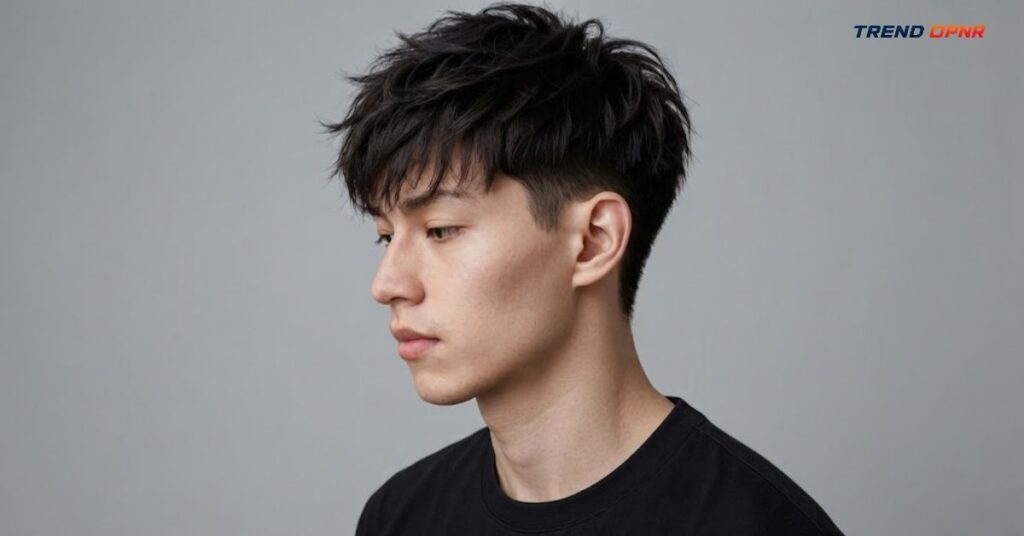
Asian hair is often straight and dense, although individual hair types vary considerably. When the hair has strong density, layering can help introduce movement while preserving a fuller appearance.
A medium-length fringe can work particularly well when the client wants enough hair to create natural separation. The barber should avoid removing excessive weight if the goal is a substantial textured top.
Best for:
- Straight hair
- Thick hair
- Medium-length hair
- Medium hair
- Fuller hair
Styling tip: Use a blow dryer to direct the fringe forward, then apply a small amount of texture clay.
Textured Fringe Low Taper Black Hair
Black hair can support this style through curls, coils, waves, or other natural textures. The barber should work with the existing curl pattern rather than forcing the hair into a straight shape.
A low taper can keep the ears and neckline clean while preserving natural texture above. Clean edges and a tapered neckline can sharpen the overall haircut appearance.
Best for:
- Curly hair
- Thick hair
- Natural curls
- Coily textures
- Dense hair
Textured Fringe Low Taper with Mullet
The Textured Fringe Low Taper with Mullet adds additional length toward the back while maintaining a textured front. The low taper controls the sides, creating a relationship between the shorter perimeter and longer back.
This is a stronger haircut variation than the traditional version. It works best when the client deliberately wants extra length and understands that the grow out will look different from a conventional taper.
Textured Fringe Low Taper Blowout
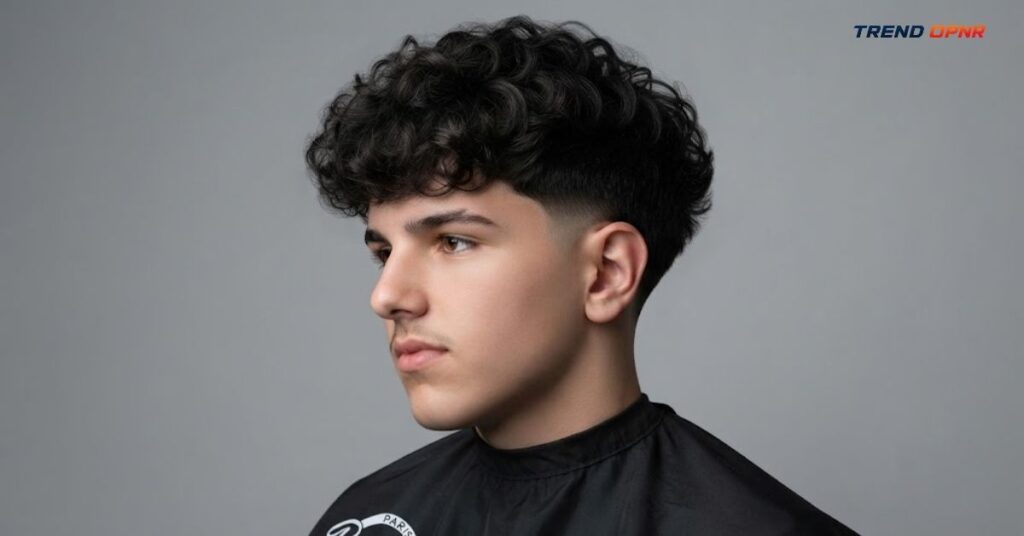
A blowout version emphasizes hair volume and lift. The blow dryer becomes a central styling tool, directing the top upward and forward before the fringe is shaped.
A heat protectant spray is useful whenever regular heat styling is part of the styling routine. The result can be a fuller appearance without requiring a high fade.
Textured Fringe Low Taper Fade Blowout
This variation combines a textured top, a low taper fade, and blowout styling. The sides remain controlled while the top receives more volume.
It is particularly useful for thick or medium-density hair because the hair can support the added height. A gradual blend prevents the side profile from becoming disconnected from the top.
Read More: Long Hair Taper Fade Best Haircut Styles for Men
Textured Fringe Low Taper Fade Straight Hair
Straight hair can appear flatter when the top is cut at one uniform length. Adding layered hair and a low taper fade creates more visual separation.
A lightweight hair product can provide hair control without making the fringe heavy. Matte paste can work particularly well when a natural finish is preferred.
Messy Textured Fringe Low Taper
The messy variation intentionally keeps some irregularity. Instead of arranging every strand, the styling focuses on natural movement, hair separation, and a relaxed finish.
A matte paste or texture powder can help create a messy fringe while retaining a clean neckline and tapered edges.
Messy Textured Fringe Low Taper Fade
The faded version provides stronger side contrast while keeping the top relaxed. This can create a modern hairstyle that looks deliberately undone rather than simply unstyled.
The taper fade should still have a smooth transition. If the fade transition becomes too dramatic, the top and sides may appear disconnected.
Curly Textured Fringe Low Taper
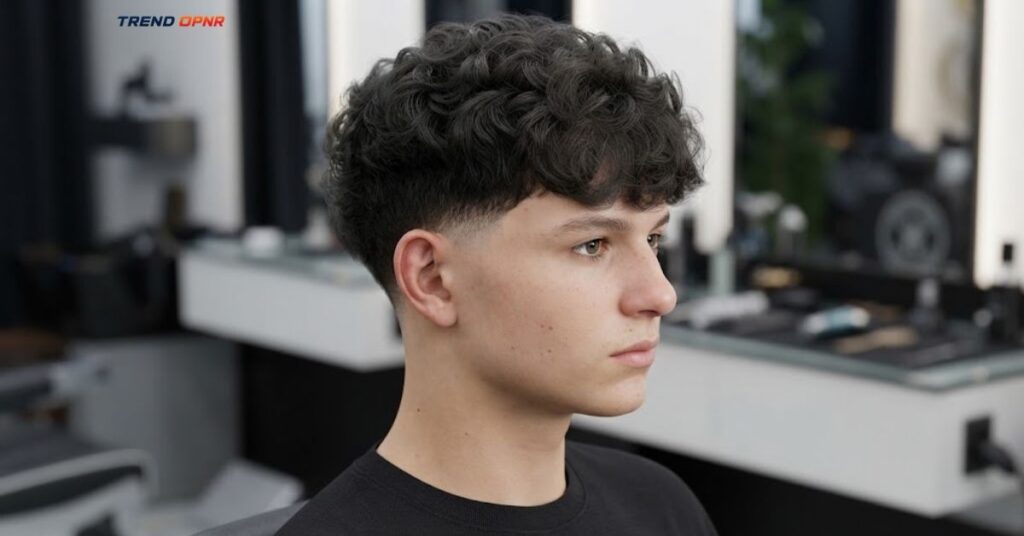
Curly hair naturally creates layered texture, so the barber can focus on controlling shape rather than adding excessive texturizing.
The fringe may be allowed to sit naturally around the forehead. Curl cream can provide definition while preserving movement and preventing the curls from becoming overly stiff.
Short Textured Fringe Low Taper
A short fringe is practical for people who want easy styling. It reduces the amount of hair falling over the forehead and can be particularly comfortable during warmer weather.
The haircut still benefits from a textured top and low taper. Shorter sides combined with a short fringe produce a clean haircut with a lighter overall shape.
Blonde Textured Fringe Low Taper
Blonde hair can show individual strands and layered texture clearly. A matte product can emphasize hair separation without creating excessive shine.
The final haircut appearance depends more on density and texture than color alone. A skilled barber can adapt the haircut shape to fine, medium, or thick blonde hair.
16 Guard Textured Fringe Low Taper
A longer guard approach leaves substantial length and provides more room for styling. It can be useful for someone who does not want the sides cut extremely short.
The longer top can be shaped with natural layers and a controlled taper. This produces a fuller appearance than a very short fade.
Textured Fringe Low Taper Medium Length
Medium-length hair gives the barber more options for fringe length, layered texture, and styling direction. It can be worn forward, separated, or lightly swept to the side.
This variation is particularly useful for someone growing out a shorter haircut who wants to retain enough top length for natural movement.
Textured Fringe Low Taper for Fine Hair
Fine hair benefits from preserving density and avoiding excessive thinning. The barber can use subtle point cutting rather than removing too much weight.
Texture powder can increase root lift, while a blow dryer can establish direction. The goal is a fuller appearance without making the hair look overloaded with product.
Textured Fringe Low Taper for Thick Hair
Thick hair can support a substantial textured top, but too much density may create unwanted bulk. Layering techniques can remove strategic weight while preserving the haircut shape.
Matte clay can provide hair control without making the top appear glossy. The taper should remain gradual so the thick top does not look disconnected.
Textured Fringe Low Taper for Wavy Hair
Wavy hair naturally supplies movement, so the haircut technique should preserve the wave pattern. Excessive texturizing may create unnecessary frizz.
Loose waves can create a relaxed hairstyle with minimal styling. A light hair product can improve hair definition while maintaining a natural finish.
Which Hair Type Works Best?
There is no single hair type that automatically determines the correct haircut. Straight hair, wavy hair, curly hair, thick hair, and fine hair can all support the style when the haircut length and haircut technique are adapted appropriately.
Straight Hair
Straight hair benefits from layering because layers create movement where natural texture may be limited. A defined fringe can be created through careful point cutting.
Avoid excessive thinning on fine hair. Keeping enough top length can make the hair appear denser.
Wavy Hair
Wavy hair already has natural movement. The haircut should preserve that movement instead of trying to flatten it.
Loose waves work well with a relaxed finish. A small amount of styling product can provide hair control while keeping the wave pattern visible.
Curly Hair
Curly hair can produce natural volume and strong hair definition. The barber should consider curl shrinkage when deciding the fringe length.
Natural curls can make the fringe look shorter once dry, so the haircut should be planned with the finished curl pattern in mind.
Thick Hair
Thick hair provides strong hair volume but can become bulky. Layered hair and carefully placed texturizing can improve manageability.
Texturizing shears should be used thoughtfully. The goal is controlled density rather than removing so much weight that the top loses its fuller appearance.
Fine Hair
Fine hair requires a different approach. Excessive layering can make it look thinner, so the barber should preserve density while adding only enough texture for movement.
Texture powder can create lift, and a blow dryer can establish volume on top. Matte paste should be used sparingly because heavy products can flatten fine hair.
Medium Hair
Medium hair provides a flexible base. It can support a short fringe, medium fringe, longer fringe, or more substantial textured top.
The haircut style can therefore be adjusted according to lifestyle, face shape, and daily styling preference.
Best Face Shapes for a Textured Fringe Low Taper
The Textured Fringe Low Taper can be customized around different face shapes by changing fringe length, top volume, and side weight. Face balance is more important than following a fixed haircut rule.
Oval Face
An oval face generally provides balanced facial proportions. Different fringe lengths and top shapes can therefore work without requiring major correction.
A natural finish can preserve the existing balance rather than exaggerating one feature.
Round Face
A round face can benefit from controlled volume on top and a moderate fringe. Keeping the sides neat can reduce unnecessary visual width.
A slightly longer top may provide a more elongated overall shape.
Square Face
A square face often has strong facial features and a defined jaw. A textured fringe can soften the visual structure while maintaining clean sides.
A subtle taper rather than a dramatic fade can produce a balanced hairstyle.
Diamond Face
A diamond face can have a narrower forehead and chin with greater width around the cheekbones. Fringe length can be adjusted to add balance around the upper face.
The barber may preserve some volume near the forehead while keeping the sides controlled.
Heart Face
A heart-shaped face often has a wider forehead and narrower chin. A medium-length fringe can reduce visual emphasis on the forehead.
Keeping balanced sides and avoiding excessive height can support a more proportionate appearance.
Oblong Face
An oblong face is longer than it is wide. Excessive volume on top may make the face appear longer.
A flatter textured top with moderate fringe length can help maintain overall shape. The taper should remain proportional to the head.
Textured Fringe Low Taper vs Other Haircuts
Small differences in taper position, fringe structure, and top length can produce noticeably different results. Comparing haircut styles helps clarify what should be requested at the barber.
Textured Fringe Low Taper vs Mid Taper
The primary distinction is taper placement. A low taper stays close to the ears and neckline, while a mid taper rises higher toward the temples.
A low taper creates a more subtle taper transition and retains more side weight. A mid taper introduces stronger contrast and a more visible fade transition.
Choose a Low Taper If You:
- Prefer a natural-looking haircut
- Want clean sides
- Work in professional settings
- Prefer subtle contrast
- Want easier maintenance
- Like a softer haircut finish
- Want more side coverage
Choose a Mid Taper If You:
- Want stronger contrast
- Prefer a more noticeable fade
- Like modern barber styles
- Have enough density for the transition
- Want a more dramatic fade appearance
- Prefer sharper side definition
Textured Fringe Low Taper vs High Taper
A high taper moves the transition farther upward. This exposes more side area and creates stronger contrast.
A low taper leaves more hair around the temples. It is therefore useful when the desired haircut appearance is clean without making the taper the dominant feature.
Textured Fringe Low Taper vs French Crop
A French crop generally uses a shorter and more uniform fringe. The textured fringe provides more flexibility because the front can retain additional length.
The haircut technique also differs. A textured top relies on separation and movement, whereas a traditional crop can use a more compact structure.
Textured Fringe Low Taper vs Edgar Haircut
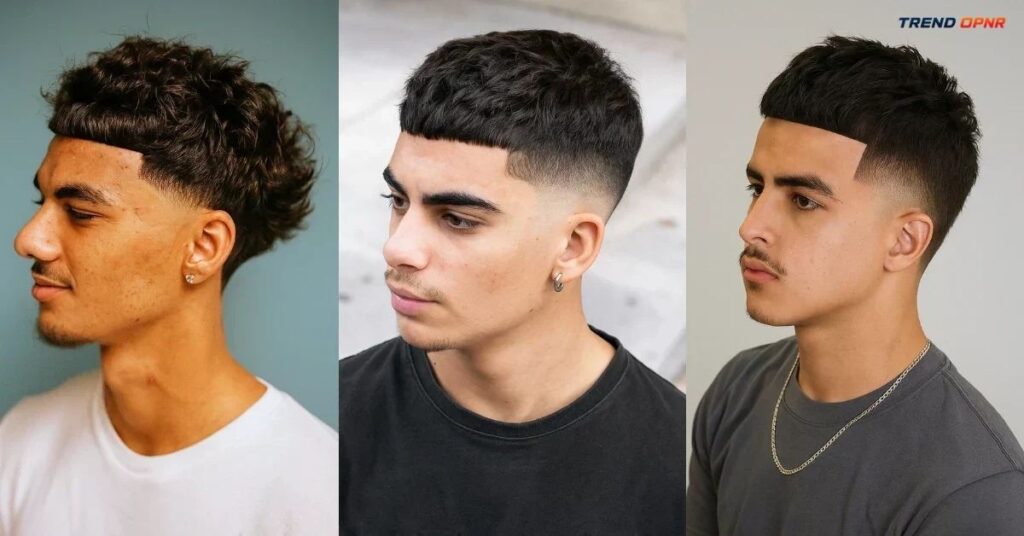
An Edgar haircut often uses a sharper front line and stronger fade contrast. The textured fringe version is less dependent on a perfectly straight fringe.
If natural movement and a relaxed finish are priorities, the textured version allows more variation in haircut shape.
Textured Fringe Low Taper vs Textured Crop
A textured crop is generally shorter across the top. A fringe hairstyle with additional top length provides more styling options.
The textured fringe can be pushed forward, separated, or styled loosely. A crop tends to maintain a more compact shape.
Low Taper vs Low Taper Fade
A traditional low taper can retain more side hair. A low taper fade may blend more tightly toward very short hair.
Neither option is automatically suitable for every person. Hair density, face shape, personal style, and desired side contrast should determine the choice.
How to Ask Your Barber for a Textured Fringe Low Taper
When requesting a Textured Fringe Low Taper, explain the desired result rather than naming only the haircut. A reference photo can help, but specific instructions about length and taper placement make communication easier.
Explain the Fringe Length
Tell your barber whether you want:
- A short fringe above the eyebrows
- A medium fringe near the forehead
- A longer fringe with more movement
- A defined fringe
- A messy fringe
- A fringe that can be pushed slightly sideways
Fringe length should be chosen according to face shape, forehead, natural texture, and styling routine.
Choose the Right Low Taper
Ask whether the sides should have:
- A natural taper
- A low taper fade
- A subtle taper
- A sharper taper fade
- A clean neckline
- Tapered ears
- Tapered edges
If you dislike exposed scalp, tell the barber before the taper begins.
Ask for Texture
Ask for texture through the top rather than simply asking for the hair to be thinned.
Useful haircut techniques include:
- Point cutting
- Layering
- Texturizing shears
- Natural layers
- Controlled layering techniques
- Fringe cutting
The exact technique should depend on hair density and texture.
Show a Reference Photo
Bring front, side, and back references when possible. A photo with similar hair texture is more useful than a picture with completely different density.
Show the barber the fringe, sides, neckline, and overall shape you prefer.
Explain Your Daily Routine
If you want easy styling, explain how much time you realistically spend on your hair. A barber can adjust the haircut length and texture accordingly.
Someone who enjoys daily styling can keep more length on top. Someone who wants low-maintenance styling may prefer a shorter fringe and simpler haircut finish.
How to Style a Textured Fringe Low Taper
Styling should reinforce the haircut shape rather than fight against natural texture. The basic routine is simple: start with clean hair, create direction, add controlled texture, and shape the fringe.
Start With Clean Hair
Clean hair generally accepts styling products more evenly. Use a shampoo suited to your hair type and avoid excessive buildup.
Fine hair may become flat if heavy conditioning or excessive hair products are used. Thick or curly hair may need more moisture.
Towel Dry Gently
Begin with damp hair rather than soaking-wet hair. Pat the hair gently instead of aggressively rubbing it.
Slightly damp hair is easier to direct with the hands or a blow dryer.
Apply Sea Salt Spray
A light sea salt spray can create grip and enhance natural texture. It can be especially useful for straight hair that needs more movement.
Use a small amount rather than saturating the top. Too much product can make fine hair feel dry or stiff.
Blow Dry the Fringe
Use a blow dryer on moderate heat and direct the airflow toward the desired fringe direction. Lift the roots slightly if more volume on top is needed.
A heat protectant spray should be used before frequent heat styling. The goal is controlled hair movement rather than maximum volume.
Apply a Styling Product
Choose the hair product according to texture:
- Texture clay for thick hair
- Matte clay for stronger matte control
- Matte paste for flexible styling
- Texture powder for fine hair
- Curl cream for curly hair
Use a small amount first. More product can be added if necessary.
Shape the Fringe
Use your fingers to separate the fringe into natural sections. This creates hair separation and prevents the front from looking like a single solid sheet.
A natural finish usually looks better when the fringe retains slight irregularity. Avoid forcing every strand into identical positions.
Best Hair Products for a Textured Fringe Low Taper
The right styling products depend on hair texture, density, and desired finish. Product choice should support the haircut rather than conceal its natural texture.
Texture Clay
Texture clay provides flexible control and a matte finish. It is useful for thick hair and medium hair that needs structure.
Work a small amount between the palms before distributing it through the textured top.
Matte Paste
Matte paste provides flexible hold with little visible shine. It works well for straight hair and everyday styling.
It can also be useful when a relaxed finish is desired rather than a rigid hairstyle.
Sea Salt Spray
Sea salt spray adds grip and texture before blow drying. It can increase the appearance of natural movement.
Use it sparingly on dry or fine hair because excessive use may leave the hair feeling rough.
Texture Powder
Texture powder adds root lift and separation. It is particularly useful for fine hair that needs a fuller appearance.
Apply a small amount near the roots and work it through with the fingertips.
Styling Cream
Styling cream can improve hair control while keeping curly or wavy hair flexible. Curl cream is particularly useful when natural curls need definition without stiffness.
For thick curls, distribute product evenly rather than concentrating it only on the fringe.
Lightweight Pomade
A lightweight pomade can produce a cleaner finish with modest shine. It works best when only a small amount is required.
Heavy pomade can reduce hair volume and make the textured top look flat.
Heat Protectant Spray
Heat protectant spray is useful when a blow dryer is part of the regular styling routine. Apply it before exposing the hair to repeated heat.
Use a moderate temperature rather than the highest setting. Heat protection does not eliminate all damage, so limiting unnecessary heat remains useful for long-term hair maintenance.
How to Maintain a Textured Fringe Low Taper
Hair maintenance involves more than keeping the taper fresh. The fringe, top length, neckline, and styling routine all influence the haircut appearance.
Visit Your Barber Every 3 to 4 Weeks
A regular trim helps maintain the taper maintenance schedule and keeps the edges clean. Three to four weeks is a common interval, although faster-growing hair may require more frequent barber visits.
If you prefer a softer grow out, you can wait longer. The correct interval depends on haircut growth and personal preference.
Trim the Fringe When Needed
The fringe may become uncomfortable before the sides need another taper. If it begins covering the eyes or losing its intended shape, a small trim can restore balance.
Avoid cutting it excessively short simply because it has become difficult to style. Maintaining the intended fringe length preserves the haircut shape.
Use Quality Hair Products
Use hair products that match your hair type. Fine hair, thick hair, curly hair, and wavy hair do not necessarily need the same product.
The right styling products can improve hair definition and hair control without eliminating natural movement.
Wash Your Hair Properly
Use a suitable shampoo and avoid unnecessarily hot water. Product buildup can reduce texture and make the top feel heavy.
Curly and thick hair may need a different washing schedule from fine hair. Hair maintenance should be personalized rather than based on one universal routine.
Avoid Using Too Much Product
Excess hair product can weigh down the fringe. This is especially noticeable with fine hair.
Start with a small amount and increase gradually. The ideal amount is the least needed to achieve the desired hair definition and control.
Protect Your Hair From Heat
Repeated heat can dry the hair. Use heat protectant spray before frequent blow-drying and avoid unnecessarily high temperatures.
Air drying can be preferable when the natural texture already provides the desired shape. Curly hair can also benefit from air drying or a diffuser.
Common Mistakes to Avoid
A good haircut can lose its appearance when the styling routine or maintenance schedule does not match the haircut design.
Letting the Fringe Grow Too Long
A fringe that becomes too long may cover the eyes and lose its defined shape. It can also become harder to style.
Schedule a trim when the fringe starts interfering with vision or daily styling rather than waiting until the entire haircut becomes overgrown.
Choosing the Wrong Taper
A taper that is too high may create stronger contrast than intended. A taper that is too low may provide less visible definition.
Discuss the desired side contrast, exposed scalp, and fade transition before the barber begins.
Using Too Much Hair Product
Heavy product can remove natural texture and hair movement. This is especially problematic when the desired style is a relaxed hairstyle.
Use less product initially and build control gradually.
Skipping Regular Haircuts
Even a natural taper eventually loses its clean edges. Long gaps between barber visits can change the haircut shape and neckline taper.
A regular trim can maintain the fresh haircut appearance without requiring a complete restyle.
Ignoring Your Natural Hair Texture
Trying to force straight hair to behave like curls, or curls to behave like straight hair, often creates unnecessary work.
A better haircut technique works with natural texture. The barber should use the existing hair movement instead of fighting it.
Using the Wrong Styling Products
Fine hair often benefits from texture powder, while thick hair may respond better to matte clay. Curly hair can benefit from curl cream.
The product should support the desired haircut finish, hair volume, and hair definition.
Cutting Too Much From the Top
Removing too much top length can eliminate the ability to create a defined fringe or textured top. This is especially important for medium-length hair.
Discuss the minimum top length needed for your preferred styling routine before cutting.
Making the Fringe Too Uniform
A perfectly straight fringe can remove the natural separation that gives this haircut its character.
Point cutting and controlled texturizing can create a more natural-looking fringe without making the haircut messy.
Making the Fade Too Dramatic
A dramatic fade can dominate the haircut appearance. If the goal is a balanced hairstyle, a subtle taper may work better.
Discuss whether you want a low fade, high fade, skin fade, or simple taper before the clippers are used.
Ignoring the Neckline
The neckline influences the back profile. A clean neckline and tapered neckline can keep the haircut looking finished even when the top is intentionally relaxed.
Pros and Cons
Like every hairstyle, the Textured Fringe Low Taper has advantages and limitations.
Benefits
- Works with straight hair, wavy hair, and curly hair
- Can be adapted for thick hair and fine hair
- Offers multiple haircut variations
- Creates natural movement
- Supports a fuller appearance
- Can be styled as a messy fringe
- Can provide a clean finish
- Works in casual settings and professional settings
- Can suit teenagers and older men
- Allows different fringe lengths
- Can be paired with a taper fade
- Can be adapted to several face shapes
- Can retain longer hair on top
- Usually avoids excessive exposed scalp
- Provides several styling options
- Can work with everyday wear
- Can be adapted to different lifestyles
- Can grow out more softly than some high fades
Drawbacks
- The fringe may need daily styling
- Fine hair may require additional volume
- Thick hair may require more layering
- Curly hair may need curl-specific styling products
- Regular trim appointments help maintain the taper
- Excess product can flatten the top
- A longer fringe may become inconvenient
- A stronger fade may require more frequent maintenance
- Different hair textures may require different styling routines
- The final result depends heavily on haircut technique
The balance between styling effort and appearance depends on personal preference. Someone who enjoys daily styling may choose a longer textured top, while someone seeking easy maintenance may prefer a shorter fringe and simpler haircut finish.
Final Thoughts
The Textured Fringe Low Taper is a flexible haircut built around contrast between textured top hair and controlled sides. Its biggest strength is adaptability: the fringe length, top length, layering, taper placement, and haircut finish can all be changed to suit the wearer.
Straight hair can gain movement, wavy hair can emphasize its natural texture, curly hair can preserve natural curls, and thick hair can be shaped through controlled layering. Fine hair can also work when the barber preserves density and uses suitable styling products.
The most successful result comes from matching the haircut technique to the actual hair type rather than copying a reference exactly. A skilled barber can assess hair density, face shape, facial features, forehead, and lifestyle before deciding how much texture and taper to use.
For daily wear, a natural taper and moderate fringe are practical choices. For a stronger modern appearance, a low taper fade, sharper taper, or additional top texture can increase side contrast without changing the basic haircut concept.
FAQ’s
What is a low taper fade textured fringe?
A low taper fade textured fringe combines a textured fringe with a low taper fade around the ears and neckline. The top keeps natural movement and separation while the sides receive a gradual blend.
Which fringe will suit me?
The best fringe depends on face shape, forehead, hair texture, and preferred styling routine. A short fringe can create a cleaner appearance, while a medium or longer fringe provides more movement and styling flexibility.
Can Asians get a textured fringe?
Yes. Asian hair can work very well with this hairstyle, particularly when it is straight or thick enough to support layered texture. The barber can use layering and point cutting to create movement.
What is the 3:2:1 rule for haircuts?
The 3:2:1 rule is an informal proportion concept sometimes used when discussing haircut length. It generally describes a relationship where the top remains longest, the sides become shorter, and the area closer to the neckline becomes shorter still.
Is 4 or 5 shorter?
A number 4 guard is shorter than a number 5 guard. The larger the standard clipper guard number, the more hair it generally leaves behind.

