


A long hair taper fade gives men a practical way to keep meaningful length while making the edges look intentional. The haircut can be adjusted around the temples, sideburns, ears, neckline, and back without sacrificing the movement that makes long hair attractive.
The appeal comes from its flexibility. Straight hair can be worn sleek, wavy hair can keep its flow, curly hair can preserve its curl pattern, and coily hair can retain its natural texture. The result can range from a subtle haircut to a bold contrast, depending on the taper height, hair density, and desired finish.
For men choosing between a taper fade, long hair fade, or long hair taper, the main decision is how much hair removal is appropriate. A good taper haircut keeps the transition controlled, while a traditional fade haircut can create more visible contrast. Your barber can adjust the taper effect according to hair volume, hair bulk, hair weight, and face shape.
This guide covers haircut ideas, hair types, styling options, barber communication, maintenance, and practical ways to make a long hairstyle work for everyday occasions, special events, workplaces, workouts, and relaxed settings.
What Is a Long Hair Taper Fade?
A Long Hair Taper Fade keeps the main length on top while progressively shortening selected areas near the sides, temples, sideburns, ears, and neckline. Unlike an aggressive fade haircut, the transition can remain conservative and leave plenty of hair around the upper sides.
The amount of hair left above the taper depends on whether you have medium-length hair, shoulder-length hair, or longer hair. A skilled barber considers hair density, hair volume, hair bulk, hair weight, and hair texture before deciding how much removal is appropriate.
The Long Hair Taper Fade can work with several styling directions:
- Slick back
- Middle part
- Side part
- Long curls
- Wavy flow
- Ponytail
- Man bun
- Layered hairstyle
- Mullet
- Textured hairstyle
- Loose waves
- Natural texture styles
A taper fade differs from a full fade because the transition can remain concentrated around specific areas rather than removing large amounts of hair from the entire side. The taper effect can therefore produce a smooth transition, clean finish, or natural finish according to the desired haircut suitability.
Why the Long Hair Taper Fade Is So Popular
The Long Hair Taper Fade combines classic grooming with modern styling. It gives men enough length for a long hairstyle while creating cleaner boundaries around the sides and back.
This balance makes the style useful for men, teenagers, college students, students, working professionals, office workers, and professionals who need a work hairstyle that can still become a relaxed style after hours.
It Works for Many Hair Types
A Long Hair Taper Fade can be customized for straight hair, wavy hair, curly hair, coily hair, thick hair, and naturally curly hair. The barber can change the taper height according to the natural texture and curl pattern.
Straight hair may benefit from controlled layering, while curly hair may need more attention to curl definition. Thick hair often benefits from bulk reduction, whereas fine hair may need a softer approach that protects visual hair volume.
It Looks Clean Without Removing Too Much Hair
The main attraction is controlled hair removal. A taper haircut can clean the sides, back, temples, sideburns, and neckline without forcing the entire head into a short fade.
That produces a balanced appearance instead of an unnecessarily dramatic contrast. A defined fade can still look polished, but a subtle haircut may be more suitable for conservative workplaces or men who want a natural look.
Easy to Style
One cut can support a slick back, middle-part hairstyle, side-part hairstyle, layered hair, long curls, loose waves, or textured hair. This hairstyle versatility makes the haircut useful when your schedule changes.
A loose hairstyle may work for weekends, while slicked-back hair can create a polished look for an office. A ponytail or man bun can become a practical workout hairstyle when you need hair away from your face.
Suitable for Different Ages
Men can adapt the style to their lifestyle rather than treating it as a single fixed look. Teenagers may prefer a textured hairstyle, college students may choose a middle part, and working professionals may select a lower taper with a cleaner finish.
The same principle applies to students and professionals: the haircut can remain modern without becoming unsuitable for formal settings.
Grows Out Naturally
A gradual taper often produces an even grow-out. Because the haircut does not necessarily expose large areas of scalp, hair growth can remain visually balanced as the taper softens.
Natural grow-out is particularly useful for men who do not want frequent barber visits. Taper maintenance still matters, but the transition can remain attractive between touch-ups.
Helps Control Heavy Sides
Men with thick hair often struggle with hair bulk around the ears and lower sides. A taper can reduce that weight while leaving the main length intact.
This is especially useful for managing thick hair without sacrificing the long locks that make the hairstyle distinctive.
Works With Different Styling Personalities
A personalized haircut can be conservative, fashionable, athletic, artistic, or classic. The taper haircut itself does not dictate the entire appearance; hair styling on top determines much of the final character.
That makes the cut useful for men who want multiple hair styling options without changing their basic haircut every few weeks.
Creates a Cleaner Neckline
A neckline taper gives the back of the haircut a deliberate boundary. It can be blended into the back rather than creating an abrupt horizontal line.
This approach supports a natural finish while still giving the haircut a sharp appearance when needed.
Best Long Hair Taper Fade Haircuts
There are many ways to customize the Long Hair Taper Fade. Your choice should consider face shape, hair texture, hair density, hair volume, lifestyle, and how much daily hair management you are willing to do.
Long Hair Mid Taper Fade
The Long Hair Mid Taper Fade places the main taper around the middle portion of the sides. It gives more visible structure than a low taper fade while remaining less dramatic than a high taper fade.
This mid taper fade is especially useful when you want a balanced appearance. It can work with straight hair, wavy hair, curly hair, thick hair, and medium-length hair.
The mid taper fade is particularly associated with an oval face shape, square face shape, and diamond face shape because its placement can help maintain visual balance around the cheeks and jaw.
Good styling choices include:
- Middle-part hairstyle
- Slick back
- Side-part hairstyle
- Layered hair
- Textured hair
- Loose waves
Long Hair High Taper Fade
A Long Hair High Taper Fade starts higher on the sides and produces more noticeable contrast. It can create a sharper appearance when the top has substantial hair volume.
A high taper fade can be useful for thick hair because high placement removes more visual bulk from the upper sides. It can also emphasize layered hair, textured hair, or a slick back.
The high taper works best when the wearer wants a defined fade rather than an extremely subtle haircut. Hair density should be considered before removing too much from the sides.
Low Long Hair Taper Fade
A Low Long Hair Taper Fade keeps the taper closer to the ears, sideburns, and neckline. It is often the most conservative option for men who want to preserve the long hair silhouette.
The low taper fade works particularly well with a side part, ponytail, man bun, loose waves, and long layered hair. It can also provide a natural finish during natural grow-out.
For office workers and professionals, the low taper is often an easy-to-style haircut because it keeps the overall appearance understated.
Long Hair Taper Fade Curly Hair
A Curly Hair Taper Fade leaves natural curls prominent on top while reducing unnecessary bulk around the lower sides. The goal is not to flatten the curl pattern but to make the outline more controlled.
Naturally curly hair benefits from careful conditioning, curl definition, and appropriate drying. A sulfate-free shampoo, conditioner, curl cream, air drying, or a hair diffuser can support curl health.
Avoid aggressive brushing when working with dry curls. Gentle hair management helps reduce frizz while preserving hair softness and the natural shape of the curls.
Long Hair Taper Fade Straight Hair
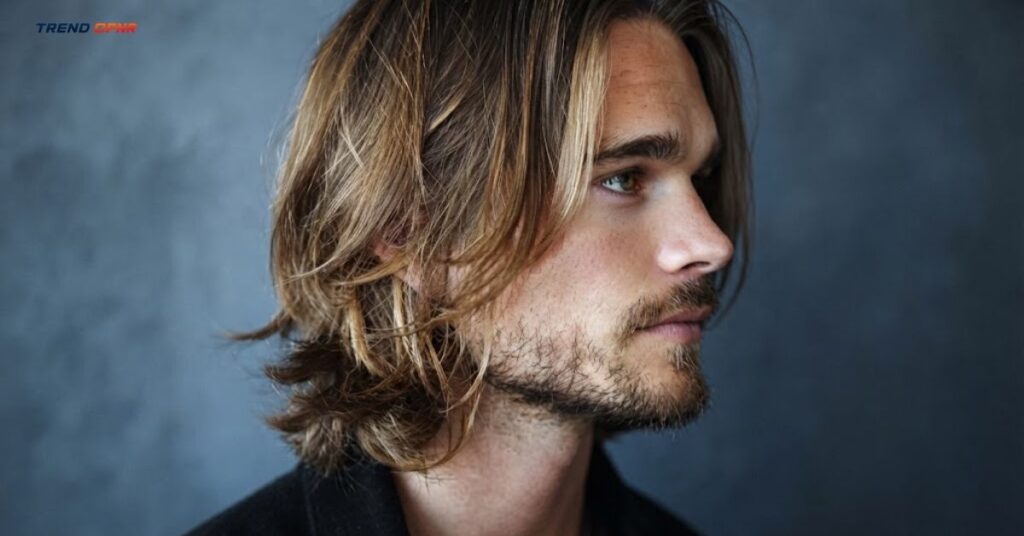
A Straight Hair Taper Fade creates a clean silhouette because straight hair naturally follows the shape of the haircut. The style can emphasize the movement of long hair without making the sides look excessively heavy.
A slick back, middle part, side part, or layered hairstyle can all work with straight hair. Lightweight products are generally useful when you want movement rather than a rigid finish.
Straight hair can also benefit from a gradual taper because the clean edges contrast naturally with the longer top.
Long Wavy Hair Taper Fade
Wavy hair naturally provides movement, so a taper can simply remove distracting bulk around the sides. The result can feel relaxed while still having a clean finish.
Loose waves and a wavy flow work especially well when the top is allowed to retain its natural texture. A small amount of styling cream can provide control without eliminating movement.
For medium-length hair or shoulder-length hair, keeping the layers connected can help create a more natural finish.
Slick Back Long Hair Taper Fade
A slick back gives the haircut a polished look without requiring the sides to become extremely short. The top can be brushed backward while the taper provides structure near the temples and neckline.
Slicked-back hair works particularly well for workplaces, special events, formal occasions, and professional environments. The style can also become a relaxed style when less product is used.
A lightweight pomade or styling cream can support the shape without creating excessive hair weight.
More Long Hair Taper Fade Haircuts
The Long Hair Taper Fade becomes more versatile when the top is customized. Instead of treating the haircut as one fixed design, consider the following variations according to hair texture, face shape, and lifestyle.
Middle Part Long Hair Taper Fade
A middle part creates symmetry while allowing long hair to fall naturally on both sides. The middle-part hairstyle can work especially well with straight hair and wavy hair.
The sides can receive a low taper or mid taper depending on how much definition is desired. Keeping the top healthy through regular conditioning helps the part fall naturally.
This style is suitable for men who want a balanced appearance without an overly sharp fade.
Side Part Long Hair Taper Fade
A side part gives long hair a more structured direction. The side-part hairstyle can look particularly polished when the taper is kept clean around the sideburns and neckline.
It is useful for workplaces, special events, and everyday occasions. A subtle taper can make the style feel classic, while a stronger taper can produce a modern appearance.
Read More: Low Taper Fade Modern Mullet Haircut: 30 Best Styles for Men in 2026
Man Bun Long Hair Taper Fade
A man bun provides a practical way to control long locks. The taper reduces visual bulk around the ears and lower sides while the remaining length can be gathered at the back.
This option can work as a workout hairstyle because the top stays away from the face. Avoid tying the man bun excessively tightly, particularly when the hair is long and heavy.
Ponytail Long Hair Taper Fade
A ponytail offers another practical option for shoulder-length hair and longer hair. The tapered sides can make the ponytail look cleaner without interfering with the length.
A ponytail can be worn low for a relaxed style or higher when greater control is needed. Straight hair, wavy hair, curly hair, and coily hair can all be adapted to this approach.
Long Hair Taper Fade Mullet
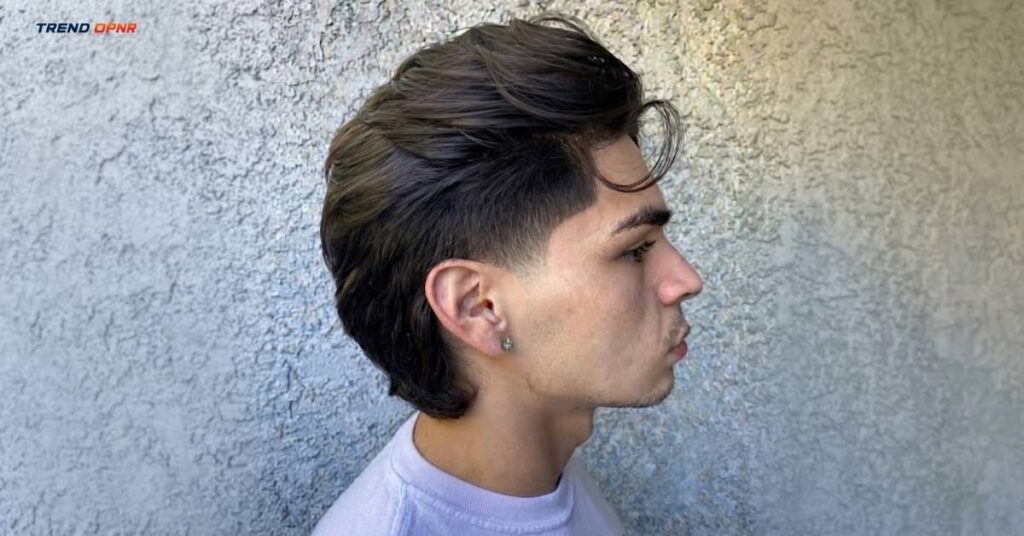
A modern mullet can combine longer length at the back with controlled tapering near the sides. The contrast creates a more fashion-forward silhouette.
A mullet can be especially effective with wavy flow, loose waves, curly hair, or thick hair. Texture can be emphasized rather than hidden.
Flow Hairstyle with Taper Fade
A flow hairstyle relies on movement. The sides receive enough tapering to prevent excessive bulk while the longer hair continues to move backward or sideways.
A flow works well when the wearer prefers minimal hair styling. Regular conditioning can keep the ends softer and help the natural texture remain visible.
Layered Long Hair Taper Fade
A layered hairstyle removes weight from strategic sections without necessarily making the overall haircut short. Layers can make thick hair easier to manage while maintaining visual hair volume.
Layered hair is particularly useful for long locks because it prevents the top from becoming one heavy block. Your barber should blend the layers into the side taper rather than creating disconnected sections.
Long Brown Hair Taper Fade
Hair color can change how texture appears, although the haircut principles remain the same. Brown hair can show movement clearly when paired with a gradual taper.
A layered hairstyle can make medium-length hair or long hair appear more dynamic. The taper should complement the color rather than become the only noticeable feature.
Long Hair Taper Fade Black Men
For Black men, the haircut can work with natural curls, coily hair, twists, braids, locs, or other textured styles. The taper can clean the temples and neckline while leaving the primary hairstyle intact.
Managing curly hair requires attention to conditioning, moisture, curl definition, and hair softness. A barber experienced with natural texture can determine the appropriate taper effect.
Hispanic Long Hair Taper Fade
A Hispanic long hair taper fade can work across straight, wavy, and thick hair. Styling options may include a middle part, slick back, layered hair, or loose waves.
The related Hispanic Mexican low taper fade is another useful reference when a wearer wants less visible tapering around the sides.
Boys Long Hair Taper Fade
For boys, the haircut can keep enough length for movement while creating a tidy outline. A low taper fade can provide a subtle haircut that works for school and everyday occasions.
Parents can ask for a natural finish when they want the haircut to grow out evenly between barber visits.
Kids Long Hair Taper Fade

A kids’ version should prioritize comfort and practicality. The barber can keep the taper low around the ears and neckline while leaving enough hair on top for natural texture.
Straight hair, wavy hair, and curly hair can all work, provided the haircut is adapted to the child’s hair density and daily hair management needs.
Medium Long Hair Taper Fade
Medium-length hair is an excellent middle ground for someone growing toward shoulder-length hair. The sides can be tapered while the top retains enough length for a textured hairstyle, side part, middle part, or loose waves.
This option is useful during hair growth because it creates an even grow-out rather than leaving the sides uncontrolled.
Long Locks Taper Fade
Long locks can remain the focal point while the barber uses a controlled taper around the lower sides. This creates a clean finish without forcing the wearer to sacrifice significant length.
The approach works especially well when hair weight becomes noticeable around the ears and neckline.
Textured Fringe Taper Fade
A textured fringe can bring movement toward the forehead while the taper keeps the lower outline neat. This is a useful option for men who prefer textured hair rather than a slick style.
The amount of fringe should be selected according to face shape and hair texture.
Natural Texture Taper Fade
Natural texture styles allow the hair to behave according to its existing curl pattern or wave pattern. Instead of forcing every strand into a fixed direction, the barber shapes the surrounding areas.
This can produce a natural look with a defined fade and clean finish.
Long Hair Taper Fade vs Mid Taper Fade
A Long Hair Taper Fade describes the overall combination of longer hair and tapered edges, while a mid taper fade describes where the taper begins.
| Long Hair Taper Fade | Mid Taper Fade |
| Emphasizes longer hair | Emphasizes taper placement |
| Can use low, mid, or high taper | Specifically uses a mid taper |
| Supports many long hairstyles | Supports short through long hairstyles |
| Focuses on retained length | Focuses on balanced side transition |
| Works with many hair textures | Especially useful for balanced proportions |
A mid taper fade can be a strong choice when you want a controlled taper effect without the stronger contrast associated with some high taper designs.
For an oval face shape, square face shape, or diamond face shape, the mid taper fade can create a balanced appearance when the top length is properly proportioned.
Long Hair Taper Fade vs High Taper Fade
The primary difference is placement. A high taper fade begins farther up the sides, while a lower taper remains closer to the ears and neckline.
| Long Hair Taper Fade | High Taper Fade |
| Can be subtle or pronounced | Usually more pronounced |
| Can use a low taper | Uses high placement |
| Can preserve more side weight | Produces greater bulk reduction |
| Often gives a natural finish | Often gives a sharper finish |
| Flexible styling | Stronger visual contrast |
A high taper is useful when you want a modern appearance and a defined fade. A lower taper is more appropriate when you want a subtle haircut with a relaxed style.
Hair density matters in both cases. Thick hair can tolerate substantial bulk reduction, while lower density may benefit from a gentler transition.
Best Face Shapes for a Long Hair Taper Fade
Face shape should influence the taper height, top length, and overall hair volume. The best haircut is not simply the most dramatic fade; it is the one that creates balanced proportions.
Oval Face
An oval face shape works with many taper fade styles. Long hair can be worn loose, layered, slicked back, or tied into a ponytail or man bun.
A mid taper fade can preserve balanced proportions while giving the sides a clean finish.
Round Face
A round face shape can benefit from controlled height on top. A middle-part hairstyle, textured hairstyle, or slick back can add visual length.
A gradual taper can prevent the sides from appearing overly wide without removing too much hair bulk.
Square Face
A square face shape naturally has stronger jaw definition. A mid taper fade can complement that structure while a side-part hairstyle or layered hair can soften the overall appearance.
A natural finish around the neckline can prevent the haircut from becoming unnecessarily severe.
Diamond Face
A diamond face shape can benefit from keeping enough visual fullness near the upper sides. A mid taper fade is often useful because it provides definition without forcing the taper too high.
The goal is to maintain hair volume where it helps balance the cheekbones.
Heart Face
A heart-shaped face can work with longer hair because the additional length can balance a wider forehead. A low taper fade or mid taper fade can keep the temples from appearing too exposed.
A side part or loose hairstyle can create a relaxed style with good visual proportion.
Oblong Face
An oblong face shape may benefit from avoiding excessive height on top. Medium-length hair, layered hair, and a low taper can help create a balanced appearance.
The barber can focus on a smooth transition rather than adding unnecessary height.
Best Hair Types for a Long Hair Taper Fade
The Long Hair Taper Fade can be adapted to different hair types, but the cutting technique should follow the natural behavior of the hair.
Straight Hair
Straight hair offers a smooth surface for a slick back, middle part, side part, or layered hairstyle. It often shows a taper effect very clearly because the strands fall predictably.
Hair styling should focus on maintaining movement rather than making the top rigid.
Wavy Hair
Wavy hair provides natural movement and a relaxed style. Loose waves and a wavy flow can be enhanced with lightweight products.
The barber should respect the natural texture instead of removing excessive hair bulk from areas that help define the waves.
Curly Hair
Curly hair benefits from a careful taper because removing side bulk can create a cleaner silhouette while preserving curls. Naturally curly hair needs special consideration of curl pattern because curls can shrink considerably after drying.
Curl definition, conditioning, and curl health should remain priorities.
Thick Hair
Thick hair has greater hair density and hair bulk, so a taper can provide meaningful bulk reduction. However, removing too much can make the transition look disconnected.
Managing thick hair is easier when the barber removes weight strategically rather than simply shortening everything.
Fine Hair
Fine hair can use a softer taper that avoids excessive removal. Layered hair and textured hair can help create the appearance of additional hair volume.
A personalized haircut should preserve density where the top needs visual fullness.
How to Ask Your Barber for a Long Hair Taper Fade

Clear communication is essential. A barber needs to know how much length you want to preserve, where you want the taper to start, how you want the neckline shaped, and how your hair behaves naturally.
A haircut consultation is especially useful when you are trying the style for the first time.
Decide How Long You Want the Top
Explain whether you want medium-length hair, shoulder-length hair, or longer hair. Tell the barber whether you want enough length for a ponytail or man bun.
The top should match your preferred styling options rather than an arbitrary measurement.
Choose the Taper Height
Discuss whether you want a low taper, mid taper, or high taper.
- Low taper: subtle and conservative
- Mid taper: balanced and versatile
- High taper: sharper and more noticeable
A low taper can suit a natural look, while a high taper may create a bold contrast.
Talk About the Neckline
Tell your barber whether you want a natural neckline, neckline taper, or sharper finish. The neckline can strongly influence how clean the haircut looks from behind.
A gradual taper generally creates a softer grow-out than a hard line.
Mention Your Hair Texture
Explain whether you have straight hair, wavy hair, curly hair, coily hair, or thick hair. Hair texture affects blending, bulk reduction, curl pattern, and the final silhouette.
Mention whether you prefer natural texture or a controlled styling finish.
Bring Reference Photos
Reference photos can communicate the desired taper height and top length more clearly than a haircut name alone.
Show photos from the front, side, and back when possible. This gives the barber a better understanding of the desired sides, back, temples, sideburns, ears, and neckline.
How to Style a Long Hair Taper Fade
The Long Hair Taper Fade can support several hair styling routines. The best method depends on hair texture, hair volume, and how much time you have available.
Natural Everyday Style
Start with clean, conditioned hair and allow it to remain slightly damp. Apply a lightweight styling cream and arrange the top according to your natural texture.
Air drying can work particularly well for loose waves and naturally curly hair. The objective is a natural finish rather than excessive control.
Slick Back Style
Use a brush or comb while blow-drying the top backward. Apply a moderate amount of styling product after the hair is mostly dry.
Slicked-back hair should retain some movement if you want a modern appearance rather than an overly rigid finish.
Textured Look
Apply a lightweight texture product to damp or nearly dry hair. Work it through with your fingers rather than flattening everything with a comb.
Textured hair works well for casual settings and can become a polished look when the sides remain carefully tapered.
Man Bun
Gather the long hair toward the back and secure it comfortably. Do not make the bun excessively tight.
A man bun works particularly well when the sides and neckline receive a clean finish.
Curly Hair Styling
For curly hair, apply curl cream to damp hair and distribute it gently. Use air drying or a hair diffuser to preserve curl definition.
Conditioning, frizz control, dry curls prevention, and curl health are more important than forcing curls into a rigid shape.
Middle-Part Hairstyle
Create a center part while the hair is damp. Allow both sides to fall naturally, then use a small amount of product if additional control is needed.
This works especially well with straight hair, wavy hair, and medium-length hair.
Side-Part Hairstyle
Create a natural side division and direct the longer section across the head. Use lightweight styling cream when you want movement.
This hairstyle can create a polished look for workplaces without requiring excessive product.
Ponytail Styling
Brush or finger-comb the longer hair backward and secure it loosely. The taper keeps the surrounding edges neat while the ponytail controls the main length.
This is a practical hairstyle for workouts and active days.
Best Hair Products for a Long Hair Taper Fade
Product selection should follow your hair type rather than the haircut name. The right product should support hair softness, hair volume, curl definition, or hold without creating unnecessary buildup.
Sea Salt Spray
Sea salt spray can add texture and movement to straight hair and wavy hair. Use it sparingly if your hair tends to become dry.
Styling Cream
Styling cream provides flexible control and can work well for a loose hairstyle, wavy flow, or natural texture styles.
Pomade
Pomade is useful for slicked-back hair and structured styles. Choose a lighter formula if you want movement rather than a rigid finish.
Hair Clay
Hair clay can create texture and moderate hold. It is useful for textured hair when you want a matte appearance.
Curl Cream
Curl cream supports curl definition in curly hair and naturally curly hair. It can help reduce frizz while maintaining softness.
Leave-In Conditioner
Long hair can become dry toward the ends. A leave-in conditioner helps support conditioning, hair softness, and manageable long locks.
Sulfate-Free Shampoo
A sulfate-free shampoo can be useful for people who find stronger cleansing products drying. Washing frequency should be based on scalp needs and hair behavior.
Conditioner
Regular conditioner supports hydration and helps make long hair easier to detangle. Conditioning is especially useful for curly hair and dry curls.
How to Maintain a Long Hair Taper Fade
Hair maintenance has two separate parts: preserving the taper and preserving the health of the longer hair.
Trim the Taper Regularly
Taper maintenance often requires barber visits every few weeks. The exact interval depends on hair growth and how sharp you want the edges.
Touch-ups can restore the clean finish around the temples, ears, sideburns, and neckline.
Wash Your Hair Properly
Avoid automatically washing long hair every day if your hair does not need it. Excessive cleansing can affect natural oils and hair softness.
Curly hair may require a different schedule from straight hair because its natural texture can make dryness more noticeable.
Use Conditioner
Regular conditioning helps long hair remain manageable. It is especially useful for reducing tangling and supporting curl health.
Men with long curls may need more consistent conditioning than men with short, straight hair.
Brush Gently
Use a suitable comb or brush and avoid aggressive pulling. Curly hair is often easier to detangle when damp and conditioned.
Gentle hair management can reduce breakage and protect long locks during hair growth.
Protect Hair From Heat
Use a heat protectant when blow-drying or using heated styling tools. Excessive heat can contribute to dry curls, roughness, and reduced hair softness.
Air drying is an alternative when your schedule allows it.
Manage Growing Out
Growing out a taper can be easier when the transition is gradual. A natural grow-out allows the edges to soften rather than creating a sudden change.
An even grow-out is especially useful for men who want fewer barber visits.
Manage Thick Hair
Managing thick hair often means controlling hair bulk rather than simply reducing length. Strategic layers and a carefully selected taper can keep hair volume without allowing the sides to become too heavy.
Manage Curly Hair
Managing curly hair requires attention to curl pattern, moisture, conditioning, and styling. Avoid treating curly hair like straight hair when deciding how much to remove.
Natural curls should remain the main feature if that is the desired appearance.
Is a Long Hair Taper Fade Worth It?
For many men, the answer is yes because the cut provides a useful balance between length and grooming.
Pros
- Works with straight hair, wavy hair, curly hair, coily hair, and thick hair
- Preserves long hair while improving the clean appearance
- Supports multiple hair styling options
- Can create a balanced appearance
- Works for everyday occasions and special events
- Can suit workplaces and casual settings
- Offers natural grow-out
- Allows low, mid, or high taper placement
- Can be adapted to different face shapes
- Supports a work hairstyle and workout hairstyle
- Can reduce side bulk
- Can complement a long hairstyle
- Can be a low-maintenance haircut when the taper is kept subtle
- Can become an easy-to-style haircut with the right routine
- Gives room for a personalized haircut
Cons
- Long hair still requires hair maintenance
- Taper maintenance requires periodic barber visits
- Thick hair may require additional bulk reduction
- Curly hair requires consistent conditioning and curl care
- Some styling options require product
- High taper styles may require more frequent touch-ups
- Growing out a major change can take time
The biggest advantage is hairstyle versatility. You can maintain a natural look on ordinary days and create a polished look for formal situations without changing the underlying haircut.
Leslie Lopez JLo sister
Leslie Lopez is sometimes searched in connection with Jennifer Lopez, which creates confusion because the two names refer to different people. Search results can combine information about television personalities, journalists, and members of Jennifer Lopez’s family.
For accurate identification, readers should distinguish Leslie Lopez the meteorologist from Jennifer Lopez’s family members. This is important when researching age, career, marriage, weather broadcasting, or biography details.
Leslie Lopez age searches likewise require context because names can belong to more than one public figure. A reliable biography should identify the correct Leslie Lopez before presenting personal details.
Leslie Lopez age
Questions about Leslie Lopez age commonly appear alongside searches about her television career and weather reporting. Public biographies can sometimes provide different dates or omit a complete birth date.
When researching a public figure, it is better to use established biographical sources rather than assuming that every search result refers to the same person. That approach also reduces confusion with unrelated Leslie Lopez profiles.
The same distinction matters when looking up Leslie Lopez meteorologist wikipedia, because a search phrase does not necessarily correspond to an official Wikipedia biography. Search intent can combine several separate queries into one phrase.
Leslie Lopez meteorologist wikipedia
Leslie Lopez is known publicly as a meteorologist and television weather personality, but readers should verify the specific broadcaster they mean before relying on biographical claims.
A search for Leslie Lopez meteorologist wikipedia may therefore lead to mixed results. Not every page using the name is an authoritative biography, and Wikipedia availability can change over time.
For questions about Leslie Lopez ABC7 husband, readers should likewise distinguish the meteorologist from other people with the same name. Relationship information should be taken from reliable public sources rather than social-media speculation.
Is Leslie Lopez still married
Searches asking whether Leslie Lopez still married concern her personal life rather than her meteorological work. Public relationship information can become outdated, so a current answer requires a reliable, recent source.
The phrase Leslie Lopez ABC7 husband is also used by people searching for relationship details about the television meteorologist. Readers should avoid treating old articles as proof of a current marital status.
Leslie Lopez weather searches are generally more directly connected to her professional career. Her broadcasting work is the more useful context when distinguishing her from unrelated people with the same name.
Leslie Lopez ABC7 husband
The phrase Leslie Lopez ABC7 husband is a biographical search query connected to the meteorologist’s television career. Personal relationship information should be handled carefully because public figures may not keep every family detail continuously updated.
For reliable research, readers should compare current broadcaster biographies and established publications rather than relying on unsourced claims. This is particularly important when multiple people share a common name.
Leslie Lopez weather remains a stronger identifier for the television personality because it connects the name with her professional field. Searches about her height, career, age, and marriage should use that same identifying context.
Leslie Lopez weather
Leslie Lopez weather is associated with meteorological broadcasting and television weather coverage. Weather-related searches are therefore more useful for identifying the professional Leslie Lopez than isolated searches based only on her name.
A biography should distinguish professional facts from personal details. Career information, broadcasting roles, and station affiliations can change, so current sources are preferable when accuracy matters.
The same principle applies to Leslie Lopez height. Height claims repeated across low-quality biography pages are not necessarily reliable, particularly when no authoritative source confirms the measurement.
Leslie Lopez height
Leslie Lopez height is a common celebrity-information search, but height figures online can vary because many biography sites repeat unsourced numbers.
Readers should treat an exact height as unconfirmed unless it comes from a reliable profile or direct public statement. The same caution applies to claims about weight, age, or other personal measurements.
Leslie Lopez height and weight is another combined query that appears on biography websites. Such pages may provide estimates rather than verified measurements, so they should not automatically be treated as factual.
Leslie lopez height and weight
Leslie Lopez height and weight searches often combine two personal measurements into a single query. Reliable sources do not always publish weight, and body weight can naturally change over time.
For that reason, it is better to separate confirmed biographical information from estimates. Avoid presenting an unverified number as an established fact.
When the search concerns the meteorologist, professional identifiers such as television weather work are more useful than personal measurements. This also helps prevent confusion with other people named Leslie Lopez.
FAQs About Long Hair Taper Fade
Is Leslie Lopez related to Jennifer?
There is no reason to assume that every person named Leslie Lopez is related to Jennifer Lopez. The names alone do not establish a family relationship.
What does Jennifer Lopez’ sister Leslie do for a living?
This question can be confusing because Jennifer Lopez’s family members and the television meteorologist Leslie Lopez are different people. The meteorologist is associated with broadcast weather work, while family-related searches may refer to another Leslie.
What nationality is Leslie Lopez?
Nationality depends on which Leslie Lopez the question refers to. A shared name is not enough to establish nationality, ethnicity, citizenship, or family background.
How tall is Leslie Lopez?
Online height claims about Leslie Lopez are inconsistent and may not be officially verified. Unless a trustworthy biography or direct source confirms a measurement, an exact figure should be treated cautiously.
Where was Leslie Lopez born?
The answer depends on which Leslie Lopez is being discussed. Public biographies should be checked for the specific person, particularly when the query concerns the meteorologist.
Final Thoughts
A Long Hair Taper Fade offers a strong combination of retained length, controlled sides, and flexible hair styling. Whether you prefer a slick back, middle part, side part, long curls, ponytail, man bun, wavy flow, or layered hairstyle, the taper can provide a clean finish without eliminating the character of long hair.
The most successful result comes from matching the taper to your face shape, hair texture, hair density, hair volume, and lifestyle. A low taper can provide a subtle haircut, a mid taper can create balanced proportions, and a high taper can deliver stronger contrast. Regular conditioning, sensible hair maintenance, and periodic barber visits help keep the finished style looking intentional as your hair grows.

