
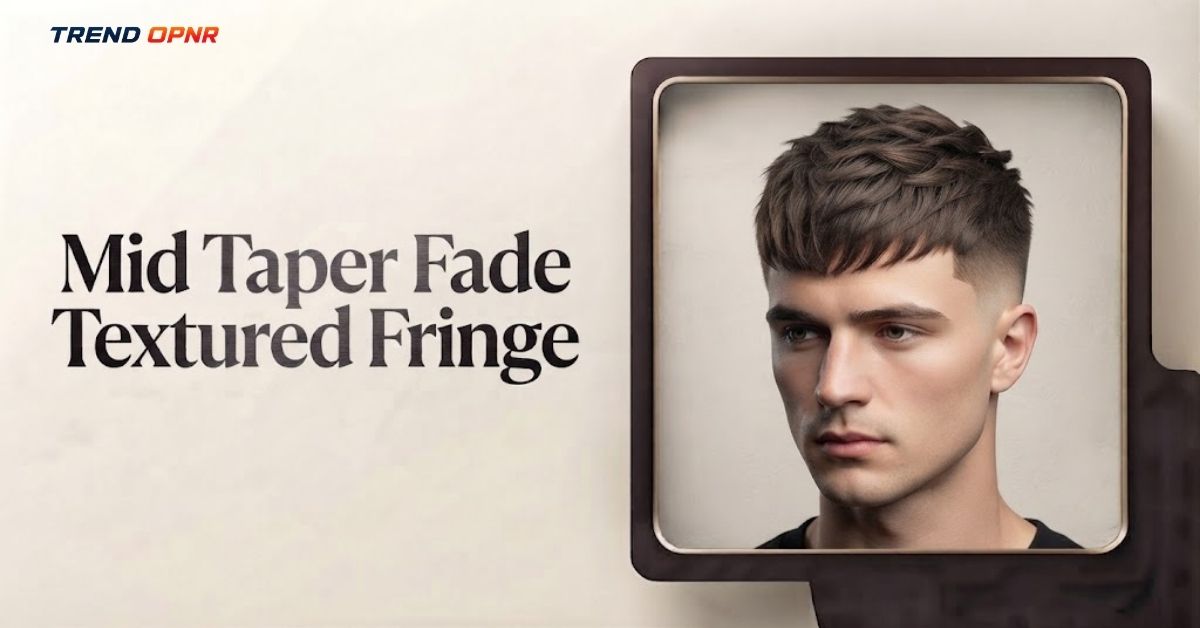

A Mid taper fade textured fringe combines a clean taper around the temples and neckline with a longer, broken fringe that falls naturally toward the forehead. The result is a modern haircut with short sides, a textured top, and enough length in front to create movement.
The Mid taper fade textured fringe is especially useful for men who want a stylish haircut without committing to a full fade. Hair texture, density, front length, and styling habits all affect the final result. This guide explains what the cut is, who it suits, how it compares with similar styles, what to tell your barber, and how to maintain it.
Article Information
| Feature | Details |
| Haircut type | Mid taper with textured fringe |
| Main feature | Short blended sides with a longer textured top |
| Best hair types | Wavy, thick, curly, and textured hair |
| Works on | Straight hair with suitable length and styling |
| Styling level | Low to moderate |
| Main top style | Messy or separated fringe |
| Taper position | Around the temple |
| Finish | Skin or soft shadow |
| Best for | Casual, modern, and professional looks |
The Mid taper fade textured fringe keeps the sides controlled while allowing the front to remain longer. This balance makes it a flexible men’s haircut for different personal styles.
The quick version
- The Mid taper fade textured fringe starts its taper around the temple while keeping more weight through the side panel.
- The fringe remains longer and is point-cut to create natural separation.
- Thick, wavy, and curly hair usually creates texture more easily.
- Straight or fine hair can work when enough length and texture are preserved.
- The taper height and the shortest finish are separate decisions.
- A shadow finish generally grows out more softly than a skin finish.
- The fringe can be styled forward, slightly sideways, messy, or loosely tousled.
What is a mid taper fade with a textured fringe?
The Mid taper fade textured fringe is made from two main elements. The mid taper controls the sides, sideburns, and neckline, while the textured fringe provides length and movement across the front. Instead of having a perfectly straight fringe, the top is cut into uneven sections.
A mid taper fade normally begins around the temple area. Unlike a broad mid fade haircut, it does not remove as much weight from the entire side panel. This leaves a more natural shape around the head while still giving the taper fade haircut a clean appearance.
The textured fringe is usually created with point cutting or layering. This technique produces separated pieces rather than a solid block of hair. When combined with textured hair, it creates a relaxed and contemporary hairstyle.
What makes the taper “mid”?
The word “mid” describes the position where the taper begins rather than how short the haircut becomes. A low taper starts closer to the ear, while a high taper begins higher on the head. The mid position sits between those two placements, usually around the temple.
The shortest part can still be adjusted separately. You can request a skin finish, a very short guard, or a soft shadow. This is important when asking for a barber haircut, because “mid” alone does not tell your barber how close you want the sides.
What makes the fringe “textured”?
A textured fringe is not simply a long fringe. The hair is cut into separated sections so the front does not fall as one flat line. Point cutting, light layering, and controlled removal of weight can create this effect.
A textured fringe haircut can look messy without actually being unplanned. The uneven pieces give the fringe haircut a natural appearance, while the taper provides the clean structure underneath.
Who does a mid taper fade textured fringe suit?

A Mid taper fade textured fringe can suit many people because the proportions can be changed according to hair type, density, and personal preference. There is no single face shape that automatically qualifies or disqualifies someone from wearing it.
The biggest consideration is whether the hair has enough front length to create a fringe. A longer top gives the barber more room to create layers, while short sides keep the overall haircut balanced.
Which hair types work best?
Thick and wavy hair is particularly suitable because natural movement already creates separation. A wavy hair fringe can look textured with very little product, while thick hair can maintain volume after the sides have been tapered.
Curly and coily hair can also work well. The fringe will usually follow the natural curl pattern rather than appearing completely straight. This creates a more individual version of the modern haircut.
Straight hair is also possible, but it normally needs more deliberate styling. Straight strands can fall flat, so a barber may preserve extra length and use controlled texturizing to create a messy fringe.
Fine hair requires more care. Excessive texturizing can make the top look thinner, so a fine hair styling approach should focus on retaining enough weight and using lightweight products.
Which face and head shapes suit it?
The Mid taper fade textured fringe is adaptable to oval, round, square, and heart-shaped faces. Instead of following a strict face-shape chart, the barber can change the fringe length and side volume to improve the overall balance.
An oval face haircut can usually handle a variety of fringe lengths. For a round face hairstyle, slightly more height and controlled texture on top can prevent the haircut from appearing too wide.
A square face haircut can work with a softer fringe, while a heart-shaped face hairstyle can benefit from enough front fullness to balance the upper and lower parts of the face.
How much length and density do you need?
There is no universal measurement because hair thickness and natural movement vary. The front should be long enough to fall forward after the fringe is textured.
A thick hair haircut can remove more internal weight without immediately looking thin. Fine hair needs a more conservative approach. Keeping a little extra length can make the textured top appear fuller.
Who should modify or skip this cut?
Some people may need a modified version rather than abandoning the haircut completely.
- Strong cowlick: Work with the natural growth direction instead of forcing the fringe against it.
- Very fine hair: Keep additional length and avoid excessive texturizing.
- Very little styling time: Choose a shorter fringe or a simple textured crop.
- Sensitive skin: Request a shadow taper instead of a skin finish.
- Very thick hair: Ask for controlled weight removal so the top does not become bulky.
How does it compare with similar haircuts?
The Mid taper fade textured fringe can look similar to several popular styles, but the differences usually come from taper placement, side coverage, top length, and fringe shape.
Mid taper vs low taper with a textured fringe

A low taper begins closer to the ears, making it more subtle around the sides. A mid taper begins higher, so the transition is easier to see from the front.
The top can remain almost identical in both styles. If you want a quieter and more conservative modern taper hairstyle, a low taper may provide that appearance. A mid taper gives a little more visible contrast.
Mid taper textured fringe vs mid fade, French crop, blowout taper, and Edgar
| Haircut | Main features | Suitable when |
| Mid taper with textured fringe | Tapered temple and neckline with separated fringe | You want texture without removing too much side weight |
| Mid fade | Broader fade through the side panel | You prefer stronger contrast |
| French crop | Short controlled fringe | You want a low-maintenance haircut |
| Blowout taper | Lift and volume through the top | You prefer height and fullness |
| Edgar | Shorter top with a defined straight fringe | You want a sharper front line |
The main difference between a textured crop with fringe and an Edgar is the front edge. A choppy fringe haircut uses irregular pieces, while an Edgar normally emphasizes a more defined straight line.
A mid taper fade fringe also differs from a traditional mid fade because the taper keeps more of the side structure intact. A textured fringe fade can therefore look softer and less aggressive.
Read More: Textured Fringe Low Taper Best Cuts for Every Hair Type
How is the haircut created?
A barber normally works from the bottom upward. The neckline and shortest areas are established first, then the blend is developed around the temple. After the sides are finished, attention moves to the top and fringe.
The top should not be cut too early because its final length depends partly on how much contrast the taper creates. The goal is to create a clean fade while leaving enough hair for a textured haircut for men.
How is the mid taper blended?
A typical barber fade technique uses several guard lengths to gradually reduce the visible difference between sections. The barber may start very short around the neckline, move through intermediate guards, and then blend the transitions.
The exact guard numbers can change according to hair density and the desired finish. The important point is that the blend should move gradually from the shortest area into the longer side panel.
A clean fade should not have obvious horizontal lines. The sides should transition smoothly while maintaining enough weight to support the overall shape.
How is the fringe layered and texturized?
The barber can use point cutting to break up the top. Instead of cutting directly across the hair, the scissors are used into the section to remove selected weight.
This creates the separated appearance associated with a textured fringe haircut. The result should have natural texture rather than random gaps.
For a messy textured fringe, the barber may leave different lengths throughout the front. A layered fringe can provide more movement, while a tousled fringe can create a softer casual finish.
How do you ask a barber for a mid taper fade textured fringe?
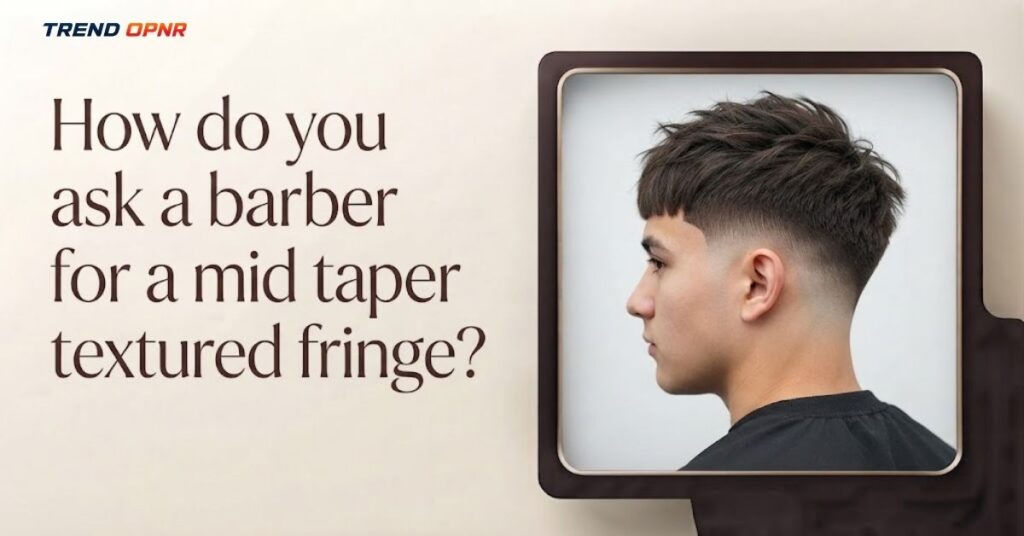
When asking for a Mid taper fade textured fringe, do not rely on the haircut name alone. Explain the four important details: taper height, shortest finish, top length, and fringe texture.
A useful barber request is:
“I want a mid taper around the temple, keep the top longer, and give me a textured fringe that falls forward. Keep the sides blended but don’t remove too much weight.”
What exactly should you tell your barber?
- Taper position: Ask for the taper around the temple.
- Shortest finish: Choose skin, very short, or shadow.
- Top length: Keep enough length for the fringe to fall forward.
- Texture: Explain whether you want subtle or heavy separation.
- Fringe direction: Decide whether it should fall straight, slightly sideways, or loosely.
- Daily routine: Tell your barber whether you use products or prefer natural styling.
Knowing how to ask barber for mid taper fade details can prevent misunderstandings. The phrase mid taper fringe haircut describes the general idea, but the exact finish depends on your hair.
What should your reference photos show?
Bring photos from the front, side, and back. The front shows the fringe shape, the side shows taper placement, and the back helps the barber understand the neckline.
Choose references with a similar hair type whenever possible. A straight hair reference may not show how the same haircut behaves on curly hair.
It is also useful to show one picture of what you do not want. This makes the consultation more specific and can prevent your barber from assuming you want a completely different taper fade haircut.
How do you style a mid taper fade textured fringe at home?
Styling a Mid taper fade textured fringe does not have to take a long time. Start with clean hair, allow it to become partly dry, and direct the fringe toward the position you want.
For a natural finish, use your fingers instead of creating a perfectly combed shape. A small amount of product can enhance natural texture without making the top look heavy.
The step-by-step styling routine
- Wash and condition: Clean hair is easier to shape.
- Partly dry the hair: Avoid aggressive rubbing with a towel.
- Set the direction: Push the fringe forward or toward the preferred angle.
- Dry gently: Use moderate heat if you need a dryer.
- Apply product: Start with a small amount.
- Separate the pieces: Use your fingers to create definition.
- Finish naturally: Avoid overworking the hair.
The best hair styling products depend on your texture. A sea salt spray can add light movement, while matte clay for textured hair can provide stronger separation.
For fine hair, use lighter products so the fringe does not collapse. For thick hair, a small amount of matte paste or clay can help control excess volume.
Which products work for straight, wavy, curly, and fine hair?
| Hair type | Common issue | Useful product category |
| Fine or straight | Fringe falls flat | Lightweight texture spray |
| Thick or wavy | Too much weight | Light cream or matte paste |
| Curly or coily | Curl definition gets lost | Curl cream |
| Medium textured | Needs separation | Matte clay or styling paste |
A straight hair fringe usually needs more help from styling products than a naturally wavy fringe. A wavy hair fringe already contains movement, so too much product can make it heavy.
How do you fix a flat, puffy, or stringy fringe?
A flat fringe usually means there is too much product, insufficient length, or not enough root direction. Try using less product and drying the hair forward.
A puffy fringe may need better directional drying. Slightly dampen it, push it into position, and let it dry naturally or with gentle airflow.
A stringy fringe usually has too much product concentrated in one area. Wash or dampen the hair and restart with a smaller amount.
How do you maintain it and let it grow out cleanly?
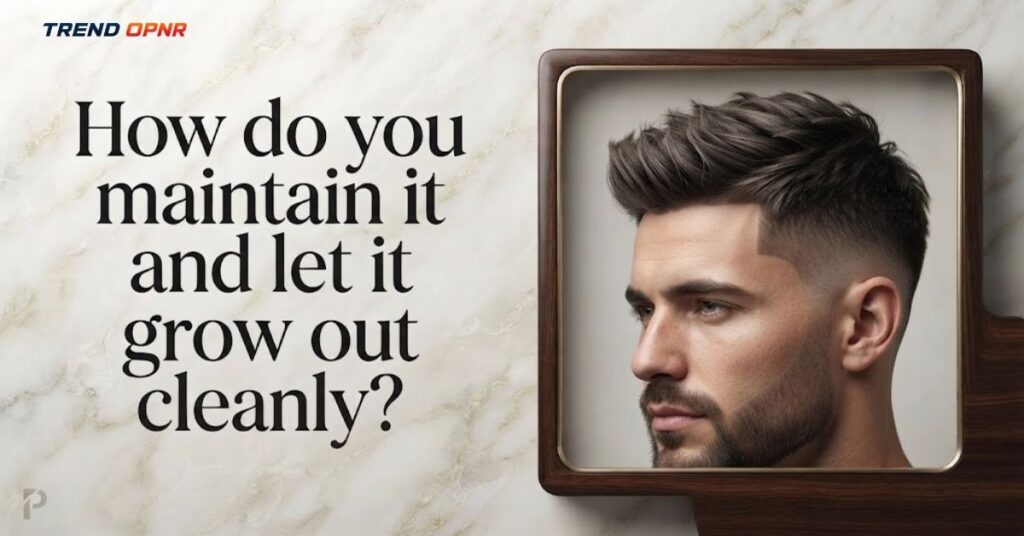
The Mid taper fade textured fringe has two different maintenance schedules. The taper loses its sharpness as the sides grow, while the fringe simply becomes longer.
This means taper fade maintenance is usually needed before the top requires a major haircut. A person who wants a very clean fade may visit the barber more frequently than someone who prefers a softer grow-out.
How fast does a taper actually grow out?
Hair generally grows gradually rather than instantly, so a fresh taper becomes softer over time. The exact rate differs between individuals, but the contrast around the temple becomes less noticeable as the short sections grow.
A tapered neckline also changes as the hair grows. Regular cleanup can keep the back looking neat without requiring a complete haircut every time.
If you want lower haircut upkeep, a shadow finish can be easier to manage than a skin finish. The low-maintenance haircut approach is particularly useful for people who do not want weekly barber appointments.
How do you keep the fringe healthy between cuts?
Avoid aggressive towel rubbing and unnecessary brushing. Use conditioner regularly, especially if your hair is dry or naturally textured.
Heat styling should also be controlled. If you use a dryer, keep the heat moderate and avoid holding it against the same section for too long.
Good hair styling habits help preserve the shape of the fringe and prevent the textured top from becoming dry or difficult to manage.
What if close cutting causes razor bumps or irritation?
If a very close taper repeatedly causes irritation, ask for a shadow finish. A shadow taper leaves a small amount of hair instead of taking the shortest area completely down to skin.
People with coarse or curly hair may be more likely to experience irritation after extremely close cutting. In that situation, a slightly softer finish can still provide a polished professional fringe haircut without requiring a skin-close base.
High taper
A high taper moves the blend higher toward or above the temple. It creates stronger contrast between the top and sides while keeping the fringe as the main feature.
For people who want a more noticeable version of the contemporary hairstyle, a high taper can make the textured top appear more prominent. It generally gives a sharper visual separation than a mid taper.
Textured Fringe high taper
A textured fringe high taper combines a higher blend with a broken, forward fringe. The higher sides make the top appear fuller and more dominant.
The style can work particularly well with thick or wavy hair. A trendy hairstyle like this usually benefits from keeping enough length in the front so the fringe does not lose its movement.
Textured fringe low taper
A low taper keeps the blend closer to the ear and creates a softer transition. It is useful for someone who likes the textured fringe idea but wants less contrast around the sides.
The top can remain long, layered, and messy while the edges stay subtle. This version can also be easier to grow out between appointments.
Mid taper black
A Mid taper fade textured fringe can be adapted to Black hair by working with the natural density and texture rather than trying to force the hair into a straight shape.
Curls, coils, waves, twists, and other textured top styles can all be paired with the taper. The barber should preserve the natural pattern while creating clean, blended sides around the temple and neckline.
High taper fade
A high taper fade places the blend higher than a standard mid taper. This increases the visible contrast between the short sides and the longer top.
If you want your modern haircut to have a stronger edge, a high taper can make the top appear more prominent. The final result still depends on how much hair remains above the blend.
Mid taper blowout
A mid taper blowout focuses on volume rather than forward fringe movement. The hair is lifted and directed outward or upward, creating a fuller silhouette.
A textured fringe can also be combined with a blowout by directing part of the top forward. This creates a casual textured hairstyle with volume behind the fringe and cleaner edges around the sides.
FAQ’s
What fade to get with textured fringe?
A mid taper, low taper, or high taper can work with a textured fringe. The mid option gives moderate contrast while keeping noticeable weight through the sides.
Is mid-fade haram in Islam?
Views on haircut rules can differ among Islamic scholars and schools of thought. If this is important for you, ask a trusted qualified local scholar about the specific haircut and religious ruling you follow.
Why does Gen Z like the middle part?
The middle part became popular because it offers a relaxed, adaptable appearance and works across several hair textures. It also fits the broader revival of layered and textured hairstyles.
Should I get a mid fade or taper?
A mid fade removes more hair across the side area, while a taper keeps more of the natural side structure. Choose according to how much contrast and side volume you want.
What is a no. 1 haircut?
A number 1 usually refers to using a clipper guard that leaves approximately 1/8 inch of hair. The exact result can vary slightly between clippers and techniques.
What to do before your barber appointment
Before getting a Mid taper fade textured fringe, prepare a few clear reference photos. Try to find examples with a similar hair texture and density.
- Save front, side, and back photos.
- Decide whether you want skin or shadow.
- Know approximately how much length you want on top.
- Explain how you normally style your hair.
- Tell the barber if you prefer a messy or controlled finish.
- Mention any cowlicks or difficult growth patterns.
- Ask the barber to leave the front longer if you are unsure.
A good consultation can make the difference between a haircut that looks good in a photo and one that actually works with your own hair. Starting slightly longer is usually safer because the barber can remove more length later.
Conclusion
The Mid taper fade textured fringe combines structured edges with a relaxed, textured top. It works across several hair types, including straight, wavy, thick, curly, and coily hair, provided the fringe has enough length and the texture is adjusted correctly.
The most important part is communication. Tell your barber exactly where you want the taper, how short the finish should be, how much length you want on top, and how textured you want the fringe. With the right proportions and simple fringe styling tips, this men’s haircut can become an easy and versatile everyday style.

