


A Mid Taper Haircut is one of the most adaptable men’s haircut choices because it creates a controlled fade gradient without taking the sides excessively high. The result is a clean silhouette that can be paired with short hair, medium-length hair, long hair, curls, waves, coils, or a polished textured top.
What makes the style especially useful is its balance. A Mid Taper Haircut gives more visual contrast than a low taper while remaining less aggressive than a high taper fade. With the right hair length, face shape, neckline, and styling approach, it can work in an office, at a formal event, during a casual weekend, or as part of a fashion-forward look.
This guide covers the structure of the cut, 47 style variations, face shape recommendations, hair-type advice, barber instructions, styling products, maintenance, and five frequently asked questions.
What Is a Mid Taper Fade and Who Should Get One?
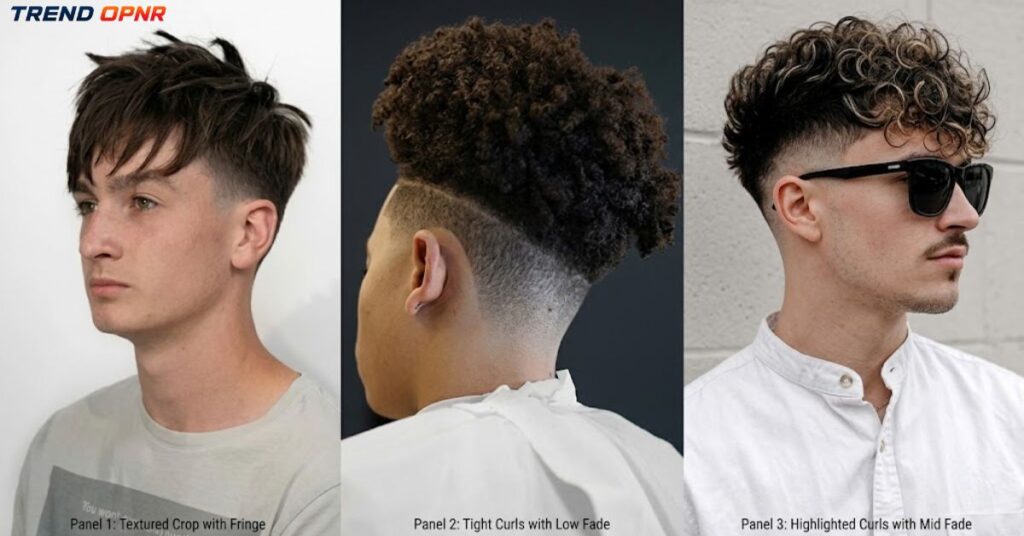
A Mid Taper Haircut gradually reduces length around the temple area, sides, sideburns, and neckline while preserving more length through the upper sides and top. Unlike a traditional all-over fade, the transition is concentrated around specific zones rather than removing a large amount of hair from the entire side panel.
It is a strong option for men who want a visible hair transition but still want the haircut to retain a natural shape. The amount of skin exposure can be adjusted, and the barber can finish the neckline as tapered, rounded, or square depending on the desired silhouette.
KEY POINTS:
- The taper generally begins around the middle of the side profile rather than directly above the ear.
- The top can remain short, medium, or long.
- Straight hair makes the fade gradient especially visible.
- Curly, wavy, and coily hair can use the taper to reduce side bulk.
- A Mid Taper Haircut can be adapted to professional or casual styling.
- A Mid Taper Haircut can be finished with a skin fade or a softer shadow fade.
- Reference photos from the front, side, and back help a barber reproduce the intended shape.
- Maintenance depends on hair growth, fade height, hairline growth, and how sharp the wearer wants the edges.
What is a mid-taper?
A Mid Taper Haircut is a taper placed around the middle section of the sides rather than at the lowest or highest possible point. The longer upper section gradually becomes shorter as it approaches the ear, sideburn, and neckline.
The key distinction is that a taper concentrates the shortening around the perimeter. A fade haircut can involve a broader section of the side panel, while a taper haircut can preserve more of the natural head shape.
Mid Taper vs Medium Taper
The terms medium taper, medium taper fade, and mid taper are frequently used to describe similar placements. The exact terminology varies between barbershops, regions, and individual barbers.
If precision matters, describe the location rather than relying only on the name. Tell the barber where you want the fade height, how much skin exposure you want, and how much top length should remain.
Where the Mid Taper Sits on the Fade Spectrum
- Low Taper Fade → begins closer to the ear and lower side area.
- Mid Taper Fade → begins around the middle side or temple region.
- High Taper Fade → begins substantially higher and creates stronger contrast.
A Mid Taper Haircut generally occupies the middle ground. It provides more definition than a low taper while preserving more of the head’s natural shape than many high taper variations.
Key Characteristics of a Mid Taper Fade
- Fade height: The starting point sits around the temple or mid-sides.
- Blending: The hair moves through progressively shorter zones.
- Top length: The top can range from clipper-short to several inches long.
- Skin exposure: The bottom can be left as shadow, stubble, or taken down to skin.
- Contrast: The result can be subtle, moderate, or bold depending on the clipper work.
- Neckline: A tapered neckline gives the softest finish, while rounded and square options create more visible shape.
A barber may use a clipper lever, guards, clipper-over-comb work, and detail trimmers to create the hair blending. The objective is a smooth transition rather than an obvious weight line.
Mid Taper vs. Mid Fade: Are They Different?
The terminology can overlap, but the technical intention can differ. A mid fade usually describes a fade beginning around the middle of the side panel, while a taper often concentrates the transition more specifically around the temples, sideburns, and neckline.
A Mid Taper Haircut can therefore look softer than a full mid fade. If you want visible scalp, say that you want a mid skin fade. If you prefer some shadow, tell the barber to preserve a darker lower section.
What Does a Mid Taper Look Like?
The Visual Signature of a Mid Taper Fade
A Mid Taper Haircut has three broad visual zones: the longer top, the transition area, and the shorter perimeter. The transition should appear gradual rather than abrupt.
From the front, the style frames the forehead and temples. From the side profile, the taper creates a controlled contour around the ear. From the back, the hair follows the natural curve of the occipital bone before becoming shorter around the neckline.
Front View: What You See First
The front view depends heavily on the chosen top style.
- A comb over creates a polished, professional appearance.
- A textured crop creates separation and a matte finish.
- A quiff adds height and volume.
- A fringe creates forward movement.
- A buzz cut emphasizes facial structure.
- Curly hair creates natural volume above the taper.
The hairline should complement the haircut rather than overpower it. Excessively sharp edging can make a natural hairstyle look artificial, while moderate cleanup creates a cleaner appearance.
Side Profile: The Fade Gradient
The side profile is where the fade height becomes most obvious. The upper side remains longer, the mid-length zone acts as the transition, and the lower side becomes progressively shorter.
A skilled barber avoids a visible weight line. Hair blending should follow the head shape, especially around the temple area, ear, and occipital bone.
Sideburns also matter. They can be blended directly into the taper, left slightly fuller, or connected into facial hair for a stronger visual contour.
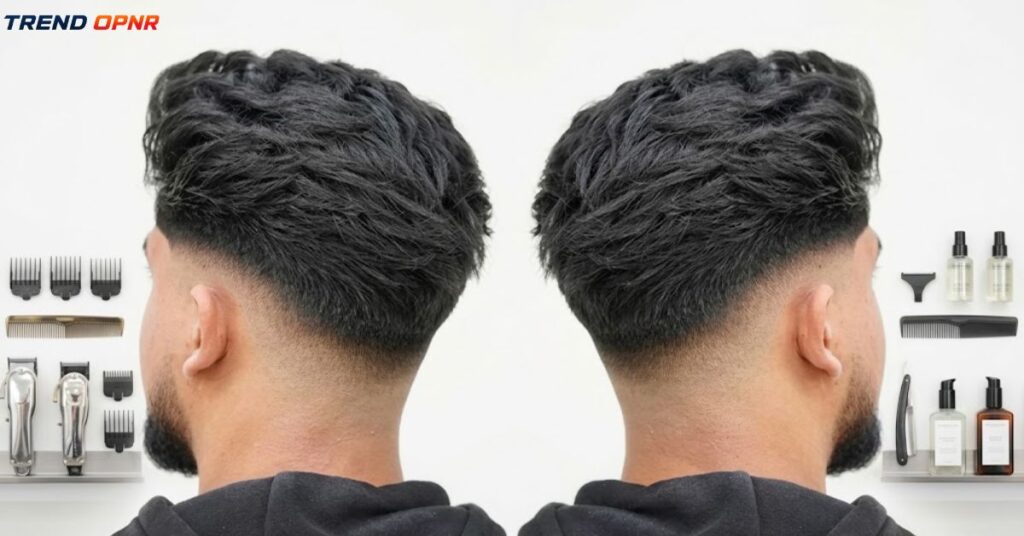
Back View: Neckline Treatment
At the back, the crown usually retains the majority of the top length. The taper then follows the natural head curve toward the neckline.
A tapered neckline creates the softest appearance. A rounded neckline provides a defined curved outline, while a square neckline creates a stronger geometric finish.
The best option depends on hair growth. A neckline that naturally grows downward may benefit from a tapered finish because it avoids creating an obvious hard boundary.
360° Summary: All-Around Coverage
A good Mid Taper Haircut should look intentional from every angle rather than only from the front. The temple, sideburn, lower side, occipital region, and neckline should work as one connected hair transition.
Think of the haircut as a contour rather than a single line. The longer zone creates the silhouette, the mid-length zone creates the fade gradient, and the short zone provides the clean perimeter.
Mid Taper Fade vs. Other Fades: What’s the Difference?
Mid Taper Fade vs Low Taper Fade
A low taper begins lower, usually closer to the ear and lower sideburn area. It creates less visual contrast and preserves more weight on the sides.
A Mid Taper Haircut removes more side bulk and creates a clearer transition. It is often a better choice for men who want the taper to be noticeable without moving into a very high placement.
| Feature | Low Taper Fade | Mid Taper Fade |
| Starting point | Lower | Middle |
| Contrast | Subtle | Moderate |
| Side bulk | More preserved | More reduced |
| Visual impact | Conservative | Balanced |
| Styling range | Excellent | Excellent |
| Maintenance | Usually easier | Usually more frequent |
Mid Taper Fade vs High Taper Fade
A high taper begins considerably higher on the head. It produces a more dramatic contrast and can expose more of the side structure.
A Mid Taper Haircut is usually easier to adapt to conservative environments because the transition leaves more visual weight around the upper sides.
Mid Taper vs Mid Fade: Same Thing?
Not always.
A mid fade can extend across a wider section of the side and may transition all the way to skin. A taper generally focuses more on the perimeter and may retain more shadow.
Ask for a Mid Taper Haircut if you want the barber to focus the reduction around the temple, sideburns, and neckline. Ask for a mid fade if you want a broader fade across the side.
Mid Taper Fade vs Skin Fade / Bald Fade
A skin fade or bald fade finishes at essentially bare skin. A taper can stop at a darker shadow, a very short stubble length, or skin depending on the desired result.
A Mid Taper Haircut with skin exposure creates stronger contrast. A shadow version is more understated and can be easier to grow out.
Mid Taper Fade vs Drop Fade
A drop fade curves downward behind the ear and follows the natural shape of the head. A Mid Taper Haircut can incorporate a drop element when the wearer wants extra contour at the back.
This combination is useful for men whose head shape benefits from a more customized transition rather than a horizontal fade.
Mid Taper Fade vs Burst Fade
A burst fade radiates around the ear in a semicircular pattern. It is commonly paired with mohawks, faux hawks, curly tops, and other styles where the ear area becomes a visual focal point.
A Mid Taper Haircut usually provides a more conventional side profile and can be paired with almost any top style.
40+ Best Mid Taper Fade Styles for Men in 2026
The following list expands the classic 40-style structure into 47 options. Each variation changes the balance between hair length, texture, volume, face framing, and styling effort.
Classic & Professional Mid Taper Fade
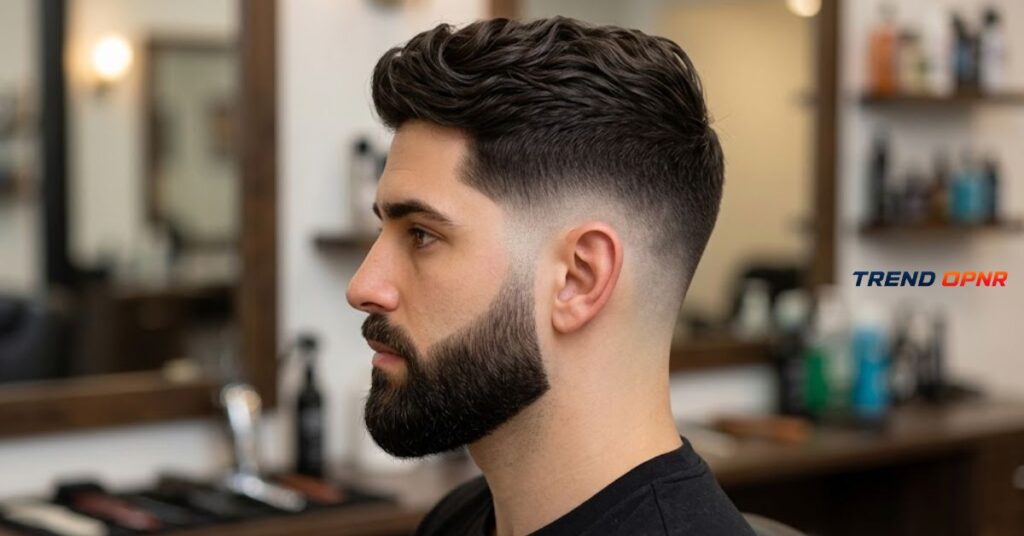
1. Mid Taper Fade Comb Over
The comb over keeps the top longer and directs it across the head with a defined side movement. The taper removes unnecessary bulk around the temples while preserving enough length for a polished finish.
Who It Suits: Best for oval, square, diamond, and heart-shaped faces with straight or wavy hair.
Styling Tip: Use a lightweight pomade or styling cream on slightly damp hair. Blow-dry toward the chosen side and finish with a comb for definition.
2. Mid Taper Fade Side Part
A side part introduces a clear directional line without requiring extreme length. The contrast between the part and the tapered sides creates a structured silhouette.
Who It Suits: Straight and wavy hair with medium density works particularly well.
Styling Tip: Establish the part while the hair is damp, then use a small amount of pomade for control and a natural or lightly glossy finish.
3. Mid Taper Fade French Crop
The French crop combines a compact textured top with a forward fringe. It is one of the easiest styles to maintain because the top does not require extensive styling.
Who It Suits: Oval, square, oblong, and heart-shaped faces.
Styling Tip: Apply matte clay to dry hair and pinch small sections to create separation.
4. Mid Taper Fade Textured Crop
A textured crop adds choppy movement through the top while keeping the perimeter controlled. The result is modern without demanding a complicated grooming routine.
Who It Suits: Straight, slightly wavy, and textured hair.
Styling Tip: Work texture clay through the top with your fingers and concentrate product near the roots for definition.
5. Mid Taper Fade Short Hair
Short hair creates a clean relationship between the top and the fade. Because there is less length to manage, the haircut is especially convenient for men who value low maintenance.
Who It Suits: Almost every face shape and most hair textures.
Styling Tip: Use a lightweight styling cream rather than a heavy product. Let the natural hair texture provide most of the finish.
Voluminous & Lifted Mid Taper Fades
6. Mid Taper Fade Buzz Cut
A buzz cut paired with a taper produces a highly practical silhouette. The short top emphasizes the hairline, temples, jawline, and facial structure.
Who It Suits: Round, square, oval, and diamond faces.
Styling Tip: Styling is optional. A small amount of lightweight cream can reduce flyaways and provide a cleaner finish.
7. Mid Taper Fade Quiff
The quiff adds height at the front while the sides remain controlled. This creates a strong vertical element that can visually lengthen a rounder face.
Who It Suits: Oval, diamond, square, and round faces with straight or wavy hair.
Styling Tip: Apply volumizing mousse to damp hair, blow-dry upward with a round brush, then use molding paste for flexible hold.
8. Mid Taper Fade Pompadour
The pompadour uses substantial volume and backward direction. The tapered sides keep the large top from overwhelming the overall silhouette.
Who It Suits: Oval, square, and diamond face shapes.
Styling Tip: Blow-dry upward and backward, then use strong-hold pomade. A small amount of gloss spray can create a polished finish.
9. Mid Taper Fade Blowout
A blowout uses fullness, movement, and lifted texture. It is especially effective when natural hair density provides plenty of volume.
Who It Suits: Thick, dense, wavy, and textured hair.
Styling Tip: Apply sea salt spray to damp hair, lift the roots while blow-drying, and finish with a flexible styling cream.
10. Mid Taper Fade Fluffy Hair
Fluffy hair keeps the top soft and voluminous rather than tightly controlled. The taper provides enough structure to prevent the overall shape from becoming too wide.
Who It Suits: Thick, wavy, straight, and naturally textured hair.
Styling Tip: Use lightweight mousse or cream and avoid heavy products that collapse root volume.
Textured & Forward-Styled Mid Taper Fades
11. Mid Taper Fade Fringe
A longer fringe creates forward movement and can soften the forehead. The sides remain clean while the top retains a relaxed, fashion-oriented appearance.
Who It Suits: Oval, heart-shaped, diamond, and oblong faces.
Styling Tip: Use sea salt spray for movement, then blow-dry the fringe forward.
12. Mid Taper Fade with Textured Fringe
This version adds more separation to the fringe through choppy sections. It has more visual energy than a traditional French crop.
Who It Suits: Straight, wavy, and medium-density hair.
Styling Tip: Use texture powder or matte clay on dry hair and twist small sections between your fingers.
13. Mid Taper Fade Middle Part
A middle part works particularly well with medium-length hair that already has natural movement. The taper adds structure around the perimeter without removing the character of the top.
Who It Suits: Oval, diamond, and oblong faces.
Styling Tip: Blow-dry from the center outward and use a lightweight cream to prevent frizz.
14. Mid Taper Fade Spiky Hair
Spikes create a more energetic and youthful appearance. The taper keeps the lower section clean so the textured top remains the focal point.
Who It Suits: Straight or slightly wavy hair with enough density to hold separation.
Styling Tip: Use molding paste or texture clay and shape small sections upward with your fingers.
Curly & Wavy Mid Taper Fades
15. Mid Taper Fade Curly Hair
A Mid Taper Haircut works particularly well with curls because the taper can reduce side bulk while allowing the curl pattern to remain prominent on top.
Who It Suits: Round, square, oval, and diamond faces with curly hair.
Styling Tip: Apply curl cream to damp hair, scrunch upward, and air-dry or use a diffuser on low heat.
16. Mid Taper Fade Wavy Hair
Wavy hair naturally creates movement, so the taper mainly needs to provide shape and control. Keeping the top moderately long allows the wave pattern to remain visible.
Who It Suits: Oval, diamond, oblong, and heart-shaped faces.
Styling Tip: Use sea salt spray or lightweight styling cream and avoid brushing the hair once the wave pattern has formed.
17. Mid Taper Fade Perm
A perm can add curl and volume to naturally straight hair. The taper prevents the sides from becoming overly wide while the top retains its newly created texture.
Who It Suits: Men with permed or chemically treated hair who want a contemporary shape.
Styling Tip: Use curl-enhancing cream and low heat. Avoid excessive manipulation while the hair is dry.
Mid Taper Fades for Black Men / Afro-Textured Hair
18. Mid Taper Fade Black Male
Natural coils and tight curls can create a striking contrast with clean tapered sides. The barber should account for shrinkage, density, growth direction, and the natural hairline.
Who It Suits: Coily, tightly curled, and Afro-textured hair.
Styling Tip: Keep the hair moisturized and use a curl sponge, cream, or light gel according to the desired definition.
19. Mid Taper Fade Afro
An afro with a taper preserves natural volume while reducing the width around the temples and neckline. This creates a cleaner outline without sacrificing the character of the hair.
Who It Suits: Oval, round, square, and diamond faces.
Styling Tip: Use leave-in conditioner and a pick to maintain volume while keeping the perimeter regularly trimmed.
20. Low Afro with Mid Taper Fade
A lower afro provides a more controlled version of the traditional rounded shape. The taper creates definition around the sides without requiring a very dramatic fade.
Who It Suits: Men who want natural texture with a polished everyday silhouette.
Styling Tip: Maintain moisture and use a curl sponge or pick for consistent shape.
21. Afro Hawk with Mid Taper
The afro hawk concentrates volume through the center of the head. The tapered sides make the central section look taller and more defined.
Who It Suits: Diamond, oval, and round faces with coily or curly hair.
Styling Tip: Use curl cream to define the center and keep the side taper regularly cleaned.
22. Mid Taper Fade with Dreads
Locs and a taper create contrast between substantial top length and controlled perimeter work. The style can range from understated to highly expressive.
Who It Suits: Men with locs who want cleaner temples and neckline definition.
Styling Tip: Keep the locs moisturized while asking the barber to preserve their natural width and direction.
23. Dreadlock Bun with Mid Taper Fade
A bun creates a controlled top silhouette while the taper provides structure around the perimeter. This makes the combination useful for both casual and professional environments.
Who It Suits: Oval, square, and diamond faces with longer locs.
Styling Tip: Use a snag-free tie and avoid pulling the locs excessively tight.
24. Sponge Twist with Mid Taper Fade
Sponge twists add compact texture and definition. The taper emphasizes the twist pattern by reducing competing bulk around the temples and ears.
Who It Suits: Curly and coily textures.
Styling Tip: Apply twist cream to damp hair and use a curl sponge in circular motions.
25. Box Braids with Mid Taper Fade
Box braids combined with tapered sides produce a strong geometric contrast. The clean perimeter also helps frame the braids.
Who It Suits: Coily and natural hair with sufficient length for braiding.
Styling Tip: Keep the scalp moisturized and schedule perimeter touch-ups separately from braid maintenance.
26. Twisted Curls with Mid Fade
Defined twists or curls on top can be paired with a cleaner mid fade around the sides. The combination offers both texture and controlled shape.
Who It Suits: Curly and coily hair with moderate to high density.
Styling Tip: Use leave-in conditioner and curl cream, then add a small amount of gel if stronger definition is needed.
Slicked & Refined Mid Taper Fades
27. Mid Taper Fade Slick Back
The slick back directs the top away from the forehead and emphasizes the clean side profile. A Mid Taper Haircut makes the transition modern while keeping the top sophisticated.
Who It Suits: Oval, square, and heart-shaped faces with straight or wavy hair.
Styling Tip: Blow-dry backward from the roots, then apply styling cream or pomade for control.
28. Mid Taper Fade with Beard
A tapered haircut and beard can create a continuous visual frame around the face. The barber should blend the sideburn and beard carefully rather than creating an abrupt junction.
Who It Suits: Round and oval faces often benefit from the added jawline definition.
Styling Tip: Match the beard density to the haircut. A very full beard usually pairs best with a controlled top.
Asian & Straight Hair Mid Taper Fades
29. Mid Taper Fade Asian
Straight, dense hair can make the fade gradient highly visible. The key is controlling weight without making the upper sides appear too flat.
Who It Suits: Straight, thick hair and oval, round, or heart-shaped faces.
Styling Tip: Use lightweight matte cream and blow-dry the top into the desired direction.
Read More: Low Taper Fade Long Hair: 40 Best Styles for Every Face Shape & Hair Type
30. Mid Taper Fade Straight Hair
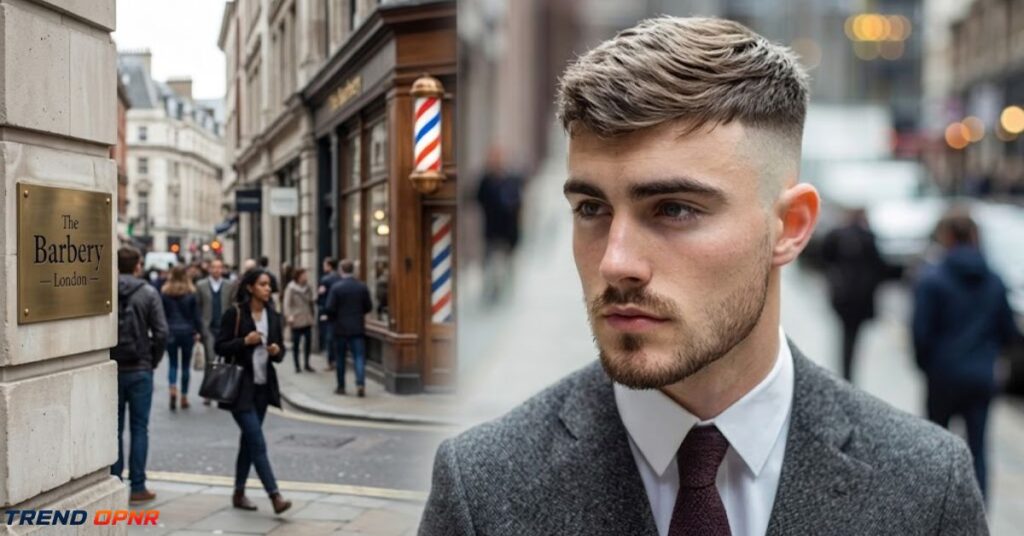
A Mid Taper Haircut with straight hair creates a particularly clean visual transition because individual length changes are easy to see.
Who It Suits: Fine, medium, or thick straight hair.
Styling Tip: Use a vent brush or fingers during blow-drying and finish with a small amount of lightweight styling cream.
Long Hair & Modern Mullet Mid Taper Fades
31. Mid Taper Fade Long Hair
Long hair can remain the main feature while the taper prevents the sides and neckline from appearing untidy. The result is a useful compromise between length and grooming.
Who It Suits: Oval, heart-shaped, and diamond faces with medium to long hair.
Styling Tip: Use a smoothing cream or light leave-in product and let the length create natural movement.
32. Mid Taper Fade Mullet
The modern mullet keeps length at the back while shortening the sides. A taper adds a cleaner transition and makes the style more controlled.
Who It Suits: Wavy, textured, and straight hair with enough length at the back.
Styling Tip: Use matte clay for separation and keep the perimeter sharp.
33. Man Bun with Mid Taper Fade
A man bun keeps long top hair contained while the taper introduces clean structure around the lower head.
Who It Suits: Oval, square, and diamond faces.
Styling Tip: Apply smoothing cream before tying the hair. Avoid excessive tension around the hairline.
Edgy & Custom Mid Taper Fades
34. Mid Taper Fade Edgar
The Edgar combines a blunt forward fringe with sharp perimeter work. Its strongest feature is the straight horizontal front line.
Who It Suits: Round and square faces with straight or thick hair.
Styling Tip: Keep the fringe crisp and use a matte product to maintain texture without shine.
35. Mid Taper Fade with Line Design
A shaved line can personalize an otherwise traditional taper. Simple diagonal marks, double lines, or geometric patterns can all change the visual character of the cut.
Who It Suits: Most face shapes and short-to-medium hair textures.
Styling Tip: Choose a design that follows the natural head shape and remember that detailed designs require frequent touch-ups.
36. Mid Taper Drop Fade
The transition drops behind the ear instead of following a straight horizontal path. This creates additional contour and can complement the natural curve of the head.
Who It Suits: Most face shapes with short or medium top length.
Styling Tip: Let the haircut provide most of the visual effect and keep the top relatively simple.
Blonde & Colored Mid Taper Fades
37. Mid Taper Fade Blonde
Blonde hair can make the transition look softer because the contrast between hair and scalp may be less pronounced depending on the skin tone and hair density.
Who It Suits: Natural blonde or professionally colored hair.
Styling Tip: Use a lightweight texture clay and minimize excessive heat on chemically treated hair.
38. Mid Taper Fade Blonde Hair
Blonde hair with waves or texture creates a relaxed appearance. The taper gives the lighter top a cleaner frame.
Who It Suits: Oval and diamond faces, particularly when the top has natural movement.
Styling Tip: Use matte cream and finger-style rather than over-brushing the hair.
Medium & Balanced Length Mid Taper Fades
39. Medium Mid Taper
Medium-length hair gives the wearer multiple styling choices. It can be combed over, parted, brushed back, or left naturally textured.
Who It Suits: Most face shapes with straight or wavy medium-density hair.
Styling Tip: Keep a lightweight product available for polished days and a matte clay for casual texture.
40. Mid Taper Fade Low Cut
A low-cut top keeps the overall haircut practical while the taper adds enough structure to prevent it from looking completely uniform.
Who It Suits: Oval, square, and athletic facial structures.
Styling Tip: A small amount of matte cream is usually enough. Styling time can remain under a few minutes.
Bonus Styles
41. Curly Mid Taper
Natural curls can be left longer on top while the taper controls the lower sides. The result emphasizes curl definition and facial framing.
Who It Suits: Curly and wavy hair across most face shapes.
Styling Tip: Apply curl cream to damp hair and use a diffuser if additional volume is needed.
42. Short Hair with Mid Fade
A short top with a clean fade offers a straightforward grooming routine. It is particularly useful for men who want a professional haircut that does not require daily styling.
Who It Suits: Straight, wavy, curly, and textured hair.
Styling Tip: Use matte clay for separation or styling cream for a softer natural finish.
43. Mid Taper Fade Crew Cut
The crew cut keeps the top compact while allowing slightly more length toward the front. The taper creates a clean transition around the sides and neckline.
Who It Suits: Oval, square, and diamond faces.
Styling Tip: Use a small amount of matte paste and brush the front upward or slightly forward.
44. Mid Taper Fade Brush Up
The brush-up directs the top upward without creating the extreme height of a pompadour. It provides a clean vertical silhouette with moderate styling effort.
Who It Suits: Round, oval, and square faces.
Styling Tip: Blow-dry the roots upward and finish with texture powder or flexible paste.
45. Mid Taper Fade Caesar
The Caesar uses a short forward top and compact fringe. The tapered sides make the haircut appear sharper while preserving its low-maintenance character.
Who It Suits: Oval, square, and oblong faces.
Styling Tip: Use a small amount of matte clay and keep the fringe short and controlled.
46. Mid Taper Fade Faux Hawk
The faux hawk concentrates height through the center without requiring the shaved sides of a traditional mohawk. The taper makes it wearable in more settings.
Who It Suits: Round, oval, and diamond faces.
Styling Tip: Use molding paste and push the center upward with your fingers while leaving the sides controlled.
47. Mid Taper Fade Side-Swept Texture
A side-swept textured top creates movement without the formal appearance of a hard side part. The taper supplies clean framing around the ears and neckline.
Who It Suits: Straight and wavy hair with medium or longer top length.
Styling Tip: Blow-dry diagonally across the forehead and finish with lightweight clay for flexible separation.
Which Face Shape Suits a Mid Taper Best? (Complete Guide)
Face shape should influence the top styling more than the taper itself. The same fade height can look completely different depending on how much volume, width, or length is retained above it.
Mid Taper for Oval Face
An oval face has relatively balanced proportions, which makes it highly adaptable. A Mid Taper Haircut can be paired with almost any top length without creating an obvious imbalance.
Recommended styles: Comb over, side part, textured crop, quiff, slick back, fringe, French crop, middle part, and medium-length flow.
Styling tip: Use the haircut as a neutral frame and choose the top based on personality rather than trying to correct facial proportions.
Mid Taper for Round Face
Round faces usually benefit from additional height and reduced side width. A Mid Taper Haircut can remove enough side bulk to create a cleaner vertical impression.
Recommended styles: Quiff, pompadour, brush up, faux hawk, textured crop with height, and blowout.
Styling tip: Blow-dry upward and slightly backward. Avoid creating excessive width at the temples.
Mid Taper for Square Face
Square faces already have strong jawlines and defined angles. The taper can reinforce that structure, while a textured top can soften it when desired.
Recommended styles: Side part, comb over, slick back, textured crop, wavy top, fringe, and beard combinations.
Styling tip: Use a medium-hold product and avoid forcing every strand into a rigid shape.
Mid Taper for Heart-Shaped Face
Heart-shaped faces are wider around the forehead and narrower toward the chin. Moderate volume around the crown can help create better visual balance.
Recommended styles: Textured fringe, side part, quiff, French crop, side-swept hair, and moderate pompadour.
Styling tip: Avoid extreme height directly at the front if it makes the forehead appear disproportionately wide.
Mid Taper for Diamond Face
Diamond faces commonly feature prominent cheekbones with narrower forehead and chin areas. The top can add useful width while the taper keeps the side profile controlled.
Recommended styles: Side part, textured crop, quiff, fringe, comb over, and medium-length flow.
Styling tip: Favor natural movement rather than extremely rigid styling.
Mid Taper for Oblong/Long Face
Longer faces can appear even longer when excessive height is added to the top. A Mid Taper Haircut works best when paired with moderate volume and some horizontal movement.
Recommended styles: French crop, textured fringe, side-swept hair, messy crop, middle part, and short waves.
Styling tip: Keep the top controlled rather than creating a very tall pompadour or exaggerated quiff.
Mid Taper for Triangle Face
Triangle-shaped faces are wider around the jaw and narrower around the forehead. Some volume at the upper section can help balance the proportions.
Recommended styles: Quiff, brush up, pompadour, textured crop, blowout, and fluffy top.
Styling tip: Use volumizing mousse or texture powder near the roots and direct the hair upward and outward.
Mid Taper for Different Hair Types: Curly, Wavy, Straight & More
Hair texture determines how the fade grows out, how much side bulk develops, and how easily the top holds its intended shape. A good barber should adjust the blend for density rather than applying identical clipper work to every client.
Mid Taper for Straight Hair
Straight hair shows a fade gradient clearly because the strands generally lie close to the head. This makes clean blending particularly important.
What works well:
- Sleek comb overs
- Side parts
- Slick backs
- French crops
- Textured crops
- Middle parts
- Crew cuts
- Quiffs
Products to use: Lightweight pomade, matte clay, styling cream, molding paste, and texture powder.
Styling tip: Start with a small amount of product. Straight hair can look greasy when too much pomade or cream is applied.
Mid Taper for Wavy Hair
Wavy hair provides natural movement and dimension. Instead of trying to eliminate the wave, use the taper to control the sides while allowing the top to remain loose.
What works well:
- Messy fringe
- Textured quiff
- Brush back
- Middle part
- Curtain-style flow
- Fluffy top
- Blowout
Products to use: Sea salt spray, lightweight mousse, texture powder, and styling cream.
Styling tip: Apply product to damp hair, scrunch gently, and let the natural wave pattern develop.
Mid Taper for Curly Hair
Curly hair often expands outward as it grows, making side control especially important. A Mid Taper Haircut can remove some of that bulk while leaving the curl pattern prominent above.
What works well:
- Defined curls
- Curly fringe
- Curly quiff
- Curly blowout
- Loose curls
- Textured curls
- Perm curls
Products to use: Curl cream, leave-in conditioner, curl-enhancing mousse, and a diffuser.
Styling tip: Apply curl product while the hair is damp, scrunch upward, and avoid excessive brushing after the curls have dried.
Mid Taper for Natural/Coily Hair (Type 4)
Coily hair can create substantial volume, so taper placement becomes an important part of the overall silhouette. The barber should consider shrinkage and natural growth direction before choosing the fade height.
What works well:
- Cropped afro
- Full afro
- Twists
- Locs
- Braids
- Sponge twists
- Defined coils
- 360 waves
Products to use: Leave-in conditioner, moisturizing cream, curl sponge, twist cream, light natural oils, and edge control.
Styling tip: Moisture and gentle handling are essential. Avoid overworking dry coils because excessive manipulation can create breakage.
Mid Taper for Thick Hair
Thick or dense hair can build substantial weight around the sides. A Mid Taper Haircut can make that density easier to control without forcing the top into an extremely short cut.
What works well:
- Buzz cuts
- Crew cuts
- Textured crops
- Quiffs
- Pompadours
- Blowouts
- Slick backs
Products to use: Texture clay, strong-hold pomade, matte paste, and molding paste.
Styling tip: Build hold gradually. Thick hair often needs more control, but applying too much product at once can create unnecessary weight.
Mid Taper for Fine/Thin Hair
Fine hair benefits from visual contrast. Keeping the sides shorter can make the top appear fuller, while texture powder can create additional root volume.
What works well:
- Textured crops
- Short quiffs
- Brush ups
- French crops
- Messy fringe
- Short crew cuts
Products to use: Texture powder, volumizing mousse, lightweight styling cream, and sea salt spray.
Styling tip: Blow-dry the roots before applying texture powder. Avoid heavy oils and dense pomades that can flatten fine strands.
How to Ask Your Barber for a Mid Taper
Getting the result right depends on communication. The name of the haircut alone is not always enough because barbers may interpret fade height, skin exposure, neckline shape, and top length differently.
The Golden Rule of Barber Communication
- State the placement clearly. Say that you want the taper around the middle of the sides and temple area.
- Bring reference photos. Show front, side, and back views whenever possible.
- Specify fade height. Explain whether you want the transition conservative, moderate, or higher.
- Mention neckline preference. Choose between a tapered, rounded, or square neckline.
- Describe top length. Give an approximate length or explain the top style you want.
- Specify skin exposure. Say whether you want a shadow, stubble, or skin finish.
- Explain your texture. Tell the barber whether your hair is straight, wavy, curly, coily, fine, or thick.
- Mention your styling routine. A barber should know if you want a three-minute haircut or a style that requires daily blow-drying.
- Discuss your hairline. If the natural hairline is uneven, ask for cleanup without creating an excessively artificial shape.
- Ask about the neckline. Your growth pattern may determine whether a tapered, rounded, or square finish looks best.
- Discuss sideburns. Decide whether they should blend into the haircut, beard, or remain slightly fuller.
- Ask about maintenance. Find out how quickly the particular fade height will lose its sharpness.
- Show the barber the back view. The back is easy to overlook when choosing reference photos.
- Mention your workplace. A professional environment may call for less skin exposure and a softer finish.
- Ask the barber to adapt the cut to your head shape. Reference photos are guides, not templates.
For a Mid Taper Haircut, a useful barber script is:
“I want a mid taper around the temples and sides, blended smoothly into the neckline. Keep the top at my current length and shape it into [your chosen style]. Leave [shadow/stubble/skin] at the bottom, keep the sideburns clean, and use a [tapered/rounded/square] neckline.”
The best Mid Taper Haircut is not necessarily the one with the strongest contrast. It is the one that works with your natural hair texture, growth pattern, face shape, lifestyle, and preferred styling time.
Low taper haircut
A low taper haircut keeps the fade lower around the ear and neckline, so more of the side remains full. It is often the better choice when you want a conservative appearance, softer contrast, or a style that grows out gradually.
For men comparing it with a Mid Taper Haircut, the biggest difference is placement. The low taper keeps the transition closer to the perimeter, while the mid option becomes more visible around the temple and mid-side area.
The low taper haircut is especially useful for professional settings, conservative workplaces, and men who prefer subtle grooming. It also pairs well with comb overs, side parts, curls, short crops, and longer top lengths.
If your priority is a less noticeable fade and longer intervals between touch-ups, a low taper may be the better choice. If you want more side definition and a stronger contrast with the top, the mid placement is usually more suitable.
Mid taper haircut men
A Mid Taper Haircut for men works because it can be adjusted rather than treated as a single fixed style. The barber can change the fade height, skin exposure, neckline, top length, and texture while keeping the central concept intact.
For men who want one haircut that can move between professional and casual environments, this versatility is a major advantage. A polished comb over can look office-ready, while the same taper can support a textured crop, curly top, quiff, or messy fringe on another day.
Men with straight hair can emphasize precision, while men with curls or coils can make natural texture the main feature. Thick hair can use the taper to reduce bulk, and fine hair can use the shorter sides to make the top appear fuller.
The best choice also depends on maintenance habits. A sharply detailed taper requires more frequent barber visits, while a softer shadow finish can remain attractive as it grows.
Mid taper haircut curly hair
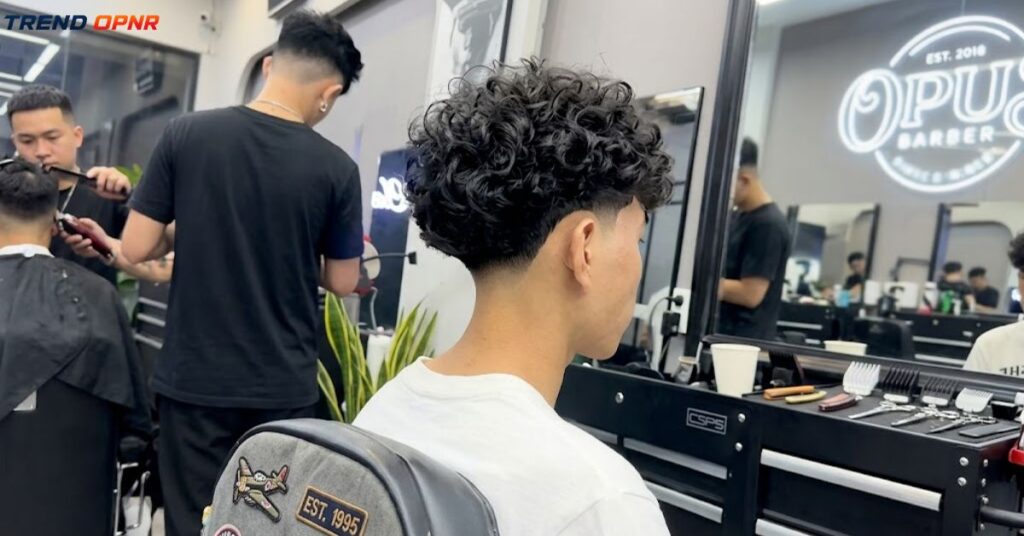
Curly hair can make a Mid Taper Haircut look more dimensional because the top retains natural curl volume while the sides become progressively cleaner. The barber should account for shrinkage rather than judging the curl length only when the hair is wet.
A good curly version should preserve the curl pattern. The taper should remove unnecessary side weight without cutting so high that the natural shape becomes disconnected from the face.
For styling, curl cream and leave-in conditioner are often more useful than heavy pomade. Apply product to damp hair, scrunch upward, and allow the curls to dry without repeatedly touching them.
A Mid Taper Haircut can also work with loose curls, tight curls, curly fringe, curly quiff, sponge curls, and textured tops. The key is matching the taper height to the density and direction of the curl pattern.
Mid taper haircut straight hair
Straight hair makes a Mid Taper Haircut particularly easy to read because the transition between long, medium, and short zones is visually clear. This makes precision around the temples and sideburns especially important.
Straight hair can support almost every classic top style, including a side part, comb over, slick back, French crop, crew cut, quiff, and textured fringe. Fine straight hair may benefit from lightweight products, while thick straight hair may need stronger styling clay.
Avoid applying excessive product to straight hair. Heavy pomade can flatten the top and reduce the visual separation that gives the haircut its shape.
A Mid Taper Haircut for straight hair can be finished matte, natural, or glossy depending on the product. The haircut itself provides the structure, so styling should enhance rather than hide it.
Mid taper fade
A Mid Taper Haircut and a mid taper fade are often used interchangeably in everyday barber conversations, although the technical execution can differ. The important details are where the transition begins, how wide the fade area is, and whether the bottom reaches skin.
A Mid Taper Haircut can therefore be customized as a shadow fade, skin fade, or intermediate finish. If you dislike visible scalp, request a darker transition. If you want maximum contrast, ask for the lower section to be taken down closer to skin.
The style also works with a tapered neckline, rounded neckline, or square neckline. The neckline should follow the natural hair growth rather than being selected only because it looks good in a reference photograph.
For the most accurate result, bring photographs showing the front, side, and back. Mention your preferred top length and tell the barber how much daily styling you are willing to do.
High taper
A high taper starts substantially higher than a low or mid taper. It creates a stronger contrast and removes more visual weight from the upper sides.
Compared with a Mid Taper Haircut, the high taper is usually more noticeable from the side profile. It can work especially well with thick hair, curls, coily textures, and bold modern hairstyles.
The high taper is useful when you want a dramatic silhouette, but it is not automatically better. Men who want versatility for conservative workplaces may prefer a middle placement because it gives more room to adjust the top and side balance.
A barber can also combine a high taper with a textured top, curls, faux hawk, blowout, or other modern styles. The decision should be based on facial proportions, hair density, lifestyle, and desired visual contrast.
Frequently Asked Questions
What is a mid-taper haircut?
A mid-taper haircut is a style where the hair gradually becomes shorter around the middle portion of the sides, temples, sideburns, and neckline. It sits between a low taper and a high taper in terms of placement.
The exact result can range from subtle to bold. You can request a shadow finish, a close fade, or skin exposure depending on your preference.
What’s better, a fade or taper?
Neither is universally better. A taper usually concentrates the shortening around the edges and preserves more of the natural side shape, while a fade can reduce a broader area of the sides.
Choose a taper when you want flexibility, a natural transition, and a softer perimeter. Choose a fade when you want stronger contrast and more visible scalp exposure.
Is mid-fade haram in Islam?
There is no single answer that applies to every Islamic scholar or interpretation. Some scholars consider certain forms of qaza, particularly shaving part of the head while leaving another part substantially longer, impermissible or discouraged.
Because interpretations and circumstances differ, someone concerned about religious compliance should ask a trusted qualified scholar or imam and explain exactly what haircut they intend to receive. A barber can then adjust the fade according to that guidance.
Is a low taper or mid taper better?
A low taper is better when you want subtle contrast, more side fullness, and a conservative appearance. A mid taper is better when you want a clearer transition around the temples and a sharper side profile.
Your face shape and hair density also matter. Round faces can benefit from additional side reduction, while men with very prominent facial angles may prefer a softer transition.
What is a no. 1 haircut?
A No. 1 haircut generally refers to using a number-one clipper guard, leaving roughly 1/8 inch of hair, although exact cutting length can vary slightly by clipper and blade system.
It is much shorter than a typical medium top and is often used for buzz cuts, short fades, or the lower sections of a taper. If you want a No. 1 specifically, tell your barber where you want that guard length used rather than assuming it applies to the entire haircut.
Conclusion
A Mid Taper Haircut offers one of the most useful balances between clean barbering and everyday versatility. It can support straight, wavy, curly, coily, thick, fine, short, medium, and long hair while allowing the neckline, skin exposure, and top styling to be customized.
The strongest result comes from treating the taper as part of the whole haircut rather than as an isolated fade. Match the placement to your face shape, hair density, lifestyle, workplace, and styling routine, then use clear reference photos and precise barber instructions to achieve the intended silhouette.

