
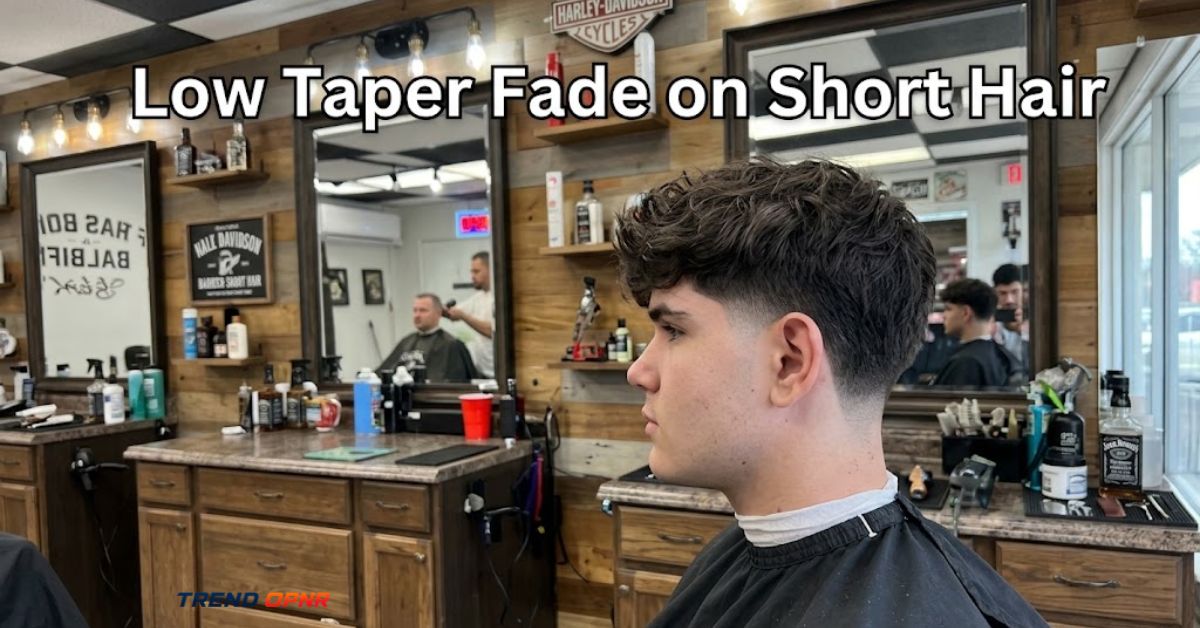

A Low Taper Fade on Short Hair gives men a clean outline without taking too much height away from the top. The fade stays low around the temple, sideburns, ear area, and nape, while the top can be shaped into a crop, buzz cut, crew cut, curls, waves, or a messy textured top.
The appeal is versatility. A Low Taper Fade on Short Hair can look conservative enough for a workplace while still feeling current for weekends, campus, dates, and casual wear. The right fade height, top length, neckline, and texture make the difference.
If you are choosing a Low Taper Fade on Short Hair for 2026, start with your natural hair texture and face shape rather than copying a celebrity haircut. Straight hair, wavy hair, curly hair, and coily hair all need slightly different cutting and styling decisions.
This guide covers the structure of the cut, more than 20 style variations, hair-type recommendations, face-shape guidance, barber instructions, styling, products, maintenance, grow-out behavior, beard combinations, and common questions.
Table of Contents
- What Is a Low Taper Fade on Short Hair and Why Is It So Popular?
- What Is a Low Taper Fade on Short Hair?
- What Is the Difference Between a Low Taper and a Low Taper Fade on Short Hair?
- How Does a Low Taper Fade Compare to Other Fade Haircuts on Short Hair?
- What Are the Best Low Taper Fade Styles for Short Hair?
- What is a Low Taper Fade Short on top, and Which Styles Work Best?
- Which Face Shape Suits a Low Taper Fade Best for Short Hair?
- How Do You Ask Your Barber for a Low Taper Fade on Short Hair?
- Can You Do a Low Taper Fade on Short Hair at Home?
- How Do You Style a Low Taper Fade with Short Hair?
- How Do You Maintain a Low Taper Fade on Short Hair?
- Which Celebrities Wear a Low Taper Fade on Short Hair?
- Frequently Asked Questions
What Is a Low Taper Fade on Short Hair and Why Is It So Popular?
A Low Taper Fade on Short Hair keeps the fade concentrated around the lower temple, sideburn, ear, and neckline instead of pushing the fade high toward the crown. That creates subtle contrast while leaving enough top hair to show texture, direction, or curl.
The style works particularly well when you want a sharp appearance without the aggressive contrast of a high fade or skin fade. It can also make a short haircut feel more intentional because the perimeter is clean while the top remains easy to manage.
KEY POINTS:
- The fade placement stays low around the temple and neckline.
- The top can range from a very short buzz cut to roughly 2 inches.
- A shadow finish leaves visible stubble instead of bare skin.
- A skin finish creates stronger contrast around the lower sides.
- Straight hair can emphasize a crisp gradient.
- Wavy hair creates softer movement through the top.
- Curly hair makes the fade a frame for natural curls.
- Coily hair pairs especially well with an edge-up and defined perimeter.
- Thick hair benefits from controlled bulk removal.
- Fine or thinning hair can benefit from a softer shadow transition.
- Oval, square, round, diamond, heart, oblong, and triangle face shapes can all use the cut with different top proportions.
- A natural neckline generally produces a softer grow-out.
- A skin neckline looks sharper but usually needs more frequent maintenance.
- A professional barber can adjust the fade around the individual’s head contour and hair growth pattern.
- A good barber consultation should specify fade height, top length, neckline finish, and styling direction.
What Is a Low Taper Fade on Short Hair?
A Low Taper Fade on Short Hair is a taper haircut in which the shortest section is concentrated low around the sideburns, temples, ears, and nape. The hair becomes progressively shorter through a blending zone rather than changing abruptly from long to short.
The important word is low. The fade height describes where the taper begins, not necessarily how short the top is. A #1 top can have a low taper, while a 2-inch top can also have a low taper.
A typical short top may sit between ⅛ inch and 2 inches depending on the chosen haircut. A barber can use a #0 guard, #0.5 guard, #1 guard, #1.5 guard, #2 guard, #3 guard, #4 guard, or longer scissor work to build the desired transition.
The lower section usually contains several stages of progressive blending. A barber creates a guideline, softens that guideline with successive guard numbers, and uses a flick-out technique to prevent visible bands.
The result should be a gradient rather than a staircase. A quality clipper fade has a smooth transition between lengths, a clean perimeter, and a neckline finish that follows the natural head contour.
Key Specifications at a Glance
| Specification | Typical Choice |
| Fade placement | Low temple and sideburn area |
| Shortest point | No guard, #0, or #0.5 |
| Shadow option | #1 through #0.5 transition |
| Top length | ⅛ inch to 2 inches |
| Common short top | #2 to #4 |
| Blending zone | Lower sides and nape |
| Neckline | Natural, rounded, shadow, or skin |
| Sideburns | Tapered or blended |
| Styling | Matte, natural, textured, curly, or directional |
| Maintenance | Usually every 2–4 weeks |
A barber may also use clipper-over-comb, point-cutting, thinning shears, barber scissors, and a trimmer. The final result depends as much on the transition as it does on the guard numbers.
What Is the Difference Between a Low Taper and a Low Taper Fade on Short Hair?
A Low Taper Fade on Short Hair generally creates a more visible gradient than a traditional low taper. A conventional low taper can retain more hair at the shortest point, while a fade may approach a zero or skin-tight finish.
The distinction is useful when communicating with a barber. If you say only “low taper,” your barber may leave a soft shadow around the base. If you specifically ask for a fade, you can request stronger contrast or skin contact.
| Feature | Low Taper | Low Taper Fade |
| Fade intensity | Subtle | More defined |
| Skin contact | Optional, usually avoided | Optional or common |
| Shortest area | Visible hair | Shadow, zero, or skin |
| Appearance | Natural | Sharper |
| Maintenance | Lower | Moderate to high |
| Grow-out | Very soft | More visible as it grows |
| Best use | Conservative styles | Modern styles |
| Neckline | Natural or soft | Shadow or skin |
For a professional haircut, a low shadow taper can be an excellent compromise. It keeps enough visible hair at the base to soften the transition while still giving the sides a clean shape.
For stronger contrast, request a low skin fade or low skin taper. Your barber can determine how much skin exposure suits your hair density, scalp tone, head shape, and desired maintenance level.
How Does a Low Taper Fade Compare to Other Fade Haircuts on Short Hair?
A Low Taper Fade on Short Hair is generally the least aggressive of the common fade placements because its transition remains close to the lower third of the sides. A mid taper fade rises toward the mid-temple, while a high fade pushes the contrast higher.
A skin fade can be placed low, medium, or high, depending on the desired effect. A shadow fade keeps visible stubble rather than exposing bare skin. A drop fade curves behind the ear, while a burst fade follows a rounded arc around the ear.
| Feature | Low Taper Fade | Mid Taper Fade | High Fade | Skin Fade | Shadow Fade | Drop Fade | Burst Fade | Undercut |
| Fade height | Low | Medium | High | Variable | Variable | Curved | Ear-focused | Disconnected |
| Contrast | Subtle-medium | Medium | Strong | Strong | Soft | Strong | Strong | Very strong |
| Skin contact | Optional | Optional | Often | Yes | No | Optional | Optional | No blend |
| Grow-out | Gradual | Moderate | Faster | Noticeable | Graceful | Moderate | Moderate | Obvious |
| Short top compatibility | Excellent | Excellent | Good | Excellent | Excellent | Good | Excellent | Good |
| Professional suitability | High | High | Moderate | Depends | High | Moderate-high | Moderate | Moderate |
| Maintenance | Moderate | Moderate-high | High | High | Moderate | Moderate | Moderate | Moderate |
The low taper is particularly useful for men who want daily versatility. It works with a classic haircut, modern haircut, professional haircut, barber haircut, or fashion-forward shape without forcing the entire head into a dramatic fade.
The key is fade placement. A low fade leaves more visual weight above the ears, whereas a high fade removes more side volume and creates stronger horizontal contrast.
What Are the Best Low Taper Fade Styles for Short Hair?
The best Low Taper Fade on Short Hair styles are the ones that work with your actual hair texture and growth pattern. Instead of choosing solely from a photograph, consider whether your hair is straight, wavy, curly, coily, thick, fine, or thinning.
Below are 24 options covering classic, modern, professional, athletic, casual, and textured looks.
Low Taper Fade Styles for Short Straight Hair
Straight hair makes a Low Taper Fade on Short Hair particularly easy to customize because the hair direction is predictable. A barber can create a crisp side part, forward fringe, slick back, comb over, or textured crop without fighting a strong curl pattern.
Classic Textured Crop with Low Taper Fade
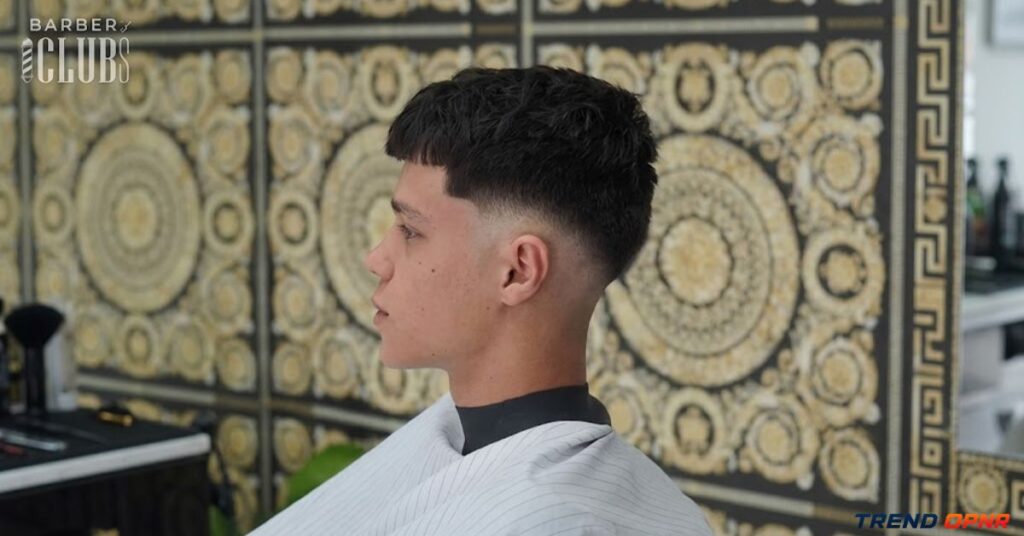
A classic textured crop keeps the top short enough to remain practical while using point-cutting to create separation. The fringe can be pushed forward, slightly broken up, or left blunt depending on the face shape.
Ask for roughly 1 to 1.5 inches on top and a low taper around the sides. A matte finish works especially well because it emphasizes texture without making the hair appear greasy.
- Top length: 1–1.5 inches
- Fade specification: Low taper with shadow or skin finish
- Best for: Daily wear, students, professionals
- Product: Matte clay or hair fiber
Side Part with Low Taper Fade
A side part gives the short haircut a refined direction. Keep enough length on top to establish the part without creating excessive side volume.
A soft part looks more natural, while a hard part creates a deliberate line. The latter requires more frequent upkeep because the shaved detail becomes less defined as the hair grows.
- Top length: 1.5–2 inches
- Fade specification: Low taper
- Best for: Business casual, corporate, formal events
- Product: Light pomade or styling cream
Slick Back with Low Taper Fade
The slick back is a polished option for straight or slightly wavy hair. Keep the top long enough to move backward, then use a comb or fingers to establish the direction.
A matte pomade creates a modern finish. High-shine pomade produces a more retro appearance.
- Top length: 1.5–2 inches
- Fade specification: Low skin taper or low shadow taper
- Best for: Weddings, date nights, formal events
- Product: Matte pomade or high-shine pomade
Short Messy Top with Low Taper Fade
A messy textured top creates contrast between controlled sides and deliberately loose hair above. The style works particularly well for young adults and men who prefer quick styling.
Use finger styling rather than a comb. A small amount of hair clay or wax can separate the strands without making the top look overly constructed.
- Top length: About 1–1.5 inches
- Fade specification: Low shadow taper
- Best for: Casual, campus, weekend
- Product: Matte clay, sea salt spray, or hair wax
Comb Over with Low Taper Fade
A short comb over is cleaner than a slick back but less formal than a hard side part. Direct the top slightly sideways and keep the transition around the ear understated.
This is a strong option when you want a professional haircut that can become more relaxed after work.
- Top length: 1.5–2 inches
- Fade specification: Low taper with clean sideburn finish
- Best for: Workplace, business casual, daily wear
- Product: Light pomade or styling cream
Caesar-Inspired Straight Crop
The Caesar keeps the top relatively uniform and directs the fringe forward. It is especially useful for men who prefer minimal daily styling.
- Top length: ¾–1.25 inches
- Fade specification: Low taper
- Best for: Classic-modern styling
- Product: Light styling cream
Low Taper Fade Styles for Short Wavy Hair
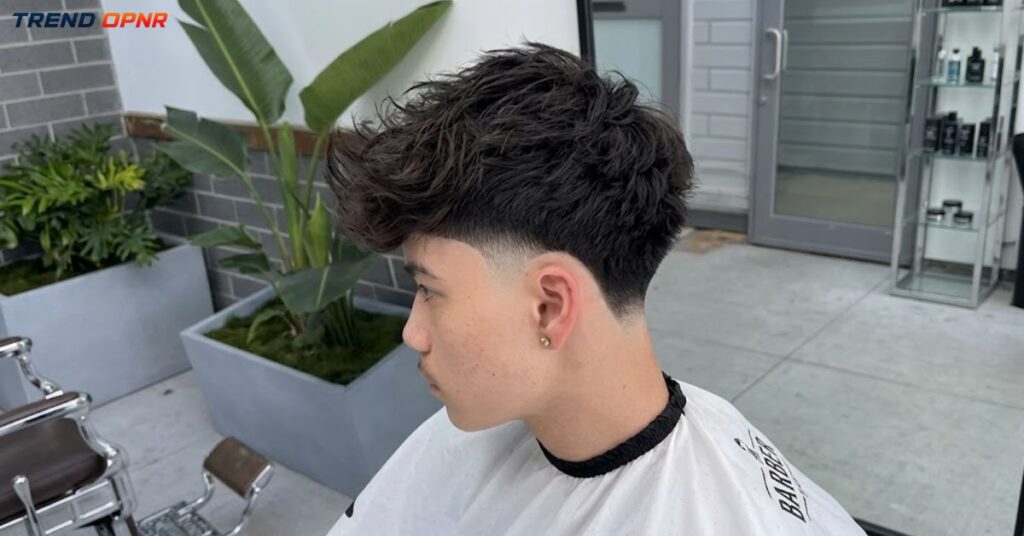
Wavy hair already provides movement, so the goal is usually to preserve that natural texture instead of flattening it. A Low Taper Fade on Short Hair gives the waves a clean frame while leaving the top relaxed.
Short Wavy Messy Top with Low Taper Fade
Let the natural wave pattern determine the final direction. Keep the top around 1–1.5 inches and use a light product that encourages separation.
Air drying usually gives the most natural finish. A blow dryer can add volume if the hair tends to collapse.
- Top length: 1–1.5 inches
- Fade specification: Low shadow taper
- Product: Sea salt spray or light mousse
- Styling: Air dry and finger comb
Short Wavy Textured Crop with Low Taper Fade
A wavy textured crop combines a forward shape with natural movement. The top can be point-cut to prevent the haircut from becoming a single heavy block.
- Top length: 1–1.5 inches
- Fade specification: Low taper
- Product: Styling cream or light wax
- Best for: Casual and modern settings
Wavy Forward Fringe
A short forward fringe works when the wave naturally moves toward the forehead. Avoid excessive product because heavy hold can flatten the texture.
- Top length: 1–1.25 inches
- Fade specification: Low shadow fade
- Product: Light mousse
- Best for: Youthful and casual styling
Low Taper Fade Styles for Short Curly Hair
Curly hair changes the visual length of a haircut because curl shrinkage can make a one-inch top appear significantly shorter. A barber should therefore assess both stretched and natural length.
Short Curly Top with Low Taper Fade
A short curly top lets the natural curl pattern remain visible while the taper cleans the lower perimeter. The barber should avoid cutting away too much curl from the crown.
- Top length: Approximately ¾–1.25 inches
- Fade specification: Low taper or low skin taper
- Best for: Natural curls, modern casual
- Product: Curl cream
- Tool: Wide-tooth comb when needed
Short Curly Crop
A curly crop directs the curls forward rather than allowing them to expand in every direction. The low fade keeps the silhouette controlled.
- Top length: ¾–1.25 inches
- Fade specification: Low shadow fade
- Product: Curl-enhancing cream
- Best for: Type 3A, 3B, and 3C textures
Curly Fringe with Low Taper
A short curly fringe can soften a strong forehead while retaining natural texture. Keep the perimeter defined but avoid an overly geometric finish if the curls are dense.
- Top length: 1 inch
- Fade specification: Low taper
- Best for: Oval, diamond, and longer faces
- Product: Curl cream
Low Taper Fade Styles for Short Coily (Type 4) Hair
Coily hair has significant shrinkage and requires careful attention to density, curl pattern, scalp moisture, and edge-up placement. The best results come from preserving enough top density to show the natural texture.
Short Coily Top with Low Taper Fade
A short coily top with a clean taper creates a strong but balanced silhouette. An edge-up can sharpen the hairline while the taper remains concentrated around the lower sides.
- Top length: About ¾–1 inch visually
- Fade specification: Low skin taper or shadow taper
- Best for: Type 4A, 4B, and 4C hair
- Product: Curl cream or edge control
- Tool: Trimmer for perimeter work
Short Coily Top with Highlights and Low Taper Fade
Subtle highlights can add dimension to tight coils. Keep the fade understated so the color and texture remain the focal point.
Color-treated hair needs appropriate haircare, including conditioner and color-safe shampoo. Avoid excessive heat and aggressive scalp scrubbing.
- Top length: Around 1 inch
- Fade specification: Low taper
- Best for: Fashion-forward styling
- Product: Curl-enhancing cream and color-safe shampoo
Mini Afro with Low Taper
A mini afro creates more horizontal fullness than a cropped coily top. The taper reduces visual bulk near the ears and neckline without eliminating the natural shape.
- Top length: 1–1.5 inches
- Fade specification: Low shadow or skin taper
- Best for: Natural texture
- Product: Curl cream
- Tool: Afro pick
Defined Coils with Edge-Up
For men who prefer a sharper outline, defined coils can be paired with a precise line-up. The edge-up should follow the natural hairline rather than being pushed excessively forward.
- Top length: ¾–1.25 inches
- Fade specification: Low taper
- Best for: High-definition finish
- Product: Edge control
Low Taper Fade Styles for Short Thick Hair
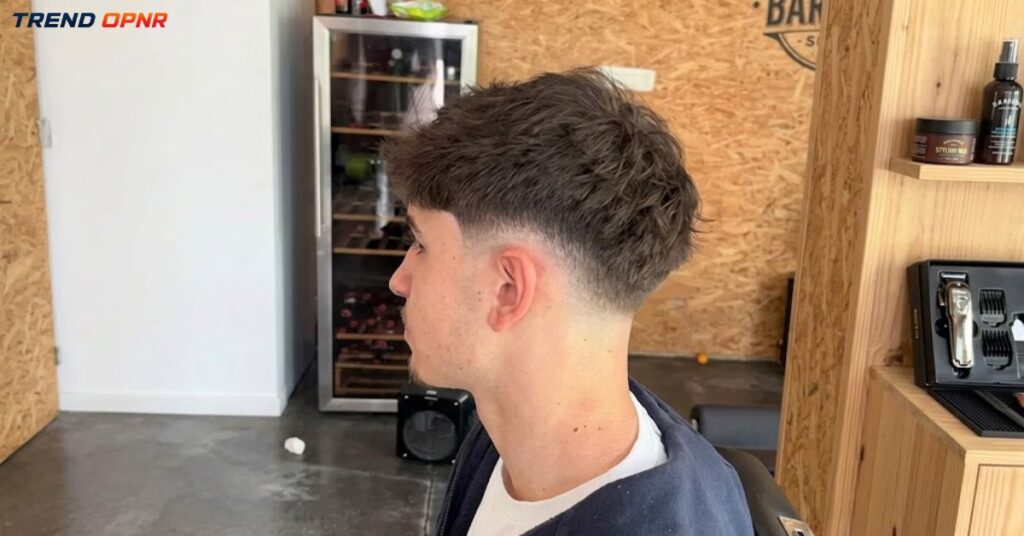
Thick hair gives a short haircut excellent density, but excess bulk can make the sides appear wider than intended. The barber can use point-cutting, clipper-over-comb, or selective thinning to control that weight.
Short Thick Textured Crop with Low Taper Fade
A thick textured crop benefits from strategic texture removal. The top remains full while the sides transition smoothly into the fade.
- Top length: About 1 inch
- Fade specification: Low taper
- Best for: Dense straight or wavy hair
- Product: Matte clay
- Barber technique: Point-cutting and controlled bulk removal
Read More: Mid Taper Haircut: 45+ Best Mid Taper Fade Styles for Men (2026)
Thick Crew Cut
A crew cut is practical when thick hair naturally stands up. A low taper cleans the sides while leaving enough density at the crown to maintain shape.
- Top length: 1–1.5 inches
- Fade specification: Low taper
- Best for: Professionals, athletes, daily wear
- Product: Matte pomade
Low Taper Fade Styles for Short, Thin, or Thinning Hair
Fine or thinning hair should not automatically be taken down to bare skin. Strong skin contact can increase the visible contrast between the scalp and the remaining hair.
A shadow taper can instead create a softer transition. Keeping the top relatively short can also reduce the tendency of long, fine hair to separate and reveal additional scalp.
Shadow Low Taper Fade for Thinning Short Hair
The shadow variation blends through visible stubble rather than exposing the scalp completely. This can provide a more consistent visual density around the sides.
- Top length: 1–1.5 inches
- Fade specification: Shadow transition
- Best for: Fine hair and diffuse thinning
- Product: Lightweight hair fiber
- Barber instruction: Ask for a shadow finish without bare-skin contrast
Textured Crop for Fine Hair
Fine hair often benefits from texture rather than excessive length. A short textured crop can create separation and make the top appear more substantial.
- Top length: 1–1.25 inches
- Fade specification: Low shadow taper
- Product: Matte fiber or lightweight clay
- Styling: Finger styling
What is a Low Taper Fade Short on top, and Which Styles Work Best?
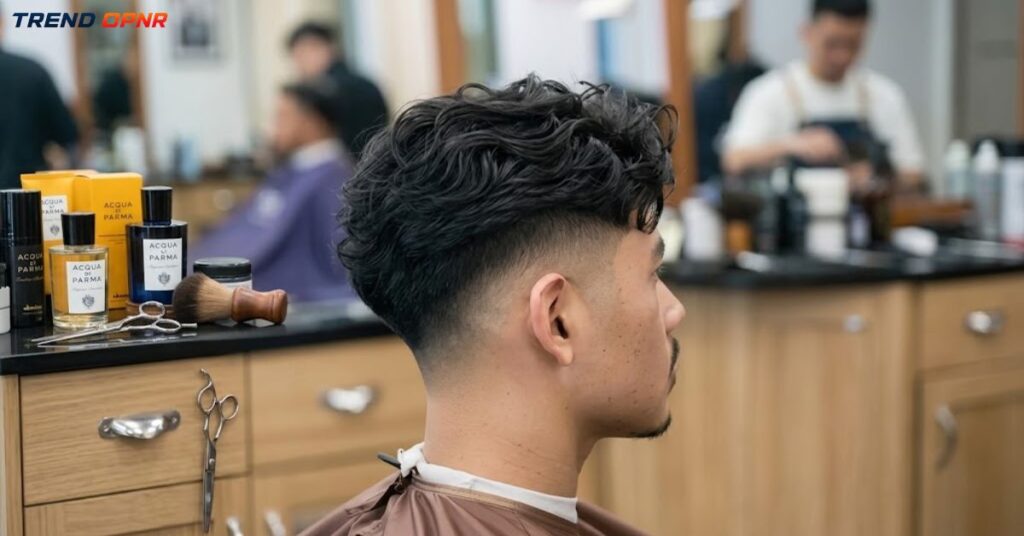
A Low Taper Fade on Short Hair can be extremely short on top. The top may use a #1, #2, #3, or #4 guard, depending on whether you want a buzz cut, crew cut, Caesar, or French crop.
The shorter the top, the less daily styling is required. However, the shorter the haircut becomes, the more important the head shape, hairline, scalp visibility, and neckline become.
Buzz Cut with Low Taper Fade
The buzz cut is the simplest short-on-top option. A uniform #1 or #2 top leaves almost no styling work, while the low taper provides definition around the temples and neckline.
- Top length: #1–#2
- Fade specification: Low taper to zero or shadow
- Best for: Athletes, military-inspired style, minimalist grooming
- Product: None or scalp moisturizer
- Maintenance: Moderate
Crew Cut with Low Taper Fade
The crew cut gives slightly more length than a buzz cut and can add subtle vertical direction. It remains one of the easiest professional short haircuts.
- Top length: 1–1.5 inches
- Fade specification: Low taper
- Best for: Professionals and students
- Product: Light styling cream or matte pomade
- Barber script: “Keep the top around 1.5 inches, taper the sides low, and keep the neckline natural.”
French Crop with Low Taper Fade
The French crop uses a short top and a forward fringe. A blunt fringe creates a graphic appearance, while a textured fringe feels softer.
- Top length: 1–1.5 inches
- Fade specification: Low taper
- Best for: Modern and fashion-forward styling
- Product: Matte clay
- Styling direction: Forward
Caesar Cut with Low Taper Fade
The Caesar is another highly practical short haircut. Its horizontal fringe can work especially well when the wearer wants to minimize daily styling.
- Top length: 1–1.5 inches
- Fade specification: Low taper
- Best for: Classic-modern styling
- Product: Light pomade or styling cream
Short Afro with Low Taper
A short afro retains natural volume while the taper cleans the lower outline. The contrast between the rounded top and controlled sides can create a distinctive silhouette.
- Top length: ¾–1.5 inches
- Fade specification: Low taper
- Best for: Afro-textured hair
- Product: Curl cream
Short Hard Part
A hard part introduces a shaved line into a short side-part haircut. It creates stronger definition but needs regular maintenance.
- Top length: 1.5–2 inches
- Fade specification: Low taper
- Best for: Sharp, structured styling
- Product: Pomade
Short Blunt Fringe
A blunt fringe gives a compact haircut a graphic front edge. It can be particularly effective with straight hair.
- Top length: 1–1.25 inches
- Fade specification: Low shadow taper
- Best for: Strong facial framing
- Product: Matte clay
Which Face Shape Suits a Low Taper Fade Best for Short Hair?
A Low Taper Fade on Short Hair can work with almost any face shape, but the top should be adjusted to control facial proportions. The goal is not to force every man into the same silhouette.
| Face Shape | Helpful Approach | Top Direction | Usually Avoid |
| Oval | Most flexible | Almost any | Very little |
| Round | Add controlled height | Upward or textured | Excessive side volume |
| Square | Soften the structure | Textured or slightly messy | Extremely rigid edges |
| Heart | Reduce forehead emphasis | Forward or moderate | Very tall top |
| Diamond | Emphasize cheekbones carefully | Side-directed or textured | Excessive side removal |
| Oblong | Avoid unnecessary elongation | Short and controlled | Tall vertical volume |
| Triangle | Add balance above the jaw | Side-directed | Extremely narrow top |
For a round face, a little height on top can create visual lengthening. For an oblong face, excessive height can make the face look longer, so a short Caesar or crew cut may be more balanced.
Square faces can handle strong structure, but soft texture may make the overall result more natural. Diamond faces can benefit from a controlled top that works with prominent cheekbones.
The haircut should follow the head shape rather than relying on a universal template. Your barber can assess the jawline, forehead width, cheekbones, crown, and head contour before deciding exactly where to place the taper.
Does a Low Taper Fade on Short Hair Work for All Hair Types?
Yes. The basic concept can be adapted to straight, wavy, curly, coily, thick, fine, and thinning hair. What changes is the top shape, product, guard progression, and maintenance plan.
Straight hair often produces the clearest visual gradient. Wavy hair softens the transition naturally. Curly and coily hair require more attention to shrinkage and natural texture.
For thin hair, a shadow fade can be preferable to an extremely skin-tight finish. For dense hair, bulk control can be more important than removing additional length.
Is a Low Taper Fade on Short Hair Suitable for All Ages?
The style can be adapted for boys, teenagers, young adults, professionals, mature men, and older men. The main adjustment is usually the level of contrast.
| Age Group | Good Option | Finish |
| Boys | Short crew or crop | Soft shadow |
| Teenagers | Textured crop or Caesar | Low fade |
| Young adults | Messy, curly, or textured top | Shadow or skin |
| Professionals | Crew cut or side part | Natural or shadow |
| Mature men | Short crop or crew cut | Soft taper |
| Older men | Short textured style | Natural neckline |
A school-appropriate haircut may use a subtle taper and natural neckline. A fashion-forward haircut can include a harder part, sharper edge-up, or stronger skin contrast.
How Do You Ask Your Barber for a Low Taper Fade on Short Hair?
The simplest barber communication method is to describe four things: fade placement, top length, neckline, and finish.
Instead of saying “make it short,” explain the desired top length in guard numbers or inches. Then tell the barber whether you want a skin, shadow, or natural transition.
A useful barber script is:
“Keep the top around a #3 or #4. Start the taper low around the temple and sideburn, blend the sides smoothly, and keep the neckline natural. I want a shadow finish rather than a high fade.”
If you want stronger contrast:
“Keep the top at a #3. Start the taper low, bring the lower section close to skin, and keep the fade concentrated around the ears and nape. Keep the top textured.”
Bring reference photos showing the front, side, and back. A single front photograph cannot show the barber how the neckline, sideburn arc, or nape should look.
Exact Barber Scripts for Each Short Hair Low Taper Variation
| Style | Barber Script |
| Textured Crop | “Keep about 1 inch on top, add texture, and use a low taper with a soft shadow finish.” |
| Buzz Cut | “Give me a #2 top with a low taper around the temples and neckline.” |
| Crew Cut | “Keep the top around 1.5 inches and taper low around the ears.” |
| French Crop | “Keep a short forward fringe with a low taper on the sides.” |
| Side Part | “Leave enough length for a side part and use a low shadow taper.” |
| Short Curly | “Keep the curls short on top and taper low without taking away the natural shape.” |
| Coily Top | “Keep the coil pattern intact and clean the lower perimeter with a low taper.” |
| Thin Hair | “Use a shadow taper and avoid taking the sides completely to bare skin.” |
| Messy Top | “Leave short textured layers on top and keep the taper low and soft.” |
| Caesar | “Keep the top short and forward with a low taper around the sides.” |
| Hard Part | “Leave enough length for a defined part and keep the fade low.” |
| Slick Back | “Keep the top long enough to move backward and use a low taper.” |
What Words and Phrases Should You Avoid Telling Your Barber?
Avoid vague requests such as “just make it clean,” “do whatever,” or “short on the sides.” Those phrases do not tell the barber the desired fade height, top specification, guard number, or neckline.
Also avoid assuming that “low fade” and “low taper” mean the same thing at every barbershop. Different barbers may interpret those terms differently.
Instead, describe:
- Fade height
- Top length
- Guard number
- Skin or shadow finish
- Sideburn finish
- Neckline shape
- Fringe direction
- Part placement
- Amount of texture
- Desired maintenance frequency
Clear barber communication makes a custom haircut much easier to reproduce at future appointments.
Can You Do a Low Taper Fade on Short Hair at Home?
You can perform small maintenance tasks at home, but creating a clean initial fade is considerably harder. The most difficult part is establishing the first guideline and removing it without creating a visible band.
If you already have a professional fade, a trimmer can help clean the hairline, neckline, and sideburns between visits. A mirror and bright lighting are essential for checking both sides.
Useful grooming tools include hair clippers, trimmers, a foil shaver, barber scissors, a comb, and a handheld mirror.
At-Home Maintenance Steps
| Step | Tool | Purpose |
| 1 | Clipper | Maintain the established top length |
| 2 | Guard | Clean existing bulk |
| 3 | Trimmer | Refine the hairline |
| 4 | Trimmer | Clean the neckline |
| 5 | Foil shaver | Optional skin finish |
| 6 | Scissors | Remove isolated long strands |
| 7 | Comb | Check direction |
| 8 | Mirror | Inspect both sides |
| 9 | Bright lighting | Identify uneven sections |
| 10 | Styling product | Finish the haircut |
Do not attempt aggressive guideline creation if you are inexperienced. A small mistake can remove too much hair and force the taper higher than intended.
How Do You Style a Low Taper Fade with Short Hair?
A Low Taper Fade on Short Hair usually needs very little styling because the haircut itself provides the structure. Start with damp hair rather than soaking-wet hair.
Towel dry gently, then apply a small amount of product based on your texture. Matte clay works well for straight hair, sea salt spray can support waves, and curl cream helps curls retain definition.
Finger styling is often better than excessive combing because it preserves natural movement. For extra lift, use a blow dryer on a cool or low-heat setting.
A simple routine is:
- Wash or refresh the hair according to your haircare needs.
- Towel dry until damp.
- Apply a small amount of styling product.
- Work the product through the top zone.
- Style forward, backward, upward, or sideways.
- Use a cool-shot blow-dry if additional volume is needed.
- Finish the hairline if necessary.
- Leave the taper itself product-free.
What Products Work Best for a Low Taper Fade on Short Hair?
| Hair Type | Product | Finish |
| Straight | Matte clay | Matte, textured |
| Wavy | Sea salt spray | Natural, airy |
| Curly | Curl cream | Defined |
| Coily | Curl cream or gel | Defined |
| Thick | Hair clay | Controlled |
| Fine | Hair fiber | Lightweight |
| Messy | Styling wax | Separated |
| Side part | Light pomade | Directional |
| Slick back | Pomade | Smooth |
| Dry hair | Styling cream | Soft |
Choose products according to the behavior of the hair rather than buying the strongest hold available. Excessive product can flatten fine hair and make thick hair look heavy.
What Is the Daily Styling Routine for a Low Taper Fade on Short Hair?
The daily routine can be extremely short:
- Start with dry or lightly damp hair.
- Use a small amount of product.
- Warm it between the palms.
- Apply from the back toward the front.
- Shape the top with the fingers.
- Add a small amount of product only where extra definition is needed.
- Use a blow dryer if additional lift is desired.
Straight hair often responds well to matte clay. Wavy hair can use a light mousse or sea salt spray. Curly hair benefits from curl cream, while coily hair may need moisture and a light defining gel.
Do not overload the scalp with styling product. Haircare remains important even when the haircut is short.
How Do You Maintain a Low Taper Fade on Short Hair?
A Low Taper Fade on Short Hair generally looks sharpest during the first two weeks, but the exact maintenance schedule depends on hair growth, fade intensity, density, and desired sharpness.
A skin-tight fade usually needs more frequent barber visits. A shadow taper can remain presentable longer because the transition is designed to soften naturally.
A practical schedule is:
- Every 2 weeks: sharp skin finish
- Every 2–3 weeks: crisp fade
- Every 3 weeks: balanced maintenance
- Every 3–4 weeks: softer taper
- Every 4–6 weeks: longer grow-out
Haircare also matters. Use shampoo according to scalp needs, condition regularly, and avoid excessive heat. Curly and coily hair may benefit from co-washing, deep conditioning, and additional moisture.
Hairline and Neckline Maintenance
The edge-up should be refreshed carefully. Repeatedly pushing the hairline backward can permanently change its appearance and make the haircut look less natural.
A natural neckline is easier to grow out. A skin neckline provides greater contrast but becomes visible sooner as the hair returns.
Scalp Care
Short hair exposes more of the scalp to environmental factors. Keep the scalp clean, moisturized when needed, and protected from excessive sun exposure.
If the scalp becomes persistently irritated, unusually dry, or painful, consider speaking with a qualified healthcare professional rather than treating the haircut as the cause.
How Does a Low Taper Fade on Short Hair Grow Out?
A Low Taper Fade on Short Hair generally has a forgiving grow-out because the transition starts low. As the hair grows, the fade gradually becomes softer instead of immediately creating a large block of visible bulk.
| Period | Typical Appearance | Suggested Action |
| Week 1 | Very crisp | Normal styling |
| Week 2 | Still sharp | No major change |
| Week 3 | Softer transition | Optional neckline cleanup |
| Week 4 | Noticeably grown | Consider a barber refresh |
| Week 5 | Natural taper appearance | Reshape if desired |
| Week 6 | More bulk | Full haircut recommended |
Growth rate varies considerably. Some men can maintain a recognizable shape for four weeks, while faster-growing hair may require a refresh sooner.
A graceful grow-out is one of the major advantages of keeping the fade low. The sides can become slightly fuller without immediately destroying the overall haircut.
How Much Does a Low Taper Fade on Short Hair Cost in the USA?
Prices vary by city, barber experience, shop quality, service level, and whether the appointment includes a beard service. A basic short haircut in a smaller market can cost substantially less than a premium appointment in a major metropolitan area.
Instead of choosing solely by price, consider the barber’s experience with the texture and haircut you want.
| Market | Typical Relative Cost | What Often Changes the Price |
| Major cities | Higher | Premium shop, experienced barber |
| Mid-size cities | Moderate | Standard barber service |
| Small towns | Lower | Local market pricing |
| Premium barbershops | Higher | Consultation, styling, beard work |
| Basic shops | Lower | Simpler service |
Ask about the complete price before the appointment if you want a haircut plus beard fade, razor finish, design, or additional styling.
What Beard Styles Pair Best with a Low Taper Fade on Short Hair?
A beard can connect the lower sides of the haircut to the jawline. The most important detail is the sideburn-to-beard blend.
A full beard creates a stronger masculine contrast. Short stubble produces a relaxed appearance. A clean-shaven face makes the fade itself more visually prominent.
| Beard Style | Pairing | Overall Effect |
| Full beard | Low skin taper | Rugged |
| Short beard | Low taper | Balanced |
| Three-day stubble | Shadow taper | Casual |
| Goatee | Clean low taper | Defined |
| Mustache | Low taper | Retro |
| Clean-shaven | Skin or shadow taper | Sharp |
A beard fade should connect naturally rather than creating an isolated dark patch around the sideburn.
Which Celebrities Wear a Low Taper Fade on Short Hair?
Celebrity haircuts can provide inspiration, but they should not be copied without considering hair texture and face shape. Ryan Reynolds, LeBron James, Timothée Chalamet, David Beckham, Zayn Malik, and Bad Bunny have all worn short hairstyles involving taper or fade elements at different points.
| Celebrity | Style Direction | Useful Inspiration |
| Ryan Reynolds | Short textured styling | Clean professional shape |
| LeBron James | Short coily styling | Strong perimeter definition |
| Timothée Chalamet | Wavy textured styling | Relaxed movement |
| David Beckham | Side-directed styling | Classic refinement |
| Zayn Malik | Textured short cuts | Modern contrast |
| Bad Bunny | Varied short styles | Fashion-forward experimentation |
The better approach is to use celebrity photographs as references for the overall silhouette, then let a barber adapt the haircut to your natural texture, density, head shape, and hairline.
What Is the Low Taper Fade Meme and Why Did It Go Viral?
The low taper became closely associated with online men’s grooming culture, especially TikTok, Reddit, gaming communities, and meme culture. The viral attention helped make the phrase familiar to people who had never previously discussed barber terminology.
The so-called Ninja low taper fade meme became one example of how internet humor can turn a conventional haircut into a recognizable social-media trend.
The cultural appeal also came from how easy the haircut is to personalize. One person might choose a buzz cut, another a textured crop, another a curly top, and another a short afro, while the low taper remains the shared structural element.
Frequently Asked Questions
Is a low taper fade good for short hair?
Yes. A low taper is particularly compatible with short hair because it cleans the lower sides without requiring a long top. You can combine it with a buzz cut, crew cut, French crop, Caesar, textured crop, waves, curls, or coily hair.
The best version depends on your hair density, natural texture, face shape, and preferred maintenance schedule. A shadow finish can provide a softer result, while a skin finish gives stronger contrast.
What fade looks best with short hair?
A low taper, low fade, or shadow fade is usually the most versatile choice for short hair. The low placement keeps the haircut balanced and leaves enough visual weight above the ears.
A mid fade can provide more contrast, while a high fade produces a more dramatic appearance. A burst fade is useful when you want a distinctive curved transition around the ear.
Is a low taper fade attractive?
Many men find the haircut appealing because it combines a clean perimeter with a relatively natural top. Its subtle fade placement can emphasize facial structure without dominating the overall appearance.
Attractiveness is subjective, so the most flattering version is usually the one that complements your face shape, hair texture, density, and personal style.
Is low fade or taper better?
Neither is universally better. A taper generally produces a softer, more localized transition, while a fade can create stronger contrast across the sides.
Choose a taper if you want a conservative, natural grow-out. Choose a stronger fade if you want sharper contrast and do not mind more frequent maintenance.
Is a low taper fade hard?
The haircut itself is not necessarily difficult to wear, but creating a seamless fade requires barbering skill. The barber must control the guideline, guard progression, blending zone, sideburn arc, neckline, and final perimeter.
For the wearer, the haircut is generally easy to style. The short top reduces daily work, and a low fade can remain visually balanced as it grows.
Conclusion
A Low Taper Fade on Short Hair is versatile because the fade placement stays subtle while the top can be customized around texture, face shape, lifestyle, and personal preference. Buzz cuts, crops, crew cuts, curls, waves, coily tops, side parts, and messy styles can all use the same basic taper foundation.
For the best result, communicate the fade height, top length, neckline finish, and desired texture before the clippers start. Choose a shadow or natural transition when you want easier grow-out, and choose a skin finish when sharper contrast is worth the additional maintenance.

