
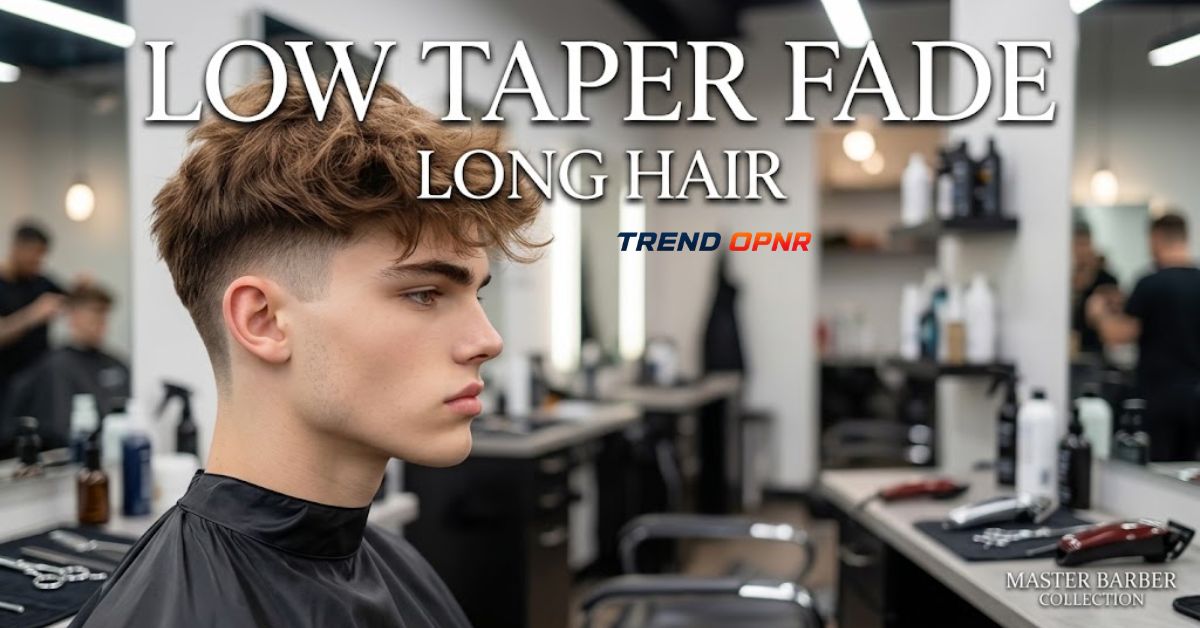

Long hair does not have to look unstructured. A carefully placed low taper fade can clean up the ears, sideburns, and neckline while preserving the length, texture, and movement that make longer hairstyles distinctive. The result is especially versatile because the top can remain straight, wavy, curly, coily, layered, tied back, or naturally loose.
This guide covers 40 variations, with practical advice for face shape, hair type, styling, barber communication, products, maintenance, beard integration, and professional wear. The goal is not simply to copy a photograph, but to choose a shape that works with your facial structure, density, natural growth pattern, and everyday routine.
What Is a Low Taper Fade with Long Hair, and Who Does It Work Best For?
A low taper fade keeps the shortest portion close to the ears and lower neckline instead of pushing the fade high into the sides. That leaves more visual width through the upper sides while allowing the longer top to remain the dominant feature.
It works especially well for people who want clean edges without sacrificing preserved length. Straight hair can look polished, wavy hair can emphasize movement, curly hair can retain definition, and coily or afro-textured hair can keep substantial volume above the blend.
KEY POINTS:
- The fade placement remains low around the ears and lower sideburn area.
- The longer top can remain several inches long or reach shoulder length.
- The neckline can be natural or squared depending on the desired finish.
- The sides should transition gradually rather than creating an abrupt disconnect unless a deliberately dramatic look is wanted.
- Hair texture should influence the cutting and styling method.
- Face shape should guide volume, parting, fringe, and overall silhouette.
- A clean perimeter can make long hair appear intentional rather than grown out.
- Regular touch-ups keep the lower fade crisp while the top can usually grow for longer periods.
What Is a Low Taper Fade with Long Hair?
The basic idea is simple: retain substantial length through the top, front, and, when desired, back while gradually reducing density around the lower sides, ears, sideburns, and neckline. The transition is deliberately restrained so the haircut does not visually compete with the longer section.
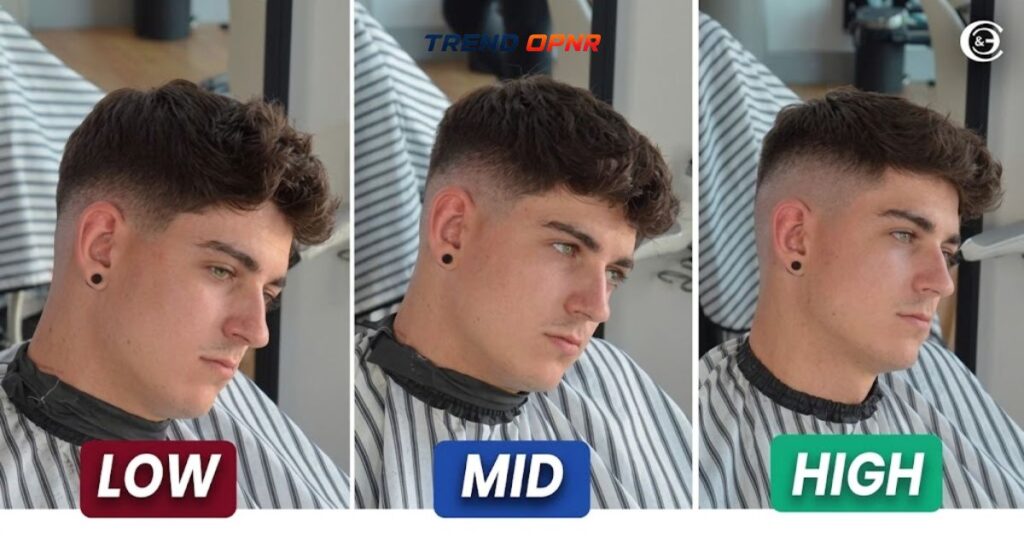
A good result depends on the relationship between the fade height and the preserved length. If the fade climbs too high, the haircut can begin to resemble a mid taper fade or high taper fade. If it stays too low, the perimeter may not remove enough bulk to create the desired clean outline.
For someone searching for Low Taper Fade Long Hair, the most important distinction is that the long section remains the star of the haircut. The taper is there to refine the silhouette, not to turn the hairstyle into a short-sided cut.
How Is a Low Taper Fade Different from a Regular Taper?
A taper gradually reduces hair around a specific perimeter without necessarily exposing much scalp. A fade generally takes the reduction shorter and creates a more visible transition between very short and longer hair.
A low taper fade combines the controlled placement of a low taper with the blended graduation associated with a fade haircut. Depending on the barber and desired finish, the shortest area may use a zero guard or remain slightly longer.
| Style | Starts At | Goes To | Best For |
| Low Taper Fade | Lower ear and sideburn area | Very short or near-skin | Long tops, professional wear |
| Mid Taper Fade | Around temple level | Short or near-skin | More visible contrast |
| High Taper Fade | Higher temple area | Short or near-skin | Dramatic silhouettes |
| Skin Fade | Chosen fade zone | Skin | Maximum contrast |
| Classic Taper | Lower perimeter | Leaves more length | Conservative styling |
| Drop Fade | Curves behind the ear | Very short | Curved modern shape |
| Shadow Fade | Lower fade zone | Soft shadow | Subtle transitions |
The biggest advantage is control. A low placement preserves more of the original facial framing than an aggressive fade, while the gradual transition prevents the sides from appearing bulky.
Where Exactly Does a Low Taper Fade Start?
The precise starting point varies according to head shape, hair density, sideburn growth, and the barber’s technique. Generally, the transition begins close to the ears and lower temple area, then works downward toward the neckline.
The barber should also decide how the sideburns connect to facial hair. A natural connection can look softer, while a tighter beard blend can create a more deliberate grooming effect.
The neckline deserves equal attention. A natural neckline follows the existing growth pattern and tends to grow out softly. A squared neckline creates a sharper visual boundary but usually demands more frequent cleanup.
Why Is the Low Taper Fade Long Hair So Popular in 2026?
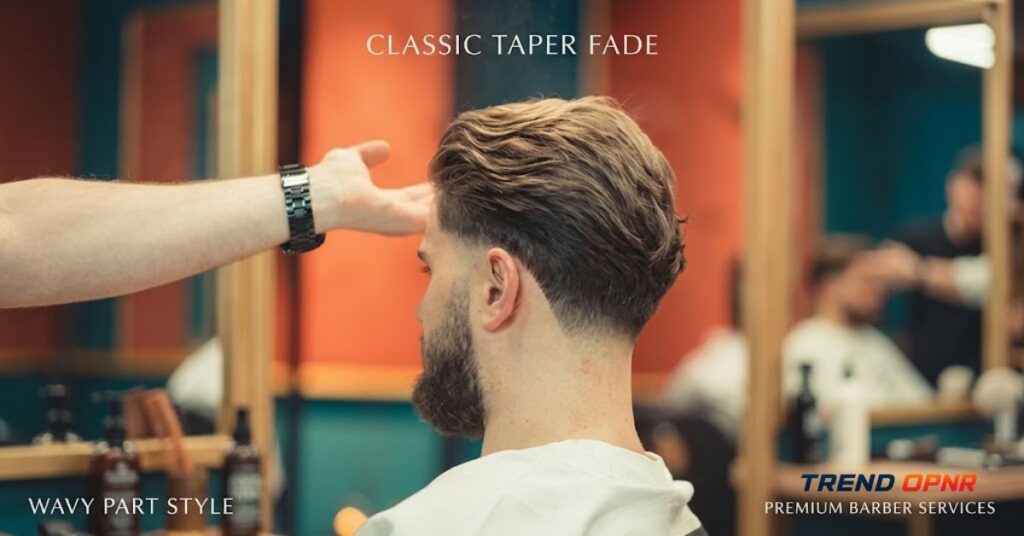
The appeal comes from versatility. Longer hair gives room for styling changes, while a clean lower perimeter provides enough structure to keep the overall appearance intentional.
The look also fits the broader movement toward natural texture, longer men’s hairstyles, layered shapes, curtains, modern mullets, and less aggressive fade placement. Rather than removing most of the sides, the haircut allows the wearer to keep a substantial amount of their identity in the top and back.
For Low Taper Fade Long Hair, the attraction is therefore less about one specific trend and more about flexibility. The same underlying haircut can be adapted to an office environment, casual wear, a formal event, a gym routine, or an active outdoor lifestyle.
40 Best Low Taper Fade Long Hair Styles for Men
Below are the original 35 style categories from the competitor structure, expanded with five additional variations to create a 40-style collection. Each option can be customized according to density, texture, face shape, and preferred maintenance level.
Classic Long Hair Styles
1. Long Hair with Low Taper Fade (The Classic)
The classic version leaves the top and front generous while the lower sides become progressively shorter. It is an excellent starting point because it does not force a specific part, fringe, curl pattern, or tied-back style.
For Low Taper Fade Long Hair, ask the barber to preserve the top and concentrate the cleanup around the lower perimeter. This works particularly well when the wearer wants maximum styling freedom.
- Best For: Oval, rectangular, and square faces; straight to wavy hair
- What to Tell Your Barber: “Keep my top length and create a low, gradual taper around the ears and neckline. Keep the transition soft.”
- Products: Styling cream, light pomade, leave-in conditioner
- Pro Tip: Ask for subtle bulk removal rather than aggressive thinning if the top already has good movement.
2. Low Taper Fade with Long Slicked Back Hair
A slicked-back version creates a longer, cleaner silhouette by directing the front and crown backward. The sides remain controlled without competing with the top.
This is a strong choice for formal occasions and professional settings when the finish is polished rather than overly wet.
- Best For: Oval and square faces; straight or moderately wavy hair
- What to Tell Your Barber: “Keep enough length for a full slick back and keep the taper low around the ears.”
- Products: Medium-hold pomade, high-shine pomade, finishing spray
- Pro Tip: Blow-dry backward first, then apply product. This gives the hair direction before the styling product provides hold.
3. Low Taper Fade with Long Wavy Hair
Waves provide natural movement, so the haircut should preserve the wave pattern rather than flattening it with excessive thinning.
The sides provide structure while the top remains soft and expressive. Face-framing layers can help prevent shoulder-length hair from becoming visually heavy.
- Best For: Square, oval, and rectangular faces; medium to thick wavy hair
- What to Tell Your Barber: “Keep the natural wave pattern and only remove enough bulk to control the perimeter.”
- Products: Sea salt spray, light mousse, texturizing cream
- Pro Tip: Scrunch damp hair and let it air-dry or diffuse instead of repeatedly brushing it.
4. Low Taper Fade with Long Straight Hair
Straight hair makes every cutting decision highly visible. A smooth top can create a strong contrast with the shorter sides, especially when the ends are healthy and neatly shaped.
For Low Taper Fade Long Hair, straight hair also provides several styling directions, including center parts, side parts, slick backs, long fringes, and sleek flowing layers.
- Best For: Oval, heart, diamond, and rectangular faces
- What to Tell Your Barber: “Preserve the straight length and keep the taper low and clean.”
- Products: Matte clay, medium pomade, heat protectant
- Pro Tip: If using a flat iron, apply heat protection before styling and keep the temperature appropriate for the hair’s condition.
5. Low Taper Fade with Long Curly Hair
Curly hair can make the transition look softer because the curls visually blur the boundary between longer and shorter sections. The barber should account for shrinkage before deciding where the top will fall.
The best approach is usually to preserve curl definition while removing unwanted side bulk. Excessive thinning can disrupt the curl pattern.
- Best For: Round, square, oval, and heart faces; curly hair
- What to Tell Your Barber: “Keep my curl pattern intact and taper only the lower sides and perimeter.”
- Products: Curl cream, leave-in conditioner, defining gel, diffuser
- Pro Tip: Bring your hair in its normal curl state so the barber can see its true shape.
Tied & Pinned Up Styles
6. Low Taper Fade with Man Bun
A man bun works when the top has enough length to gather comfortably without excessive tension. The taper makes the exposed sides look intentional while the bun creates height and length through the upper silhouette.
The combination can move easily between casual wear and a more refined dinner or business setting.
- Best For: Square, oval, and rectangular faces; thick straight or wavy hair
- What to Tell Your Barber: “Keep enough length for a secure bun and keep the taper low.”
- Products: Styling cream, light wax, seamless elastic
- Pro Tip: Avoid tying the bun extremely tightly every day to reduce mechanical stress and breakage.
7. Low Taper Fade with Half-Up Long Hair
A half-up style provides a useful middle ground between wearing the hair completely loose and tying everything back. The lower lengths remain visible while the upper section gains structure.
It is particularly useful for people with thick hair who want their face more open without committing to a full ponytail.
- Best For: Oval, heart, and rectangular faces
- What to Tell Your Barber: “Leave enough top length for a half-up style and keep the lower taper subtle.”
- Products: Styling cream, light wax, hair tie
- Pro Tip: Change the tie position occasionally rather than placing tension on exactly the same section every day.
8. Low Taper Fade with Slick Back Bun
The slick-back bun gives the haircut a cleaner, more controlled silhouette. The long hair is directed backward before being secured, while the lower taper creates definition around the ears and neckline.
This style works particularly well when the wearer wants the long top to look deliberate rather than loose.
- Best For: Square, oval, and heart faces; straight or thick wavy hair
- What to Tell Your Barber: “Preserve enough length for a low bun and keep the taper soft around the perimeter.”
- Products: Strong-hold pomade, styling cream, flyaway serum
- Pro Tip: Apply product sparingly. Excessive product can make long hair look flat and heavy.
Parted & Framed Styles
9. Low Taper Fade with Curtain Hair
Curtain hair creates two long sections that frame the forehead and cheeks. A center part keeps the look symmetrical while the taper provides a clean foundation underneath.
This variation is especially effective when the hair naturally falls into a center part.
- Best For: Heart, diamond, and oval faces; straight to wavy hair
- What to Tell Your Barber: “Preserve enough front length for curtains and keep the taper low.”
- Products: Lightweight cream, sea salt spray, round brush
- Pro Tip: Blow-dry each side away from the center before letting it fall naturally into place.
10. Low Taper Fade with Center-Parted Long Hair
A defined center part emphasizes facial symmetry and creates a strong vertical division through the longer top.
The style can be sleek or textured depending on the hair type, making it more adaptable than it initially appears.
- Best For: Heart, diamond, and oval faces
- What to Tell Your Barber: “Keep the front long enough for a stable center part and avoid shortening the face-framing pieces.”
- Products: Light pomade, styling cream, finishing spray
- Pro Tip: Find your natural part instead of forcing a perfectly centered division if your growth pattern strongly favors one side.
11. Low Taper Fade with Side Part
A side part creates direction and can visually add width to one side of the hairstyle. It works particularly well with straight and medium-textured hair.
For a more modern appearance, keep the part natural rather than creating an extremely hard line.
- Best For: Oval, rectangular, and square faces
- What to Tell Your Barber: “Keep the top long enough for a side part and keep the taper low.”
- Products: Medium pomade, fine-tooth comb, light spray
- Pro Tip: Direct the hair according to its natural growth pattern for better longevity.
12. Low Taper Fade with Long Fringe
A long fringe draws attention toward the forehead and upper face. The lower taper balances the added front weight without requiring the sides to be extremely short.
This is useful for people who prefer face-framing pieces instead of height.
- Best For: Round, heart, and oval faces
- What to Tell Your Barber: “Keep the fringe long and preserve the front while keeping the taper low.”
- Products: Styling cream, light mousse, finishing spray
- Pro Tip: Blow-dry the fringe in the desired direction while damp so it requires less manipulation later.
Volume & Statement Styles
13. Low Taper Fade with Long Pompadour
A long pompadour emphasizes height and directional volume at the front. The taper provides a controlled perimeter so the top can carry the visual weight.
It is one of the more dramatic choices in the collection and benefits from sufficient density.
- Best For: Rectangular, diamond, and square faces
- What to Tell Your Barber: “Preserve extra front length for a high, backward-swept pompadour.”
- Products: Volumizing mousse, medium pomade, round brush
- Pro Tip: Root direction matters more than simply adding more product. Establish the lift with a blow dryer first.
14. Low Taper Fade with Quiff
The quiff gives you lift without requiring the rigid structure of a traditional pompadour. The top can remain slightly messy and textured for a more relaxed finish.
A low taper is useful because it keeps the side silhouette restrained while the front carries the height.
- Best For: Round, heart, oval, and square faces
- What to Tell Your Barber: “Leave enough front length for a relaxed quiff and taper the sides low.”
- Products: Medium clay, texturizing paste, light mousse
- Pro Tip: Use a matte product when you want movement instead of a glossy, sculpted finish.
15. Low Taper Fade with Messy Long Hair
Messy long hair should look deliberately textured rather than simply untrimmed. Layers, face-framing pieces, and controlled bulk can give the style movement.
The low taper helps establish a clean perimeter while the top remains relaxed.
- Best For: Oval, oblong, and rectangular faces
- What to Tell Your Barber: “Keep the length and add controlled texture without making the top too thin.”
- Products: Matte clay, texturizing paste, sea salt spray
- Pro Tip: Use fingers rather than a fine comb when creating an intentionally undone finish.
16. Low Taper Fade with Blowout Long Hair
A blowout creates volume from the roots through the upper lengths. The taper acts as a visual anchor, preventing the overall shape from becoming too wide around the ears.
Fine and medium hair can benefit from this approach because directional drying can create the appearance of greater density.
- Best For: Round, oval, and heart faces
- What to Tell Your Barber: “Preserve the top for a high-volume blowout and keep the lower taper controlled.”
- Products: Volumizing mousse, finishing spray, heat protectant
- Pro Tip: Dry the roots against their natural direction first, then shape the hair into its final direction.
Retro & Bold Styles
17. Low Taper Fade with Mullet
A modern mullet keeps the back noticeably longer than the sides while allowing the front and crown to vary from short to medium length. A low taper creates a softer side transition than an aggressive fade.
The result combines retro influence with modern barbering.
- Best For: Oval, round, heart, and rectangular faces
- What to Tell Your Barber: “Keep the back distinctly longer and use a low taper on the sides rather than a high fade.”
- Products: Sea salt spray, light mousse, texturizing paste
- Pro Tip: Let the back retain movement. Excessive smoothing can remove the characteristic energy of the shape.
18. Low Taper Fade with Curtain Mullet
The curtain mullet combines a center-parted front with an extended back. The taper keeps the sides cleaner while allowing the front and rear sections to remain expressive.
It is an excellent choice for someone who wants a noticeable fashion haircut without a completely shaved side.
- Best For: Oval, heart, and diamond faces; straight to wavy hair
- What to Tell Your Barber: “Keep a center-parted front and longer back, with a low taper on the sides.”
- Products: Lightweight cream, sea salt spray, light wax
- Pro Tip: Check the haircut from the side and back before leaving the chair because the profile determines much of the mullet’s impact.
19. Low Taper Fade with Comb Over
A long comb over can create asymmetry and directional volume. It is particularly effective with straight hair that naturally responds to brushing.
The taper prevents the lower sides from competing with the large upper section.
- Best For: Oval, square, and rectangular faces
- What to Tell Your Barber: “Keep the top long enough for a pronounced comb over and maintain a low taper.”
- Products: Strong pomade, fine-tooth comb, finishing spray
- Pro Tip: Build the part while the hair is damp, then refine it once the hair has dried.
20. Low Taper Fade with Long Wolf Cut
A wolf cut depends on layers, texture, and controlled irregularity. The low taper adds structure around the ears without taking away the shaggy quality of the longer top.
It suits people who want a less formal shape with visible movement.
- Best For: Oval, heart, and diamond faces; wavy or textured hair
- What to Tell Your Barber: “Keep the wolf-cut layers through the top and back, but use a low taper around the lower sides.”
- Products: Sea salt spray, light mousse, texturizing powder
- Pro Tip: Avoid over-polishing the layers. The appeal comes from movement and separation.
Textured & Cultural Styles
21. Low Taper Fade with Braided Top
A braided top can include cornrows, individual braids, box braids, or other protective styling approaches depending on the hair and desired pattern.
The taper should be designed around the intended braid placement rather than treated as an unrelated detail.
- Best For: Square, oval, round, and diamond faces; coily or afro-textured hair
- What to Tell Your Barber: “Keep sufficient length and density for the braid pattern, with a low taper around the perimeter.”
- Products: Leave-in conditioner, braid spray, edge control, argan oil
- Pro Tip: Discuss braid tension with the stylist. A sharp perimeter should not come at the expense of scalp comfort.
22. Low Taper Fade with Twist Out Top
A twist-out produces defined curls, coils, bounce, and separation. The low taper frames the resulting volume without taking away from the natural pattern.
The haircut should be planned around the actual texture rather than a stretched version of the hair.
- Best For: Round, oval, and square faces; coily hair
- What to Tell Your Barber: “Preserve the top for a full twist-out and keep the taper low around the sides.”
- Products: Curl cream, leave-in conditioner, defining gel
- Pro Tip: Showing the barber your usual finished texture makes it easier to judge the correct amount of bulk.
23. Low Taper Fade with Long Afro-Textured Hair
Long afro-textured hair can create substantial height and density. The taper can clean the lower perimeter while leaving the natural volume intact.
The key is to preserve the coil structure and avoid removing too much density from the top.
- Best For: Oval, round, and square faces; afro-textured hair
- What to Tell Your Barber: “Keep the top full and use a low taper only where I want the perimeter cleaned.”
- Products: Leave-in conditioner, defining cream, argan oil
- Pro Tip: Pick the hair into its normal shape before the consultation so the barber can see the natural growth pattern.
Read More: Low Taper Fade for Kids & Boys: 20+ School-Safe Styles, Barber Tips & Complete Parent Guide (2026)
2026 Trending Styles
24. Low Taper Fade with Two-Block Cut
The two-block shape creates a clear difference between the longer upper section and shorter lower area. A low taper can soften that separation and make it easier to wear day to day.
It is particularly adaptable to straight and wavy hair.
- Best For: Oval, diamond, and heart faces
- What to Tell Your Barber: “Keep the two-block length on top but soften the lower sides with a low taper.”
- Products: Lightweight cream, blow dryer, round brush
- Pro Tip: Keep the sideburn connection soft if you want a natural rather than sharply disconnected finish.
25. Low Taper Fade with Fluffy Long Top
The fluffy top relies on root volume, light texture, and movement. It can make fine or medium hair appear more substantial without requiring heavy products.
The lower taper keeps the sides controlled while the upper shape stays airy.
- Best For: Round, oval, and heart faces; fine to medium wavy hair
- What to Tell Your Barber: “Preserve length and create enough shape for a soft, fluffy finish.”
- Products: Volumizing mousse, light finishing spray, diffuser
- Pro Tip: Use lightweight products so the roots do not collapse under excessive weight.
26. Low Taper Fade with Textured Long Top
A textured top uses selective cutting to create separation and movement. Point cutting can remove visual bulk without dramatically shortening the overall length.
This is useful when thick hair feels heavy but the wearer does not want to lose the long silhouette.
- Best For: All face shapes; medium to thick hair
- What to Tell Your Barber: “Keep the overall length but add controlled texture through the top.”
- Products: Matte clay, texturizing paste, sea salt spray
- Pro Tip: Ask for texture that follows the natural movement rather than random thinning throughout the head.
27. Low Taper Fade with Ponytail
A ponytail is practical when the top has enough preserved length to gather securely. The taper provides a neat frame around the ears while the ponytail carries the majority of the visual length.
This is especially useful for active lifestyles.
- Best For: All face shapes; any hair type with adequate length
- What to Tell Your Barber: “Preserve enough length for a comfortable ponytail and keep the perimeter low.”
- Products: Styling cream, seamless elastic, finishing spray
- Pro Tip: Avoid rough elastics that can increase friction and contribute to breakage.
28. Low Taper Fade with Beach Waves
Beach waves create a relaxed, textured appearance. The look can be produced naturally in wavy hair or encouraged with styling products in straighter hair.
The clean lower taper contrasts nicely with the informal upper texture.
- Best For: Oval, square, rectangular, and heart faces
- What to Tell Your Barber: “Preserve the top and let me style it into loose waves while keeping the taper low.”
- Products: Sea salt spray, texturizing cream, light mousse
- Pro Tip: Apply texture product to damp lengths and avoid repeatedly touching the hair while it dries.
29. Low Taper Fade with Long Side Swept Hair
A dramatic side sweep creates directional movement across the forehead and crown. The shorter lower side can make the sweep appear more pronounced.
It is a strong option when a traditional center part feels too symmetrical.
- Best For: Oval, rectangular, and diamond faces
- What to Tell Your Barber: “Keep enough length for a strong side sweep and maintain a low taper around the lower sides.”
- Products: Medium pomade, round brush, blow dryer
- Pro Tip: Dry the roots in the opposite direction first to create extra lift before directing the hair into the sweep.
30. Low Taper Fade with Long Shag Cut
The shag cut combines layers, movement, and face-framing pieces. The lower taper introduces a cleaner edge without destroying the deliberately loose silhouette.
It works especially well when the hair has natural wave or body.
- Best For: Oval, heart, diamond, and rectangular faces
- What to Tell Your Barber: “Keep the shag layers and long movement, but make the taper low and understated.”
- Products: Sea salt spray, styling cream, texturizing paste
- Pro Tip: Preserve enough length around the cheekbones to create natural face framing.
31. Low Taper Fade with Coily Long Hair
Long coily hair benefits from careful bulk management. The lower taper can reduce unwanted width while leaving the upper coil structure full.
Moisture and gentle detangling are essential because longer coils can be more vulnerable to mechanical breakage.
- Best For: Round, oval, and square faces; type 3C to 4C hair
- What to Tell Your Barber: “Keep my coily length intact and taper only the lower perimeter.”
- Products: Leave-in conditioner, defining cream, argan oil
- Pro Tip: Detangle gently when the hair is wet and conditioned instead of aggressively brushing dry coils.
32. Low Taper Fade with Flow Hairstyle
Flow hair is designed around movement rather than a rigid shape. The top and back can move naturally while the taper creates a clean foundation around the lower sides.
It is one of the easiest choices for someone who dislikes daily sculpting.
- Best For: All face shapes; medium to long straight or wavy hair
- What to Tell Your Barber: “Keep the top and back flowing naturally while cleaning the lower sides with a low taper.”
- Products: Leave-in conditioner, light cream, sea salt spray
- Pro Tip: Let the hair dry in its natural direction instead of forcing it into a rigid style.
33. Low Taper Fade with Long Faux Hawk
A long faux hawk concentrates visual height through the center while keeping the sides controlled. Unlike a traditional mohawk, it does not require dramatically shaved sides.
The result can therefore be expressive without being extreme.
- Best For: Oval, square, and diamond faces
- What to Tell Your Barber: “Keep the top long enough to create a central ridge and keep the taper low.”
- Products: Medium clay, texturizing paste, light spray
- Pro Tip: Use product at the roots rather than coating the full length.
34. Low Taper Fade with Sleek Long Top
A sleek long top is minimalist and polished. Straight hair can be brushed, blow-dried, or carefully flat-ironed to create a controlled surface.
The low taper supplies just enough contrast to keep the hairstyle from appearing shapeless.
- Best For: Oval, heart, diamond, and rectangular faces
- What to Tell Your Barber: “Keep the top long and smooth with minimal texture, while keeping the taper low.”
- Products: High-shine pomade, heat protectant, fine-tooth comb
- Pro Tip: Healthy ends matter more than excessive product when aiming for a glossy finish.
35. Low Taper Fade with Long Natural Texture
Natural texture allows the hair to behave according to its existing pattern instead of forcing it into a highly structured shape.
This can mean waves, curls, coils, bends, or simply irregular movement through straight hair. The lower taper gives the result a deliberate boundary.
- Best For: All face shapes and natural textures
- What to Tell Your Barber: “Preserve my natural movement and keep the taper low without over-texturizing the top.”
- Products: Leave-in conditioner, curl cream, sea salt spray
- Pro Tip: Start with a small amount of product and add more only when the hair genuinely needs additional control.
36. Low Taper Fade with Long Fringe Flow
This variation combines a long front with a loose flowing crown. The fringe can sweep diagonally or fall naturally around the forehead.
It is useful for people who want face-framing texture without committing to a formal part.
- Best For: Heart, oval, and diamond faces
- What to Tell Your Barber: “Preserve the front length and shape the top for a loose fringe flow with a low taper.”
- Products: Light mousse, styling cream, finishing spray
- Pro Tip: Keep the front slightly longer than the crown if you want a stronger flowing effect.
37. Low Taper Fade with Long Layered Hair
Layering distributes weight through longer lengths and can improve movement without sacrificing the overall haircut. It is particularly useful when the hair is thick or shoulder length.
The taper handles the perimeter while the layers manage the upper mass.
- Best For: Oval, rectangular, heart, and square faces
- What to Tell Your Barber: “Keep the overall length but create long layers that follow my natural movement.”
- Products: Leave-in conditioner, light mousse, texturizing cream
- Pro Tip: Avoid excessive short layers if your main goal is to preserve a long, flowing silhouette.
38. Low Taper Fade with Long Sideburn Connection
This style focuses on the transition between the longer top, sideburns, and facial hair. The taper can remain extremely subtle while the sideburn area receives precise shaping.
It is a strong option for people who want grooming refinement without obvious fading.
- Best For: Oval, square, and rectangular faces
- What to Tell Your Barber: “Keep the taper low and make the sideburn transition natural rather than sharply disconnected.”
- Products: Light styling cream, beard balm, finishing spray
- Pro Tip: Decide whether the sideburn should connect naturally into facial hair before the barber begins.
39. Low Taper Fade with Shoulder-Length Waves
Shoulder-length waves create substantial movement through the sides and back. The low taper can reduce visual bulk around the ears while allowing the lower lengths to remain full.
This is a particularly effective long-hair option when the wearer wants a natural, flowing shape.
- Best For: Oval, square, rectangular, and diamond faces
- What to Tell Your Barber: “Preserve the shoulder-length wave pattern and taper only the lower perimeter.”
- Products: Leave-in conditioner, sea salt spray, curl cream
- Pro Tip: Ask for face-framing layers if the hair feels too heavy around the cheeks.
40. Low Taper Fade with Long Textured Fringe and Flow
The final variation combines a textured fringe with a longer flowing crown. It can be worn forward, swept to one side, or separated into a loose center part.
It provides more styling versatility than a fixed fringe because the longer lengths can change direction.
- Best For: Oval, heart, diamond, and rectangular faces
- What to Tell Your Barber: “Keep the fringe long enough to move and preserve the flowing top, with a low taper around the lower sides.”
- Products: Texturizing paste, light mousse, sea salt spray
- Pro Tip: Use different styling directions on different days to make the same haircut look noticeably different.
Which Low Taper Fade Long Hair Style Suits Your Face Shape?
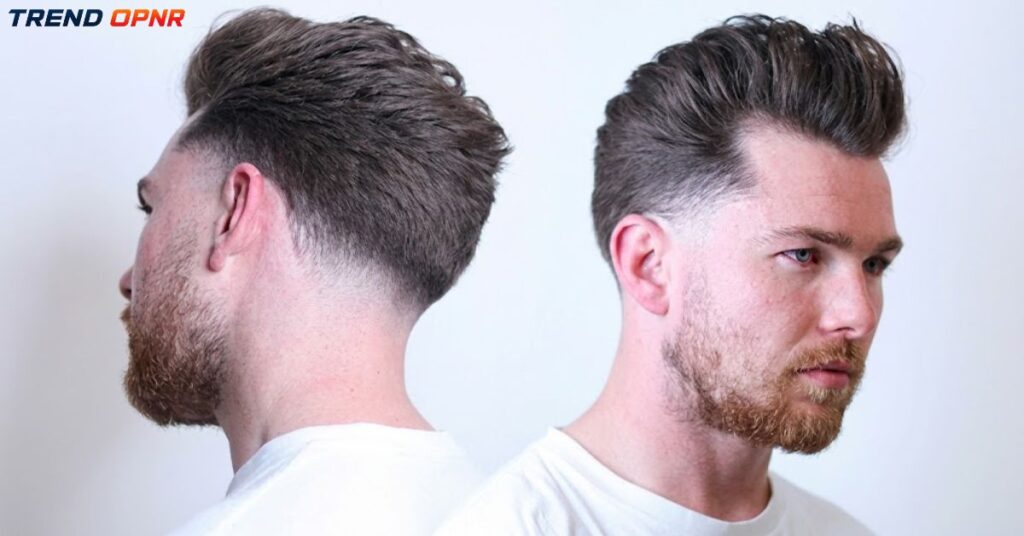
Face shape should be treated as a guide rather than a rigid rule. Hair density, natural movement, forehead height, jawline, cheekbones, and personal styling preferences can matter just as much.
For Low Taper Fade Long Hair, the most useful principle is to balance facial proportions rather than trying to make every face conform to one “ideal” haircut.
What Hairstyle Works Best for Oval Face Shape?
An oval face is generally adaptable because facial proportions are relatively balanced. Almost every major long-hair variation can work, from slicked-back styles and curtains to waves, layers, man buns, and textured tops.
The deciding factor is usually hair type and lifestyle rather than facial structure. Straight hair may suit a sleek finish, while wavy or curly hair can emphasize natural movement.
What Hairstyle Works Best for a Square Face Shape?
A square face typically has a strong jawline and relatively broad facial structure. Long hair can soften the overall geometry, while a low taper keeps the lower sides controlled without creating excessive contrast.
Slick backs, man buns, textured waves, and longer layered styles can all work well. Avoid removing too much side width if you want to preserve the natural strength of the jaw angle.
What Hairstyle Works Best for a Round Face Shape?
Round faces often benefit from some vertical emphasis and reduced bulk around the widest part of the cheeks. A quiff, curtain style, center part, or controlled volume through the crown can create that effect.
Avoid excessive side volume if the goal is a more elongated appearance. A low taper naturally helps because its shortest section remains concentrated near the lower perimeter.
What Hairstyle Works Best for a Heart Face Shape?
A heart-shaped face often has a broader forehead and narrower chin. Face-framing pieces, curtains, waves, and moderate fringe can help distribute attention more evenly.
Very heavy height at the crown can exaggerate forehead width, while excessively short sides can make the chin look narrower. A soft low taper is therefore a useful middle ground.
What Hairstyle Works Best for Diamond Face Shape?
Diamond-shaped faces tend to have prominent cheekbones with narrower forehead and chin areas. Movement through the top can complement the cheekbones while longer fringe or side-swept hair can soften the upper and lower proportions.
A pompadour, textured flow, curtains, or layered waves can all work. The goal is to avoid making the sides look dramatically narrower than the cheek area.
What Hairstyle Works Best for a Long or Oblong Face Shape?
Long faces generally benefit from styles that create horizontal movement rather than extreme vertical height. Waves, side-swept hair, curtains, and layered lengths can add visual width.
Avoid stacking too much volume directly above the forehead if it makes the face appear longer. Keeping some natural side width through the longer top and sides can produce better balance.
| Face Shape | Strong Choices | Watch For |
| Oval | Almost every variation | Very few restrictions |
| Square | Slick back, bun, waves | Excessively harsh disconnects |
| Round | Curtains, quiff, side sweep | Excess side volume |
| Heart | Curtains, waves, layered fringe | Extreme crown height |
| Diamond | Flow, pompadour, textured layers | Excessively tight sides |
| Rectangular | Waves, shag, side sweep | Too much vertical height |
| Oblong | Flow, curtains, half-up styles | Very tall pompadours |
How Does the Low Taper Fade Work for Different Hair Types?
Hair texture changes how the taper appears, how the blend should be cut, and how the top will behave after washing. A skilled barber should work with the natural texture rather than treating every head of hair as if it were straight.
Low Taper Fade Long Hair for Straight Hair
Straight hair makes a fade transition easy to see because the strands tend to lie close to the head. This can produce a very precise result, but it also means uneven cutting is more visible.
Use a pomade for a polished finish, matte clay for separation, or lightweight mousse when additional root volume is needed. Heat styling can help directional looks, but heat protection should be part of the routine.
Low Taper Fade Long Hair for Curly Hair
Curly hair benefits from preserving the curl pattern and accounting for shrinkage. The barber should assess the curls in their normal condition before deciding how much length or bulk to remove.
Curl cream and leave-in conditioner can maintain definition, while diffusing can encourage volume without excessive frizz. Avoid brushing finished curls repeatedly because it can disrupt the definition.
Low Taper Fade Long Hair for Coily or Afro-Textured Hair
Coily hair can create substantial height and density through the top. The taper should be designed around the natural growth pattern and desired shape rather than copied from a straight-hair reference.
Moisture, gentle detangling, and controlled manipulation are particularly important. A wide-tooth comb can help when the hair is properly conditioned and wet.
Low Taper Fade Long Hair for Fine or Thin Hair
Fine hair often benefits from reducing bulk around the sides while maintaining enough top length to create volume. Too much layering, however, can make the upper section look less dense.
Light mousse, volumizing products, and root-directed blow-drying can help. Heavy waxes and thick oils may flatten fine hair.
Low Taper Fade Long Hair for Thick or Coarse Hair
Thick hair can create unwanted weight around the blend zone. Instead of aggressively removing visible length, the barber can use controlled texturizing and scissor work to manage density.
Coarse hair may also require more moisture during styling. A leave-in conditioner or lightweight styling cream can improve manageability without creating a greasy finish.
Low taper fade long hair straight hair
Straight hair gives this haircut a clean visual structure because the transition from longer lengths to the lower taper is easy to see. A sleek long top, center part, side part, or slick-back shape can all work without fighting a strong curl pattern.
When the hair is fine, focus on root volume rather than adding heavy layers. When it is thick, controlled texture can reduce weight while keeping the overall length intact.
Low taper fade long hair Male

For men, the strongest version is usually the one that reflects the existing hairline, density, and styling habits rather than following a generic reference image. A male haircut can range from understated and professional to highly expressive without changing the fundamental low placement.
Facial hair can also influence the result. Stubble, a full beard, or a clean shave each changes how the sideburns and lower face interact with the haircut.
Low Taper with long hair on top
Keeping long hair on top creates the defining contrast of this haircut. The top can remain three to five inches long, reach shoulder length, or extend farther when the wearer wants a ponytail, bun, braid, or flowing style.
The longer the top becomes, the more important it is to manage weight, split ends, and movement. A taper does not replace regular care of the preserved length.
Mid Taper fade Long hair
A mid taper fade begins higher and therefore produces stronger visual contrast around the temples and upper sides. It can be a better option for bold silhouettes, particularly modern mullets, faux hawks, and highly textured tops.
For someone who wants the long hair to remain the dominant feature, a lower placement is usually easier to balance. The mid taper is better suited to people who deliberately want the fade to become part of the hairstyle’s visual statement.
Low taper fade long hair curly hair
Curly hair and a low taper can create a particularly soft blend because the curl pattern breaks up the visual boundary between lengths. The key is preserving curl definition while removing only the bulk that interferes with the perimeter.
Before the appointment, avoid dramatically changing your normal curl routine. The barber needs to see how the curls naturally sit, shrink, and expand.
Low Taper Fade Long hair back
The back view is important because the neckline and longer rear section determine whether the haircut looks balanced. A natural neckline works well for softer styles, while a squared neckline provides a sharper boundary.
If the style includes a mullet, flow, bun, or shoulder-length hair, the barber should check the back silhouette carefully. The transition should complement the preserved rear length rather than ending abruptly.
What Should You Tell Your Barber for a Long-Hair Low-Taper Fade?
The most useful barber consultation describes four things: where the taper should begin, how much length must be preserved, how the neckline should finish, and how the sideburns should connect.
Bring reference photos from the front, side, and back. A single photograph rarely communicates how much length exists behind the ears or how the neckline should look.
What Is the Exact Script to Ask for This Cut?
A practical script is:
“Keep my long top and preserve the length I have now. Start the taper low around the ears and lower sideburn area, blend gradually toward the neckline, and keep the transition soft. I want the top shaped according to my natural texture rather than aggressively shortened.”
For Low Taper Fade Long Hair, you can add your desired finish: “Keep the neckline natural,” “square the neckline,” “connect the sideburns to my beard,” or “leave enough length for a bun.”
Which Clipper Guard Sizes Are Used for a Low Taper Fade?
Guard progression depends on the barber’s tools, clipper calibration, hair texture, and desired finish. A common progression may move from a zero guard or very short setting at the lowest area toward a #1, #2, and #3 farther up.
| Zone | Common Guard | Approximate Length | Purpose |
| Lowest neckline | #0 / zero guard | Very short | Establishes the base |
| Lower side | #0.5 / #1 | Around 1.5–3mm | Begins transition |
| Middle side | #2 | Around 6mm | Builds graduation |
| Upper side | #3 | Around 10mm | Connects toward longer hair |
| Top | Scissors | Preserved length | Maintains the long section |
These numbers should be treated as reference points, not universal measurements. Different clippers and barber techniques can produce different results.
What Reference Photos Should You Bring to the Barber?
Bring at least three angles: front, side, and back. The front shows the fringe and face framing, the side reveals the fade height and profile, and the back communicates the neckline and rear length.
Also tell the barber which elements you actually want. If the model has thicker hair or a different curl pattern, say whether you want the shape, length, taper, texture, or styling direction copied.
When Is the Best Time to Book a Barber Appointment?
The best appointment is the one that allows enough time for consultation and careful cutting. Rushing through the service can be more damaging to the result than choosing a particular time of day.
If you have a complex long-hair shape, tell the barbershop when booking that you want a consultation rather than a quick fade-only service. This gives the barber time to assess the top, back, and texture.
How to Pair a Low Taper Fade Long Hair and a Beard
A beard can make the transition from scalp to jaw look more cohesive when the sideburns are blended thoughtfully. The taper does not need to disappear completely into the beard; the goal is a deliberate connection.
A clean shave creates maximum contrast, while stubble offers a subtle middle ground. A fuller beard can complement long slick backs, buns, and textured flowing styles.
Which Beard Style Complements a Low Taper Fade with Long Hair?
| Beard Style | Works Well With | Overall Effect |
| Stubble | Most long styles | Casual and balanced |
| Heavy stubble | Textured and slick styles | Stronger facial definition |
| Full beard | Man bun, slick back, flow | Bold and substantial |
| Clean shave | Curtains, sleek top | High contrast |
| Chinstrap | Structured styles | Defined jaw framing |
| Beard fade | Most taper variations | Continuous transition |
For Low Taper Fade Long Hair, the beard should support the facial structure rather than simply become another area of contrast. A barber can adjust the sideburn-to-beard transition according to the jaw angle and density of facial hair.
How to Style Low Taper Fade Long Hair: Step-by-Step
How to Style Long Straight Hair with a Low Taper Fade
- Wash or dampen the hair according to your normal routine.
- Apply heat protectant before using a blow dryer.
- Blow-dry the roots in the direction required by the final style.
- Use a round brush, paddle brush, or vent brush depending on the desired finish.
- Apply a small amount of pomade, clay, or styling cream.
- Refine the part or directional movement with a comb.
- Finish with a light spray if additional hold is necessary.
Styling time: approximately 8–12 minutes for a straightforward directional style.
How to Style Long Wavy Hair with a Low Taper Fade
- Gently remove excess water with a microfiber towel.
- Apply sea salt spray or lightweight mousse.
- Add a small amount of texturizing cream through the lengths.
- Scrunch upward to encourage the natural wave pattern.
- Air-dry or use a diffuser on low to moderate heat.
- Separate the roots gently once completely dry.
Styling time: approximately 10–15 minutes, depending largely on drying time.
How to Style Long Curly Hair with a Low Taper Fade
- Cleanse with a gentle, moisture-preserving shampoo when needed.
- Apply leave-in conditioner to wet hair.
- Add curl cream through the lengths.
- Scrunch the hair upward to encourage curl definition.
- Diffuse carefully if additional volume is desired.
- Allow the curls to dry completely before manipulating them.
Styling time: approximately 15–20 minutes, depending on density and drying method.
Best Products for Low Taper Fade Long Hair
The best product depends on texture, density, finish, and the amount of control required. Long hair generally benefits from lighter application because excessive product can flatten movement and create buildup.
| Hair Type | Main Goal | Product | Finish |
| Straight | Sleekness | Pomade | Glossy or natural |
| Straight | Texture | Matte clay | Matte |
| Wavy | Movement | Sea salt spray | Natural texture |
| Wavy | Definition | Texturizing paste | Matte |
| Curly | Curl definition | Curl cream | Natural |
| Curly | Moisture | Leave-in conditioner | Soft |
| Coily | Moisture | Argan oil and defining cream | Natural to glossy |
| Fine | Root volume | Volumizing mousse | Lightweight |
| Thick | Bulk control | Medium clay | Matte |
| All types | Finishing control | Finishing spray | Variable |
For Low Taper Fade Long Hair, avoid placing large amounts of heavy wax or pomade directly into the shortest fade zone. Product belongs mainly where the longer hair needs styling.
How to Maintain a Low Taper Fade with Long Hair
A fade and a long top have different maintenance schedules. The perimeter loses its crispness relatively quickly, while the longer section can often continue growing without looking dramatically different.
Your maintenance plan should therefore separate fade cleanup from top-length preservation.
How Often Should You Get a Low Taper Fade with Long Hair?
Many people prefer a fade touch-up approximately every two to four weeks. Those who like a softer, grown-in appearance can wait longer, while people who want extremely crisp edges may return sooner.
The top should be trimmed according to its condition rather than an arbitrary calendar. If the ends are healthy and the shape remains balanced, preserving length for longer can make sense.
At-Home Maintenance Tips Between Barber Visits
- Use warm rather than extremely hot water when washing.
- Detangle longer hair from the ends upward.
- Use a microfiber towel instead of rough towel rubbing.
- Consider a satin or silk pillowcase if friction is a recurring issue.
- Keep heavy styling products away from the shortest taper area.
- Protect long hair from excessive heat.
- Keep the scalp clean without aggressively stripping natural oils.
- Trim damaged ends when necessary.
- Avoid constantly pulling the same section into a tight ponytail or bun.
- Use a wide-tooth comb for wet curls and coils when appropriate.
Common Mistakes to Avoid with a Low Taper Fade Long Hair
What Are the Most Common Mistakes Men Make with This Haircut?
- Making the taper too high: This can change the intended low placement and remove more side width than desired.
- Removing too much top length: Long-hair styles depend on preserved length, so unnecessary cutting can eliminate the desired shape.
- Ignoring texture: Straight, wavy, curly, and coily hair should not all receive identical cutting methods.
- Over-thinning thick hair: Excessive thinning can create weak ends and disrupt natural movement.
- Using too much product: Heavy buildup can flatten long hair and visually muddy the transition.
- Neglecting the neckline: The neckline strongly affects the back profile.
- Ignoring the sideburn connection: An abrupt sideburn-to-beard transition can make an otherwise polished haircut feel disconnected.
- Copying a style without considering face shape: A haircut should be adapted to facial proportions rather than copied blindly.
- Using heat without protection: Long hair has more exposed length and can accumulate damage from repeated heat styling.
- Treating a fade touch-up as a full haircut: The top may not need shortening every time the perimeter needs cleanup.
Is the low-taper fade with long hair suitable for professional settings?
Yes. The low placement is generally more conservative than a high fade, especially when the neckline is natural and the transition is soft.
For an office environment or business setting, choose a controlled slick back, side part, center part, long flow, or tidy bun. Avoid excessive product, dramatic hard disconnects, or overly exaggerated volume if your workplace favors conservative grooming.
How to Style Low Taper Fade Long Hair for Different Occasions
| Occasion | Strong Style Choices | Product Direction |
| Office | Slick back, side part, center part | Pomade or matte clay |
| Date Night | Flow, curtains, slick-back bun | Cream or pomade |
| Casual | Messy texture, waves, half-up | Sea salt spray or light wax |
| Formal Event | Pompadour, sleek top | Medium or strong hold |
| Beach | Natural waves, loose flow | Sea salt spray |
| Gym | Man bun, ponytail, half-up | Styling cream |
| Weekend | Wolf cut, shag, textured flow | Lightweight texture products |
The Low Taper Fade Long Hair in 2026: History, Culture & Modern Influence
Tapering has a long history in men’s grooming, particularly through military and barbershop traditions. Over time, professional barbering transformed a practical short-hair concept into a much wider family of blends, fades, textures, and personalized shapes.
Modern barbering has also been influenced by Black barbershops, hip-hop culture, athletic grooming, Korean barbering, K-pop styling, social media, and contemporary men’s grooming. These influences helped expand the idea of what a fade could look like across different hair textures and lengths.
Today, longer hairstyles are increasingly combined with carefully controlled perimeter work. That makes the haircut less about one historical template and more about customization.
Low Taper Fade vs. Mid Taper Fade with Long Hair: Which Is Better?
The answer depends on how much contrast you want. A low taper leaves more of the upper side area intact, while a mid taper moves the transition higher and creates a stronger visual change.
| Choice | Contrast | Best Use |
| Low Taper | Subtle | Long, professional, versatile styles |
| Mid Taper | Moderate | Bolder modern shapes |
| High Taper | Strong | Dramatic statement styles |
| Skin Fade | Very strong | Maximum contrast |
For Low Taper Fade Long Hair, the lower placement is often easier to balance because the long top already provides visual interest. A mid taper becomes more compelling when the haircut intentionally depends on stronger contrast, such as a bold mullet or faux hawk.
Expert Barber Tips for the Perfect Low Taper Fade Long Hair
What Do Professional Barbers Recommend for This Style?
- Explain the fade height clearly. Do not assume every barber interprets “low” identically.
- State the amount of length you refuse to lose. Saying “keep it long” is less useful than specifying where the current length matters.
- Show multiple angles. Front, side, and back photographs remove ambiguity.
- Discuss the neckline. Natural and squared finishes create different grow-out patterns.
- Describe the blend. A soft blend and hard contrast produce very different visual results.
- Mention your normal styling routine. Hair that is worn curly should be cut with that finished shape in mind.
- Ask how the barber plans to handle bulk. This is especially important for thick and coarse hair.
- Discuss sideburns and facial hair. The connection can make the haircut look significantly more cohesive.
- Ask whether the top needs layering. Preserved length and controlled movement are not the same thing as adding many short layers.
- Do not rely entirely on guard numbers. The final result depends on technique, hair density, clipper settings, and the blend zone.
Frequently Asked Questions
Can I get a low taper cut with long hair?
Yes. A low taper can be used to clean the lower sides, sideburns, and neckline while leaving substantial length through the top and back. It can work with straight, wavy, curly, and coily textures.
The key is communicating how much length must remain. If you want a bun, ponytail, braid, curtain style, or shoulder-length flow, tell the barber before cutting begins.
How long hair for low taper fade?
There is no single required length. The top can be several inches long, medium length, shoulder length, or long enough to tie back.
The important factor is that there is enough preserved length to create the hairstyle you want. Your barber can then shape the lower taper around that existing length.
Is a low taper fade attractive?
Attractiveness is subjective, but the haircut has qualities many people find appealing: clean edges, controlled proportions, styling versatility, and the ability to retain natural texture.
The best result usually comes from matching the haircut to the person’s facial structure, hair type, grooming preferences, and lifestyle rather than choosing it solely because it is currently popular.
Is low fade or taper better?
Neither is universally better. A low fade can create a more visible reduction in length, while a classic taper generally leaves more hair through the lower perimeter.
If you want subtle grooming with substantial length retained, a taper-based approach is often easier to customize. If you want stronger contrast, a fade may be preferable.
Which fade is most attractive?
There is no objectively most attractive fade. A low fade, mid fade, high fade, skin fade, shadow fade, or drop fade can all work when the placement complements the head shape, face shape, texture, density, and desired style.
For longer hairstyles, a lower fade or taper often preserves more of the surrounding silhouette, making it particularly adaptable to flowing, curly, wavy, tied-back, and layered styles.
Conclusion
The strongest long-hair taper is not necessarily the shortest, sharpest, or most dramatic version. It is the one that preserves the right amount of length, works with the natural texture, complements facial proportions, and fits the wearer’s everyday routine.
With the right barber consultation, thoughtful taper placement, suitable styling products, and consistent hair care, long hair can look both expressive and polished. Choose the silhouette first, then customize the texture, neckline, sideburns, beard, and styling routine around it.

