
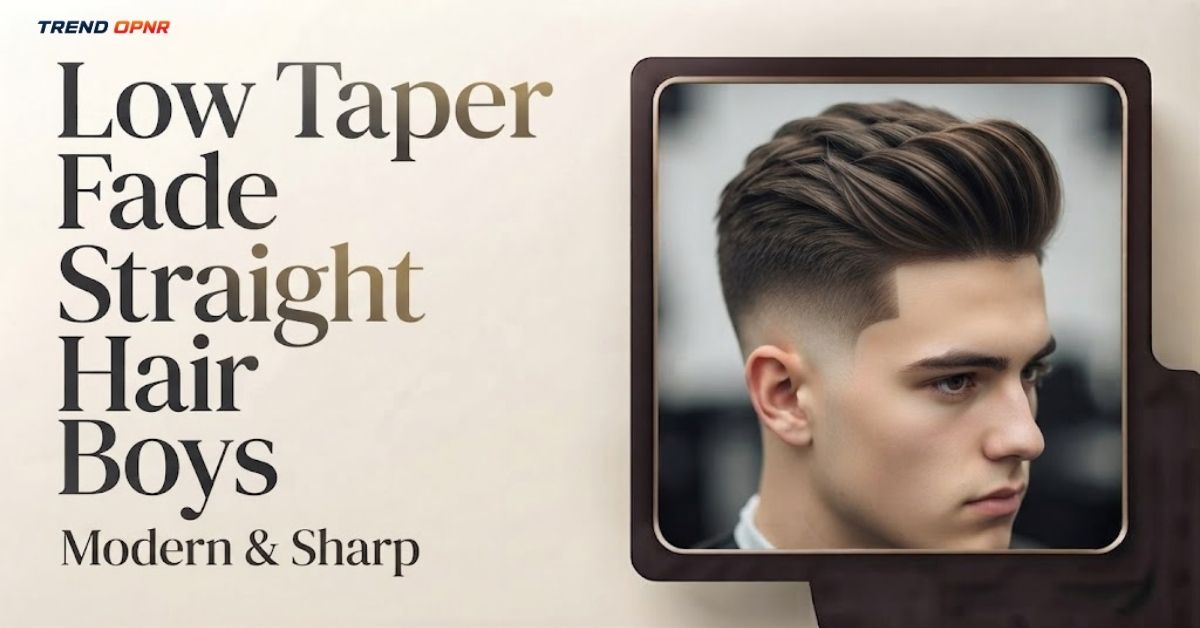

A well-planned Low Taper Fade Straight Hair cut keeps the lower sides tidy while leaving enough length on top for texture, fringe, parts, or a simple natural finish. The result can work for school, weekends, sports, and dressed-up occasions.
This Low Taper Fade Straight Hair approach is especially flexible because Straight hair usually follows a predictable direction. A skilled Barber can create a soft Hair blend, preserve the right Top length, and shape the Neckline without taking too much from the Top. This Haircut guide explains the structure, styling choices, maintenance, and Barber guide details parents and boys can use at the Barbershop.
What a low taper fade is?
A Low Taper Fade Straight Hair haircut places the Taper close to the lower portion of the head. The Sides gradually become shorter toward the Ears, while the Back and Neckline receive controlled Clipper work. The Low placement keeps most of the side hair intact rather than removing it high toward the temples.
A Low taper fade haircut differs from a High fade because the transition begins much lower. It also differs from a Skin fade, where the shortest section can reach the Scalp or Bare skin. With a Low taper fade for boys, the goal is usually a Soft blend, Natural blend, and clean Hairline shape rather than dramatic contrast.
For a Low taper fade for straight hair, the Barber needs to understand the child’s Hair type, Hair density, and Natural growth pattern. Straight hair can expose uneven Hair graduation more clearly than heavily textured hair, so controlled Clipper work, careful Taper placement, and a clean Hairline cleanup matter.
The Bottom of the head and Lower sides should transition gradually. The Barber guide principle is simple: keep the Hair transition low, avoid an unwanted High fade, and leave enough Hair length above the blend to create the desired silhouette.
Why it suits straight hair so well
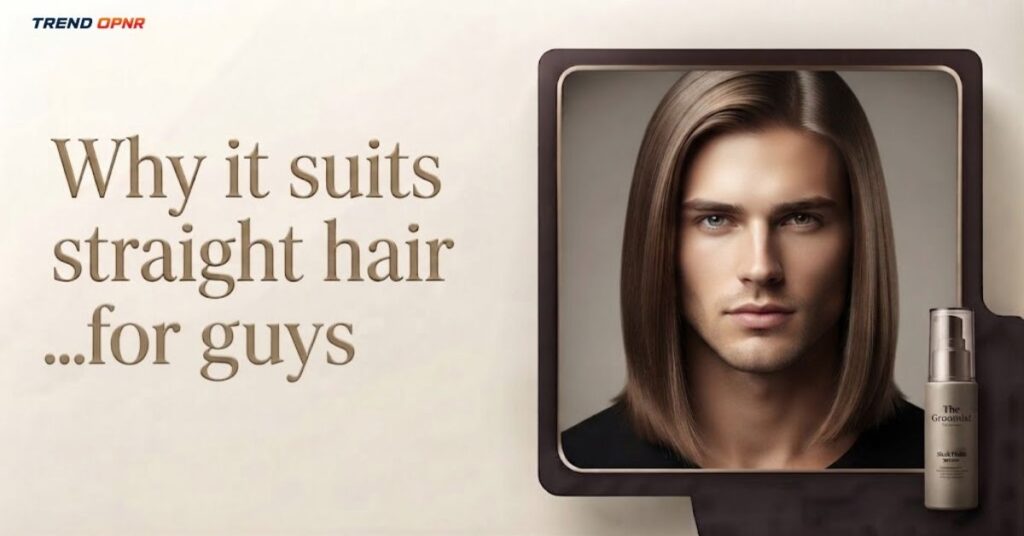
A Low Taper Fade Straight Hair style benefits from the predictable Hair movement of straight strands. When Hair that lies flat is cut correctly, the Taper fade can appear smooth and deliberate. Hair that falls forward can naturally support a fringe, while Hair that grows forward can make a forward style particularly easy.
Fine strands and dense strands need different cutting decisions. Fine straight hair can benefit from Point cutting, Texturizing, and carefully controlled Layering to create a Fuller appearance. Thick straight hair may need Removing bulk, Thinning, or Slide cutting so the Top does not become too heavy.
A Low taper fade haircut also leaves room for natural Hair movement. That is useful for boys who dislike rigid Hair styling. A Low taper fade for boys can therefore be paired with a Natural hairstyle, Relaxed hairstyle, or Low-maintenance hairstyle.
The shape also works across different ages. Children may need a simple Haircut for boys that survives school and activity, while Teens may prefer a more defined Textured haircut. The same Low taper fade for straight hair can be adjusted through Top length, Hair volume, and Hair texture.
The best styles in 2026
A Low Taper Fade Straight Hair haircut can be adapted to several 2026 hairstyles without changing the basic low placement. Current Boys’ hairstyles often emphasize a Natural finish, soft contrast, and manageable Hair styling rather than excessive product.
For a Modern haircut, the Low taper fade can support a Textured top, Textured fringe, or Middle part. A Traditional haircut can use a neat top and Clean neckline. An active child may prefer a Sporty hairstyle with a shorter top and minimal styling.
The following options add flexibility:
- Textured top: Works particularly well with Fine straight hair because variation in length can create the appearance of more Hair fullness.
- Textured fringe: A softer alternative to a blunt edge, especially when Hair that falls forward naturally.
- Middle part: Suitable when the Top length is long enough to separate naturally.
- Comb over: A practical choice for a neater Boys’ haircut.
- Side part: Creates a deliberate shape without requiring a dramatic Fade haircut.
- Forward style: Useful for Straight hair that naturally moves toward the forehead.
- Natural top: Keeps the Hair movement visible and reduces product use.
- Short top: Useful for sports, school, and Low-effort hairstyles.
- Longer top: Gives greater Styling flexibility.
- Even top: Provides a tidy, traditional appearance.
- Neat top: Works for formal settings and school.
- Loose top: Gives the Boys’ hairstyle a relaxed character.
- Relaxed hairstyle: Uses natural movement rather than rigid shaping.
- Sporty hairstyle: Keeps the silhouette practical for active boys.
- Natural hairstyle: Allows the Hair texture to determine the final finish.
- Low-maintenance hairstyle: Reduces Daily effort and Product use.
A Popular haircut does not have to be copied exactly from social media. TikTok can expose boys and parents to new Hair trends, including the Low taper fade meme, but the actual cut should be adapted to the child’s Hair type, Face shape, and School rules.
Low taper fade with a textured top
A Low Taper Fade Straight Hair with a Textured top gives the Top controlled variation rather than one uniform block. Point cutting, Razor cutting, Slide cutting, and Texturizing can create Uneven lengths and Varied lengths that encourage Hair movement.
For Fine straight hair, removing a small amount of bulk while preserving the right structure can create Added volume and Added height. With Thick straight hair, the objective may instead be reducing weight while maintaining Hair fullness. A Textured haircut should not automatically mean excessive thinning.
A Low taper fade haircut underneath keeps the Sides and Back controlled. The Low taper fade for boys therefore gives the Top attention while maintaining a clean Side profile. A Low taper fade for straight hair can be particularly effective when the Hair texture is naturally smooth.
For Hair styling, begin with Damp hair rather than soaking-wet hair. Use a Pea-sized amount of Matte clay or Hair clay, distribute it with your Fingers, and shape the top upward or forward. Air drying produces a softer result, while Blow drying on Low heat can add Lift.
Texture powder or Styling powder can add separation to Dry hair. A Matte finish generally preserves the lightweight appearance better than Wet-look gel or Heavy wax. A small amount of Light cream can be useful when the hair needs control without losing its Natural finish.
Low taper fade with a fringe

A Low Taper Fade Straight Hair with a Fringe is useful when Straight hair naturally travels toward the forehead. The Top can be shaped into a Soft forward fringe, Textured fringe, or Blunt fringe, depending on the desired Hair shape.
A Blunt fringe creates a stronger horizontal edge. A Textured fringe uses Point cutting and varied ends to produce a softer appearance. A Soft forward fringe sits between the two, retaining enough structure while allowing Natural hair movement.
A Low taper fade haircut with fringe keeps the Lower sides neat without taking the Taper too high. This can be useful for a boy with a Larger forehead, because bringing the fringe forward can reduce perceived Visual length. For a Longer face, the same principle can help create more balanced Facial proportions.
A Low taper fade for boys should be adjusted according to Hair density. If the fringe is too heavy on Thick straight hair, Removing bulk can prevent a block-like appearance. With Fine straight hair, excessive thinning can make the fringe look sparse, so the Barber should preserve enough Hair fullness.
For everyday Hair styling, use a Light hold product only when needed. A Light cream can keep a fringe organized, while Texture powder can provide separation. Avoid too much Hair gel, Heavy wax, or shiny product if the goal is a Matte finish.
Low taper fade with a middle part
A Low Taper Fade Straight Hair with a Middle part requires sufficient Top length for both sections to fall away from the center. The Center part can be subtle or clearly defined depending on the Hair direction.
A Low taper fade haircut works beneath this style because the low transition keeps the Side hair controlled while the longer Top frames the face. The Taper fade should remain below the main parting area so the Hair silhouette stays balanced.
A Low taper fade for straight hair can be particularly easy to maintain when the hair already wants to separate naturally. A Comb can establish the part after washing, while Fingers can loosen it for a more Relaxed hairstyle.
The main consideration is Hair length. Very short hair will not hold a stable Middle part, while a Longer haircut can create a curtain-like effect. A Natural top with soft Layering can encourage Hair movement without creating excessive bulk.
For Hair styling, part Damp hair with a Comb, then allow it to dry. Air drying gives a relaxed result. Blow drying with a Round brush can add controlled Lift. Keep Hair product light because straight strands can become flat when overloaded.
Low taper vs mid taper
A Low Taper Fade Straight Hair cut begins low, while a Mid taper fade starts higher on the head. The distinction affects the Side profile, Contrast, and overall Hair structure.
| Feature | Low taper | Mid taper |
| Placement | Lower sides, ears, neckline | Higher around the temple area |
| Contrast | Soft contrast | More visible contrast |
| Top | Usually retains substantial length | Can appear more separated |
| Style | Natural, neat, relaxed | Sharper, more defined |
| Maintenance | Generally forgiving | Requires closer attention to shape |
| School use | Often adaptable | Depends on school rules |
| Best adjustment | Low placement | Mid placement |
A Low taper fade haircut is different from a Mid taper fade because the Hair transition occupies a different area. A Low taper fade for boys can retain more Side hair, while a mid placement can make the haircut appear more graphic.
A Low taper fade for straight hair is also distinct from a High taper or High fade. The higher the transition moves, the greater the visual contrast. A Skin fade can create even more contrast because the shortest area reaches the Scalp.
For parents choosing a Boys’ haircut, the decision can depend on School dress codes, desired Hair maintenance, and how often Barber visits are practical. The best Haircut guide is therefore based on the child’s actual routine rather than a universal rule.
Which face shapes suit it
A Low Taper Fade Straight Hair style can be adapted to different Face shape characteristics. Facial structure, Forehead size, and Facial proportions all influence how much Hair volume should remain on top.
- Round face: A Textured top, Comb over, or controlled Added height can increase perceived Visual length.
- Longer face: A Textured fringe or Soft forward fringe can reduce the emphasis on vertical length.
- Oval face: Many combinations can work because the overall Face balance is relatively even.
- Square face: A neat Top with controlled Hair bulk can complement stronger angles.
- Heart-shaped structure: A Middle part or textured front can distribute visual weight around the forehead.
A Low taper fade haircut should not be selected solely from a face-shape chart. The Barber can assess the actual Hairline shape, Natural hairline, Hair density, and Hair behavior before deciding how much to remove.
A Low taper fade for boys can also change as a child grows. The same Haircut for boys may need different Top length or Hair styling at seven years old than during the teenage years.
How to ask your barber for it
For a Low Taper Fade Straight Hair appointment, precise Barber wording can make the desired result easier to understand. A parent or teenager can bring a reference photograph and then describe the Low placement, Top length, and finish.
A practical Haircut request could be:
“Please keep the taper low around the ears and at the neckline, preserve the top length, and give the top a natural textured finish.”
For a Low taper fade haircut, specify whether you want a Natural blend, Soft blend, or stronger contrast. Also explain whether the top should become a Textured top, Textured fringe, Middle part, Side part, or Comb over.
A Low taper fade for boys should also include instructions about the Neckline. Ask for a Clean neckline while keeping the natural shape rather than creating overly Crisp lines if a softer appearance is preferred.
For a Low taper fade for straight hair, tell the Barber whether the hair is Fine straight hair, Thick straight hair, or somewhere between. Mention whether it Sits flat, Falls forward, or naturally separates. These details affect Hair styling and cutting technique.
An exact Barbershop request might be:
“Low taper around the ears and neckline, keep the sides natural, leave enough top length for a textured fringe, and use light point cutting for movement.”
That type of Exact barber wording gives the Barber guide enough information to preserve the intended Hair structure.
Low Taper Fade Straight hair Textured Fringe
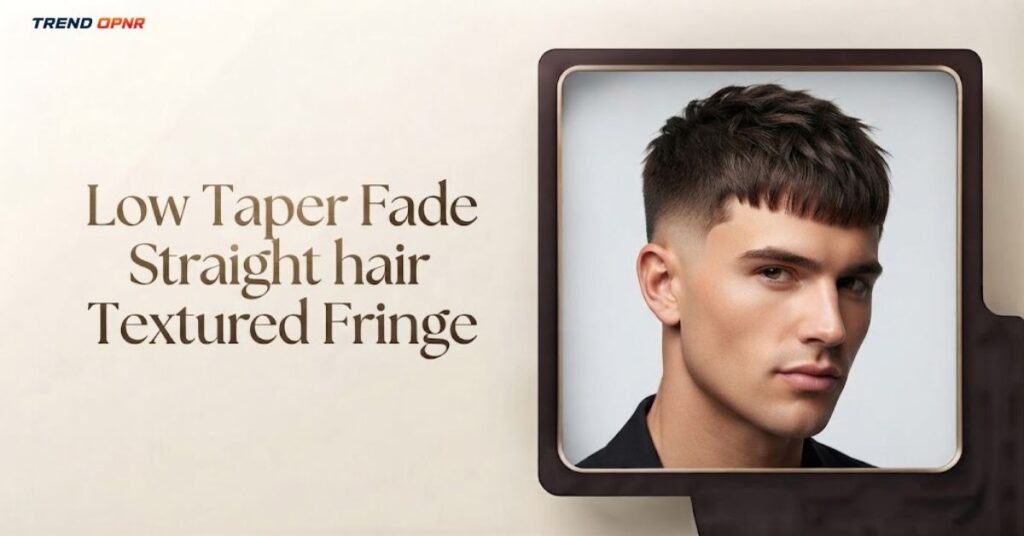
A Low Taper Fade Straight Hair Textured fringe combines a controlled Low taper fade with a softer front. It suits Straight hair that naturally travels toward the forehead and can be especially practical for school-age boys who prefer an uncomplicated Boys’ hairstyle.
The Textured fringe should not automatically be very short. A Barber can preserve Hair length through the center while using Point cutting at the ends. This creates Hair separation, Hair movement, and a more Natural finish.
For Fine straight hair, the goal is usually to create the appearance of Hair fullness without removing too much density. For Thick straight hair, modest Removing bulk can prevent the front from becoming too heavy.
A small amount of Matte clay, Hair cream, or Texture powder can support the shape. Air drying creates a relaxed appearance, while Blow drying on Low heat can direct the fringe forward.
Read More: Mid taper fade: styles, barber instructions, and maintenance
Low taper fade straight hair Male
A Low Taper Fade Straight Hair style for a male wearer follows the same basic principle: the Taper stays low while the Top determines the personality of the cut. The difference is usually in preferred Hair length, Face shape, and styling rather than the underlying taper structure.
A Low taper fade haircut can be combined with a Textured haircut, Side part, Comb over, or Natural top. The Barber can adapt the Hair blend according to Hair density and the desired Side profile.
For Straight hair, a Matte finish is often useful when a natural appearance is wanted. Hair styling can be minimal, with a Pea-sized amount of Hair clay distributed through Damp hair.
The same principles apply to Low taper fade for boys, but younger clients may need simpler styling. Parents should consider Morning routine, School hairstyles, and whether the child can manage the Styling product independently.
Low Taper Fade Straight Hair long
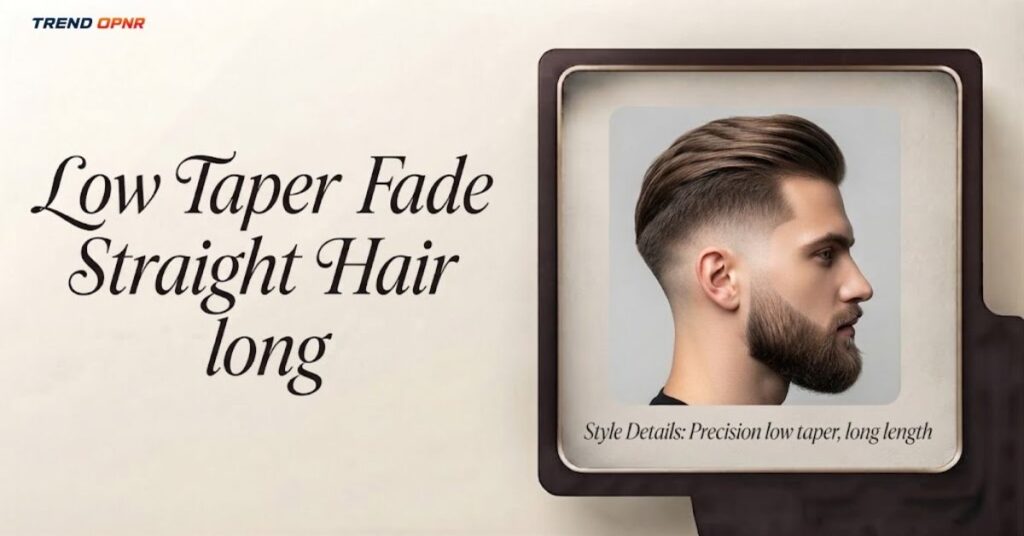
A Low Taper Fade Straight Hair cut with a longer top gives the greatest Styling flexibility. The Sides remain controlled, while the Longer top can support a Middle part, Comb over, Forward style, or loose texture.
A Low taper fade haircut does not require the top to be short. In fact, preserving Top length can help boys transition between several Boys’ hairstyles without another major haircut.
With Straight hair, longer strands can sometimes become heavy. Layering, Slide cutting, or selective Removing bulk can preserve Hair movement while preventing a flat shape.
For Hair styling, use Light hold products sparingly. A Round brush, Comb, or Fingers can direct the hair. Air drying gives a natural finish, while Blow drying can add Volume and Lift.
Low taper Fade Straight Hair Kids
A Low Taper Fade Straight Hair cut for Kids should prioritize comfort, simplicity, and the child’s daily routine. A Low taper fade for boys can keep the Ears, Lower sides, and Neckline tidy while leaving enough Top length for easy styling.
For Young boys, a Low-maintenance hairstyle is often more practical than a complicated design. A Short top, Natural top, or simple Textured top can survive school, play, and sports without requiring much Hair product.
A Low taper fade haircut can also work for a Seven-year-old when the Barber keeps the transition subtle. School-age boys may need to follow specific School rules or School dress codes, so parents should check those before requesting a dramatic Fade haircut.
For younger Children, the Barbershop experience also matters. Keeping Clipper work controlled around the Ears and avoiding unnecessary complexity can make the appointment easier.
Low Taper fade Straight Hair indian
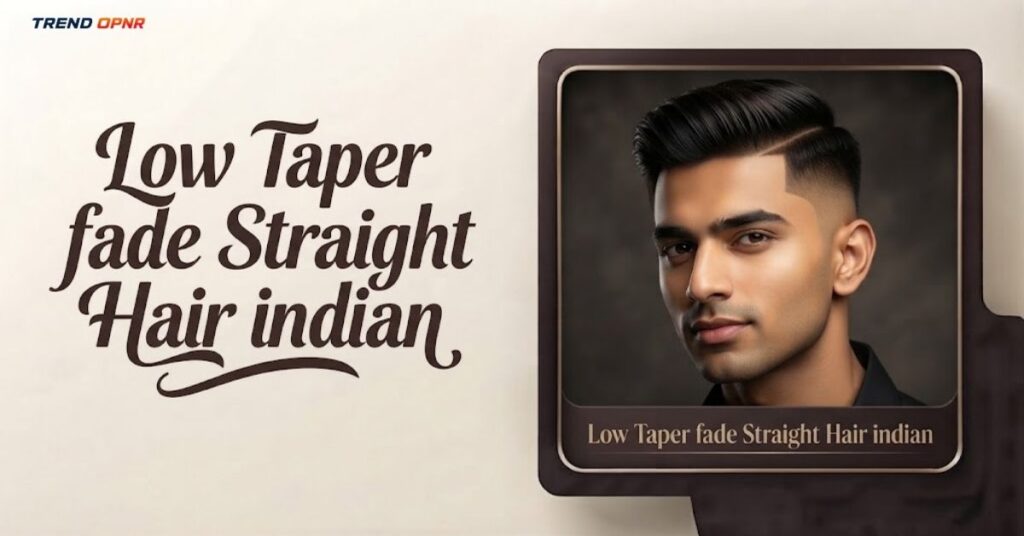
A Low Taper Fade Straight Hair style can be adapted to Indian boys with Straight hair, whether the hair is fine, dense, thick, or naturally full. The important variables remain Hair texture, Hair density, Hair thickness, and Hair direction rather than nationality alone.
A Low taper fade for boys can be paired with a Textured top, Textured fringe, Middle part, or Side part. If the hair is particularly dense, the Barber may use Texturizing or selective Thinning to control Hair bulk.
A Low taper fade haircut can also be adjusted for different Face shape characteristics. A Round face may benefit from controlled Visual height, while a Longer face may suit a softer front that does not exaggerate vertical length.
For Hair styling, lightweight products are usually easier to control on Straight hair. Matte clay, Texture powder, and Light cream can each provide different levels of Texture, Volume, and Light hold.
Styling and upkeep at home
A Low Taper Fade Straight Hair cut is relatively simple to style when the Top length matches the child’s routine. Start with clean Damp hair, then use Fingers or a Comb to establish the desired Hair direction.
For a Low taper fade haircut, the sides generally need less styling than the top. The Low taper fade for boys can therefore remain tidy while the Top receives only a small amount of Styling product.
A Low taper fade for straight hair can use:
- Matte clay for Texture and a Matte finish.
- Hair clay when a little extra control is needed.
- Texture powder for Lift on Dry hair.
- Styling powder for lightweight separation.
- Light cream for fringe and part styles.
- Hair cream for a softer Natural finish.
- Hair gel only when a deliberate Wet look is wanted.
- Hair wax when more structure is necessary.
- Heavy wax sparingly because it can reduce natural Hair movement.
- A Styling product should normally be applied in a small quantity.
A Pea-sized amount is a useful starting point. Too much product can make Straight hair appear flat, heavy, or greasy. Air drying works for a relaxed hairstyle, while Blow drying on Low heat can add Volume and Lift.
A Round brush can help create height at the front. Fingers are better for a loose finish, while a Comb provides cleaner separation. A Diffuser is usually unnecessary for naturally straight hair but can be used on low heat when the goal is gentle drying rather than aggressive shaping.
A sensible Morning routine should take only a few minutes. The Hair styling method should be repeatable enough for Daily styling, particularly for active boys who have Sports, school, and weekend activities.
Common mistakes to avoid
A Low Taper Fade Straight Hair cut can lose its intended character when the Taper is placed incorrectly or the Top is cut without considering the Hair type.
Fade too high
If the Low taper fade is taken too high, it can begin looking like a Mid taper or High fade. Tell the Barber that the blend should stay low around the Ears and Neckline.
Top cut too short
A very short Top limits a Textured fringe, Middle part, and Comb over. Preserve Top length when unsure because additional length can always be removed later.
Using too much product
Straight hair can become weighed down quickly. Excessive Hair wax, Heavy wax, or Wet-look gel can remove Volume and Hair movement.
Ignoring hair density
A Fine straight hair haircut needs different cutting decisions from a Thick straight hair haircut. Excessive Thinning can weaken fine hair, while dense hair may require Removing bulk.
Describing only the fade
A Haircut request should explain the Sides, Top, Back, and Neckline. A technically clean Fade haircut can still feel wrong if the top does not match the desired Hair shape.
Forgetting the natural hairline
The Natural hairline should influence the Neckline. Overly graphic Crisp lines can make a soft Low taper fade appear less natural.
Ignoring school rules
Some School rules and School dress codes may restrict Skin fade, disconnected shapes, or extreme Hair trends. Check the policy before the Barbershop visit.
Choosing a style that needs too much work
A Low-maintenance haircut should match the actual Morning routine. If the child will not use product or a Comb, choose a Natural hairstyle.
Removing too much side hair
A Low taper fade for boys is intended to preserve substantial Side hair. Taking the taper too high changes the Hair silhouette.
Neglecting the neckline
A Clean neckline contributes significantly to the appearance of a Taper haircut. Neckline maintenance can help the cut remain tidy between full Barber visits.
Ignoring growth direction
Hair that grows forward, Hair that sits flat, or hair that naturally separates should be cut according to its Natural hair movement rather than forced into an incompatible shape.
Choosing shine when texture is the goal
A Matte finish usually supports a Textured haircut better than a high-shine product. Hair styling should reinforce the haircut rather than cover its structure.
Skipping a reference photo
Even good Barber wording can be interpreted differently. A reference photograph plus an Exact barber wording request can reduce confusion at the Barbershop.
Waiting too long for side maintenance
A Low taper fade grow-out can be forgiving, but the Side maintenance eventually becomes noticeable. A small cleanup around the Ears and Neckline can restore the shape.
Treating every face shape identically
Face balance, Facial proportions, and Overall shape should influence Top length. A single template does not work equally for every boy.
Over-texturizing straight hair
Texturizing should create Hair separation and movement without destroying Hair fullness. The amount should reflect Hair density and Hair thickness.
Low Taper Fade Straight Hair maintenance

A Low Taper Fade Straight Hair cut generally becomes less defined as the Hair growth continues. The low placement can make the Grow-out period visually softer, but the Taper maintenance still depends on how quickly the child’s hair grows.
A Low taper fade haircut may need a cleanup around the Sides, Ears, and Neckline before the Top requires a full cut. This can reduce unnecessary changes to the Hair length.
A Low taper fade for boys can be maintained according to activity level. Active boys who play Sports may prefer shorter Top length, while boys with a calmer routine can keep a Longer haircut.
A Low taper fade for straight hair also offers flexibility during a Grow-out. If the family cannot make frequent Barber trips, the gradual Hair transition can remain wearable longer than a very tight Skin fade.
Useful maintenance habits include:
- Schedule Barber visits according to Hair growth.
- Consider Trim frequency based on how quickly the neckline changes.
- Keep Neckline maintenance separate from a full haircut when practical.
- Reduce unnecessary Product use.
- Brush or comb according to the natural Hair direction.
- Keep the Top long enough for the intended style.
- Reassess the Hair shape during each appointment.
- Discuss Hair maintenance with the Barber if the child is growing the top out.
- Adjust Hair styling as Hair density changes.
- Consider a Longer-lasting haircut if regular appointments are difficult.
What makes a good barber request

A clear Low Taper Fade Straight Hair request should include four pieces of information: taper placement, top length, top style, and finish.
For the taper, say Low taper fade, Low taper around the ears, or Low taper at the neckline. For the top, specify Textured top, Textured fringe, Middle part, Side part, or Natural top.
For the finish, use terms such as Soft blend, Gradual blend, Natural blend, Matte finish, or Natural finish. If you want Crisp lines, say so, but explain whether the Hairline should remain natural.
A useful Barber guide approach is to describe what should not happen as well. For example, a parent can say that the Fade should not become a High fade, the Sides should not be taken to Bare skin, and the Top should retain enough Hair length for styling.
The Barber can then use Clippers, Hair graduation, and other cutting techniques to create the requested Hair blend.
Bottom line
A Low Taper Fade Straight Hair haircut gives boys a practical balance between clean Sides and a flexible Top. It can support a Textured haircut, Fringe, Middle part, Comb over, Side part, or simple Natural hairstyle while keeping the Low taper fade subtle.
The most useful approach is to match the Haircut for boys to the child’s Hair texture, Hair density, Face shape, school requirements, and daily routine. With clear Barber wording, sensible Hair styling, and regular Taper maintenance, the cut can remain neat without demanding excessive effort.
FAQ’s
Is a low taper fade good for straight hair?
Yes. Straight hair is often easy to shape into a Low taper fade because its Hair direction is predictable. A Low taper fade for straight hair can therefore create a smooth Hair transition, while the Top can remain natural, textured, or styled forward.
Is taper haircut haram?
Whether a particular Taper haircut is considered permissible depends on the Islamic interpretation and the specific details of the haircut. Some scholars distinguish between different forms of Fade haircut, especially according to how sharply the hair lengths change. Anyone seeking a religious ruling should ask a qualified scholar they trust.
What is a low zero fade?
A low zero fade is a very short Low fade where the shortest section is taken close to the skin before transitioning upward. It is more exposed than a conventional Low taper fade, which can preserve visible hair around the lower sides and neckline.
What is the most popular fade in 2026?
There is no single universally measured answer for every country, age group, or barber market. Current Hair trends include Low taper fade, Mid taper, Textured top, Textured fringe, and natural Boys’ hairstyles. Social platforms such as TikTok also influence which cuts become visible to younger audiences.
What is the Gen Z boy haircut called?
There is no single official name for a Gen Z boy haircut. Current styles can include a Low taper fade, Textured fringe, Middle part, Curtain-style top, or other modern combinations. The most accurate Haircut request is usually based on the actual top shape, taper placement, and desired finish rather than an age-group label.
Conclusion
A Low Taper Fade Straight Hair cut works because it combines controlled Sides, a clean Neckline, and flexible Top length. With the right Barber, the result can be neat enough for School, relaxed enough for Weekends, and adaptable enough for changing Boys’ hairstyles.
For the best result, explain the desired Low taper fade, top style, Hair length, and finish before the Barbershop appointment. Whether the goal is a Textured top, Textured fringe, Middle part, or Low-maintenance hairstyle, matching the haircut to the child’s Hair type, Face shape, and routine is the key to easy Hair styling.

