
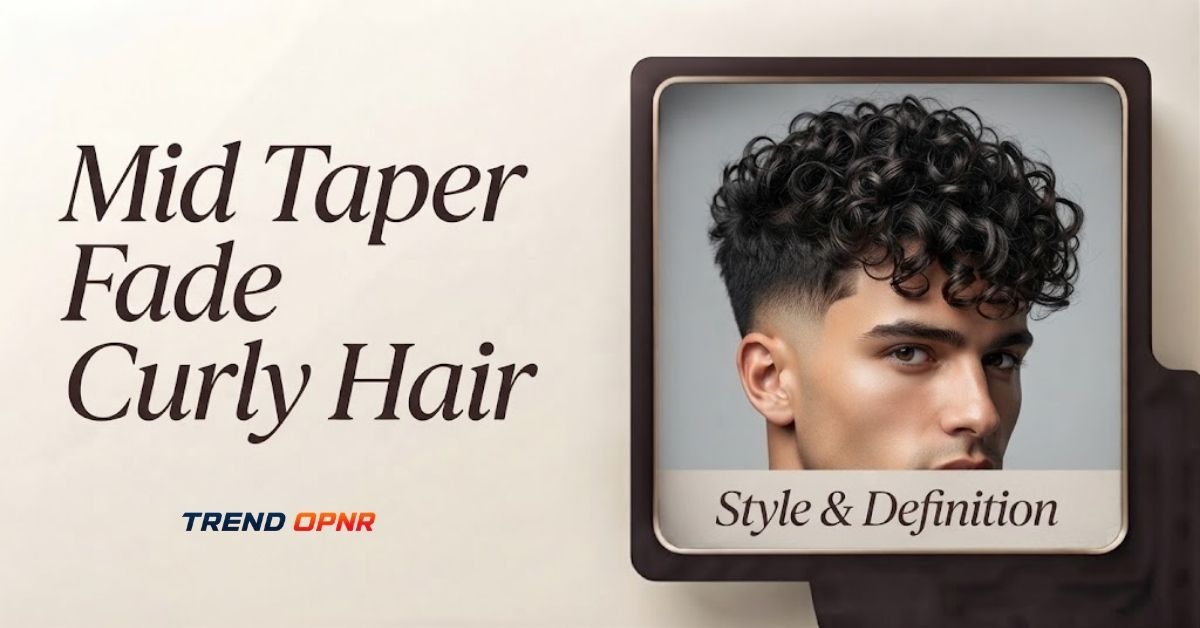

A mid taper fade curly hair cut keeps the natural character of curls while cleaning the temples, sideburns, and neckline. The result depends on taper height, curl pattern, hair density, top length, and how much side weight remains.
This haircut guide explains how a mid taper works with loose curls, tight curls, coily hair, afro-textured hair, and wavy hair. It also covers barber instructions, styling, haircut maintenance, comparisons, and practical ways to preserve curl definition.
The quick version
- A mid taper fade curly hair style shortens selected areas around the temple, sideburns, and neckline while preserving the curly crown.
- A mid taper is different from a mid fade because the taper concentrates the shortest length around specific areas rather than removing a broad section of the sides.
- Curl shrinkage matters because wet length can look substantially longer than dry length.
- A reference photo, dry-length check, and clear taper placement make a barber consultation more predictable.
- A soft shadow finish generally exposes less scalp than a skin finish.
- Loose curls, tight curls, coily hair, and wavy hair can all work with a curly taper when the shape is adjusted to density and curl behavior.
- A taper touch-up commonly becomes useful after a few weeks, depending on the finish and personal preference.
- The best mid taper fade curly hair result usually comes from balancing crown volume, side weight, hair length, and the natural hairline rather than copying another person’s haircut exactly.
What is a mid taper fade on curly hair?
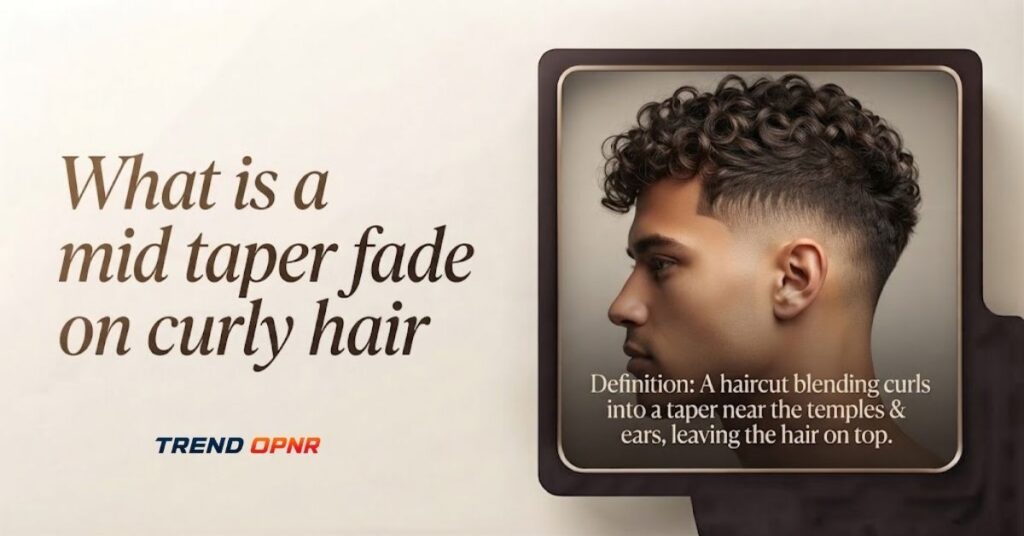
A mid taper fade curly hair cut places the taper around the temple while keeping substantial hair through the top and crown. The taper placement creates a controlled transition from longer textured hair toward a shorter finish at the sides and back.
A taper and a fade describe different amounts of surrounding hair being shortened. A taper generally focuses on the temple, sideburns, and neckline, while a fade can extend farther across the sides and back. The terms can overlap in everyday barber vocabulary, so a barber guide should explain the actual taper placement, fade height, guard length, and finish.
With curly hair, the curly crown often expands outward as curls dry. That means the haircut must account for curl density, curl pattern, shrinkage, and natural hair length. A mid taper fade curly hair style can therefore look considerably different on loose curls than on tight curls or coily texture.
Mid taper vs. mid fade: why the names get confused
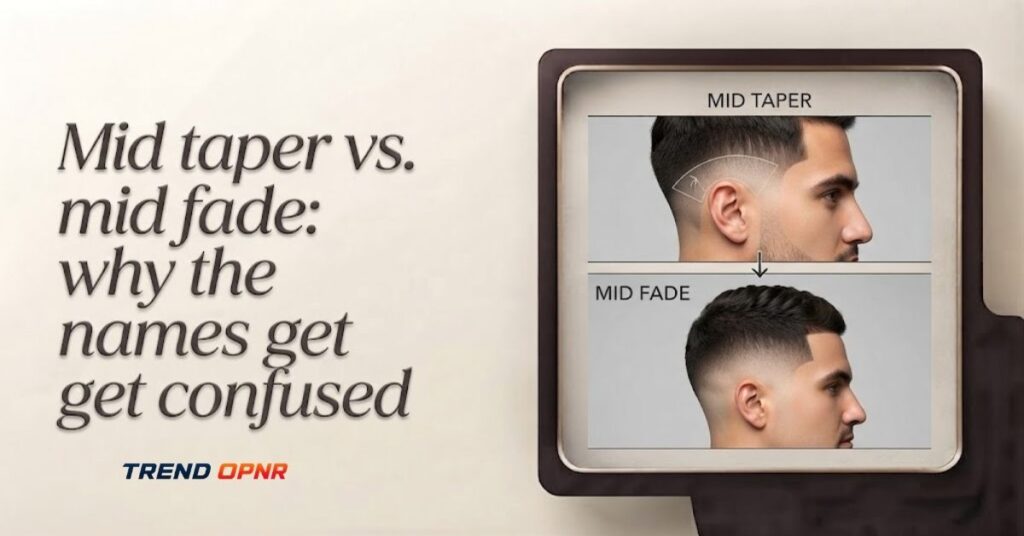
The difference between a mid taper and a mid fade is mainly the area being reduced. A mid taper leaves more side weight around the upper sides, while a mid fade normally removes a broader band of hair and creates a stronger contrast.
For someone considering a mid taper fade curly hair style, the distinction matters because curly volume can make a small change in side length look dramatic. A taper haircut can preserve a fuller silhouette, while a fade haircut can produce a sharper haircut shape.
A barber should also distinguish taper height from finish. The mid taper placement describes where the transition begins; the guard length or clipper length describes how short the lowest area becomes. A shadow fade, shadow finish, skin fade, or skin finish can therefore be requested independently from the height.
Mid taper vs. low and high tapers on curly hair
Taper height determines how much side weight remains. A low taper keeps more hair near the temple and ear, a mid taper moves the transition upward, and a high taper removes more of the upper side area.
| Haircut | Typical placement | Side weight | Contrast | Scalp exposure |
| Low taper | Near ear and lower nape | High | Subtle | Low |
| Mid taper | Around temple | Moderate | Moderate | Moderate |
| High taper | Above temple | Lower | Strong | Higher |
| Low fade | Lower side area | Moderate | Moderate | Varies |
| Mid fade | Middle side area | Lower | Strong | Varies |
| High fade | Upper side area | Lowest | Strongest | Varies |
The choice between low taper vs mid taper depends on desired contrast, head shape, hair density, and maintenance. A low taper can preserve side volume, whereas a mid taper creates a more visible blend.
The mid taper vs high taper decision changes the amount of side weight even more. A high taper has a sharper haircut appearance and can expose more scalp. A mid taper offers a middle placement while retaining more of the curly silhouette.
Low taper vs. mid taper on curly hair
A low taper keeps the taper placement close to the ear and neckline. It is useful when maintaining side volume is important or when a conservative haircut is preferred.
A mid taper moves the blend line upward toward the temple. This makes the curly crown appear more separated from the sides and can create moderate contrast without turning the entire side into a high fade.
For dense textured hair, the mid taper can also help with bulk removal. For fine or lower-density curls, a low taper may preserve enough side weight to prevent the silhouette from appearing too narrow.
Mid taper vs. high taper
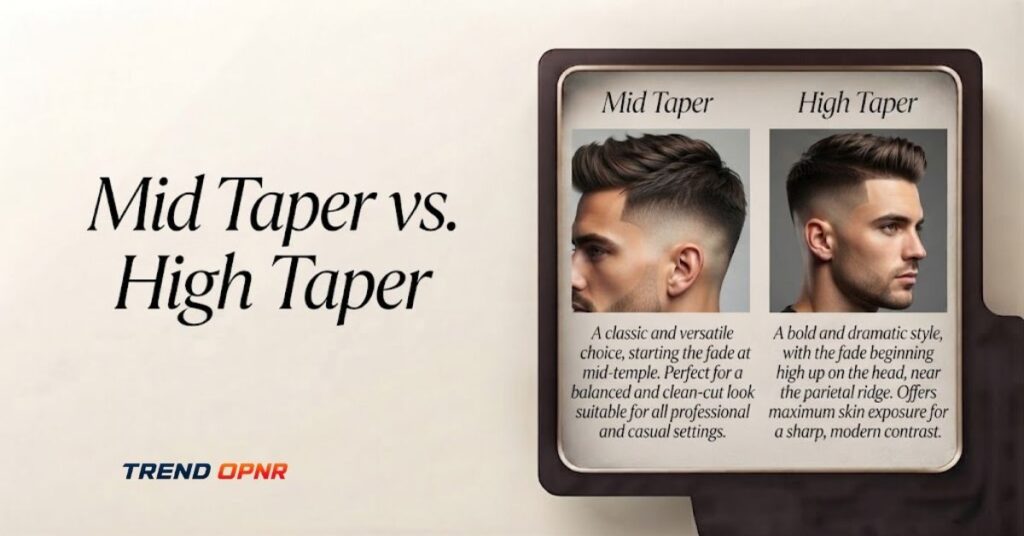
A high taper places the blend above the temple, so the sides become visibly shorter and the contrast becomes stronger. The mid taper vs high taper choice therefore comes down to how much side hair and scalp exposure you want.
The mid taper generally preserves a fuller crown-to-side relationship. A high taper creates a sharper haircut shape and can make the curl volume look more pronounced.
Is a mid taper good for your curly hair?
A mid taper fade curly hair cut can work with many curl patterns because the taper changes the perimeter rather than requiring the entire curly top to be reshaped. The important variables are curl density, hair texture, hair length, shrinkage, and desired crown volume.
Loose curls tend to create a softer transition into the sides. Tight curls and coily hair can create more visible curly volume because the crown expands more strongly. Afro-textured hair can support a fuller crown shape with shortened sides, while wavy hair often produces a softer curly hairstyle.
The barber should perform a hair density assessment and shrinkage assessment before deciding how much bulk to remove. Natural curls should generally be evaluated in their normal dry state because wet length and dry length can give different impressions.
Loose curls, tight curls, and coily hair
Loose curls have a broader curl pattern and can create a relaxed curly flow. Tight curls usually have greater visual density, while coily hair can produce significant shrinkage and a compact appearance despite substantial natural hair length.
Afro-textured hair can work particularly well with a curly taper when the crown shape is deliberately preserved. The taper can clean the sides and back without eliminating the fuller crown.
For wavy hair, the wave pattern should remain visible. A barber experienced with textured hair can adjust the taper line to the natural behavior of the waves rather than forcing a straight-haired haircut onto a textured haircut.
Short, medium, or long curls on top
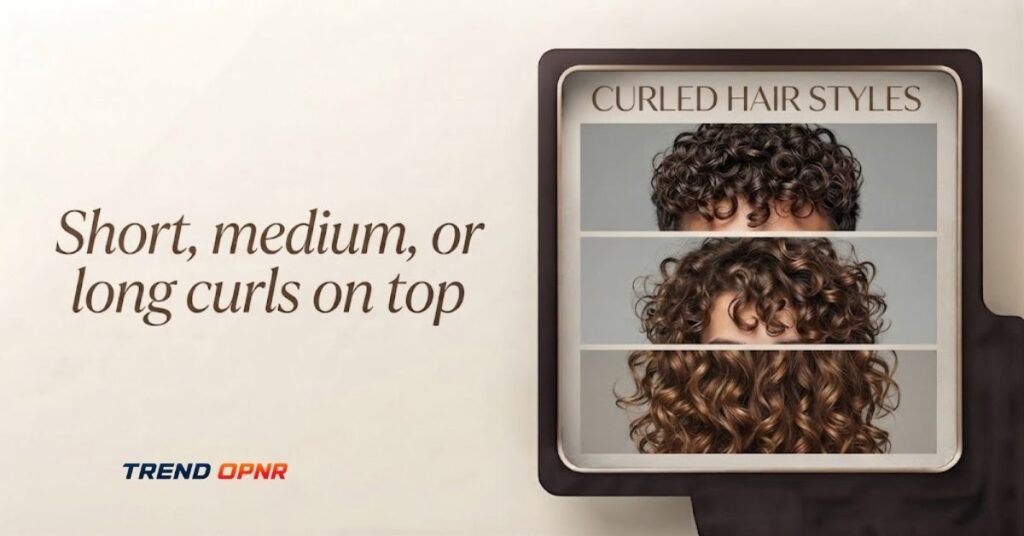
Short curls create a compact curly hairstyle and make the taper more visually prominent. Medium hair length provides a balance between curl definition, volume, and styling time.
Long hair gives the mid taper with long hair option a different silhouette. Longer top length can create loose flow, curly flow, or a fuller crown shape, but it also makes curl care and drying more important.
A useful consultation separates top length from taper height. Saying “short sides” does not explain the desired crown length, while saying “long curls” does not explain taper placement.
Best mid taper fade curly hair styles
The most useful mid taper fade curly hair styles can be understood as combinations of taper placement, top length, curl behavior, and finish. Instead of relying on one haircut name, describe the actual haircut specifications.
Read More: Low Taper Fade Straight Hair Boys: Best Styles, Tips & Barber Guide
1. Classic curly mid taper
The classic curly mid taper keeps natural curls through the top and crown while creating a moderate blend around the temple. The finish can remain soft or become more defined depending on the guard length.
This curly taper works particularly well when the goal is a balanced curly silhouette rather than an extremely sharp haircut.
2. Mid taper with curly fringe
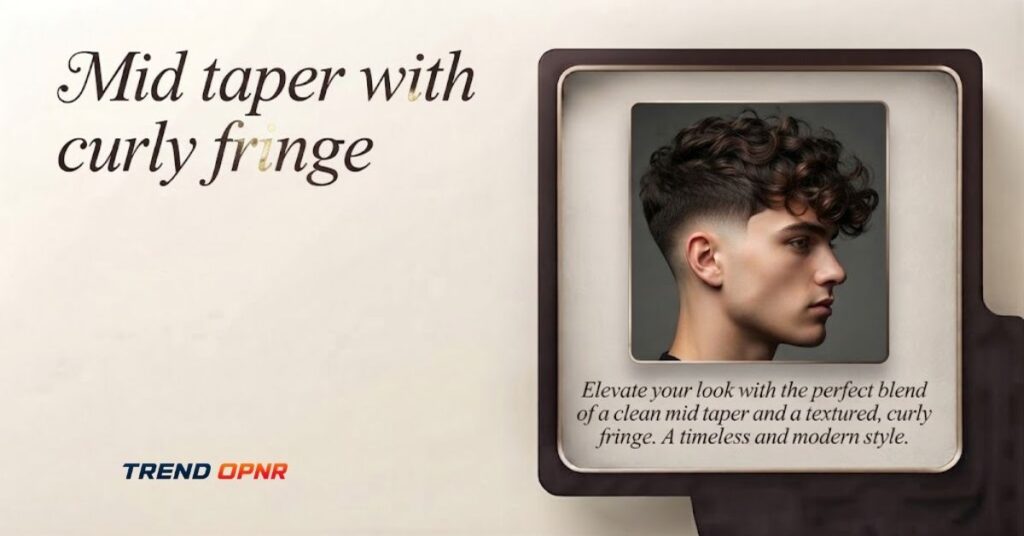
A curly fringe directs the front curls forward while the sides receive the taper. The fringe length should be discussed separately because it affects forehead coverage and front shape.
A barber can preserve natural curl definition while keeping the perimeter controlled. This produces a curly hairstyle with a defined front and moderate side contrast.
3. Curly blowout mid taper
A blowout emphasizes crown volume and outward movement. A mid taper fade curly hair blowout combines a fuller top with shortened sides, creating stronger contrast between curly volume and the taper.
The blowout depends heavily on drying technique. Diffusing upward can maintain curly volume, while pulling the curls downward can flatten the crown and change the haircut shape.
4. Short curly mid taper
A short curly mid taper keeps the top relatively compact. It reduces styling time and makes the taper finish easier to see.
This option works for people who want a clean perimeter without committing to a very short fade haircut. The trade-off is less flexibility because reduced hair length limits styling options.
5. Mid taper with coily or afro-textured hair
A mid taper for coily hair can preserve a substantial curly crown while cleaning the temple, sideburns, and neckline. The barber should account for shrinkage before removing bulk.
A mid taper fade curly hair style on afro-textured hair should be shaped around natural hair density rather than treated like straight hair. Maintaining the crown shape is often more important than creating maximum scalp exposure.
6. Mid taper with line-up or beard blend
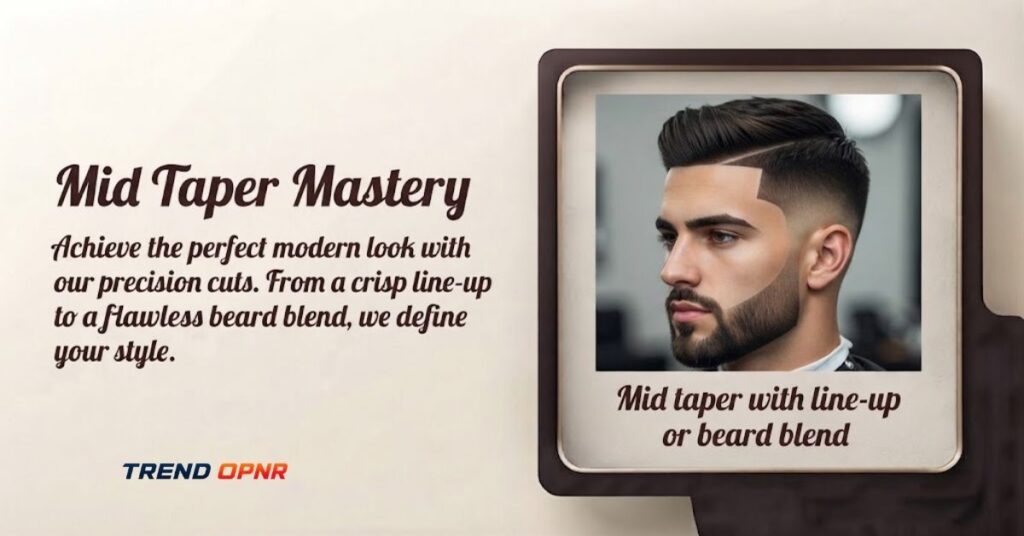
A clean outline can make the taper look more defined. A beard blend can connect the sideburns to facial hair, while a line-up can emphasize the natural hairline.
These details increase maintenance because edges and perimeter lines become visible sooner as they grow. The barber should therefore explain the taper finish and maintenance schedule before adding extra detailing.
What should you ask your barber for?
A useful barber consultation should include a reference photo, taper placement, shortest length, top length, curl behavior, neckline, and desired contrast.
For example, you can explain that you want a mid taper fade curly hair cut with the blend beginning around the temple, a moderate amount of side weight, natural curls left on top, and a soft shadow finish rather than maximum scalp exposure.
1. Show a reference photo
Bring a haircut reference showing the front, side, and back whenever possible. A reference photo is especially useful when your curl pattern differs from the example because the barber can adapt the proportions.
A good curly-hair barber will compare the reference with your hair texture, hair density, curl type, natural hair length, and head shape before starting clipper work.
2. Say where the taper should begin
Point directly to the desired mid taper placement. Saying “mid taper” alone can be interpreted differently because barber terminology varies between shops.
The temple is the usual reference point for a mid taper, but the exact taper line should follow the head shape and natural hairline.
3. Decide how short the bottom goes
Specify whether you want a guard length, shadow finish, or skin finish. A clipper guard determines the shortest length, while a skin fade takes the finish much closer to the scalp.
A shadow finish gives the taper a softer appearance. A skin finish creates more contrast and may require more frequent taper maintenance.
4. Explain how much curl length to keep
Tell the barber whether you want a compact curly hairstyle, moderate curly volume, or a fuller crown. Because curl shrinkage changes visible hair length, discuss dry length as well as wet length.
For a mid taper fade curly hair cut, this distinction is particularly important when the curls are long enough to create substantial shrinkage.
5. Discuss bulk, fringe, and neckline
Explain where you want bulk removal and where you want side weight preserved. You can request natural shape, a rounded crown shape, a clean perimeter, or a sharper perimeter depending on the desired haircut shape.
Also specify whether the neckline should follow the natural hairline or receive a defined shape. The neckline and nape contribute significantly to how the taper grows out.
How do you style a mid taper with curly hair?
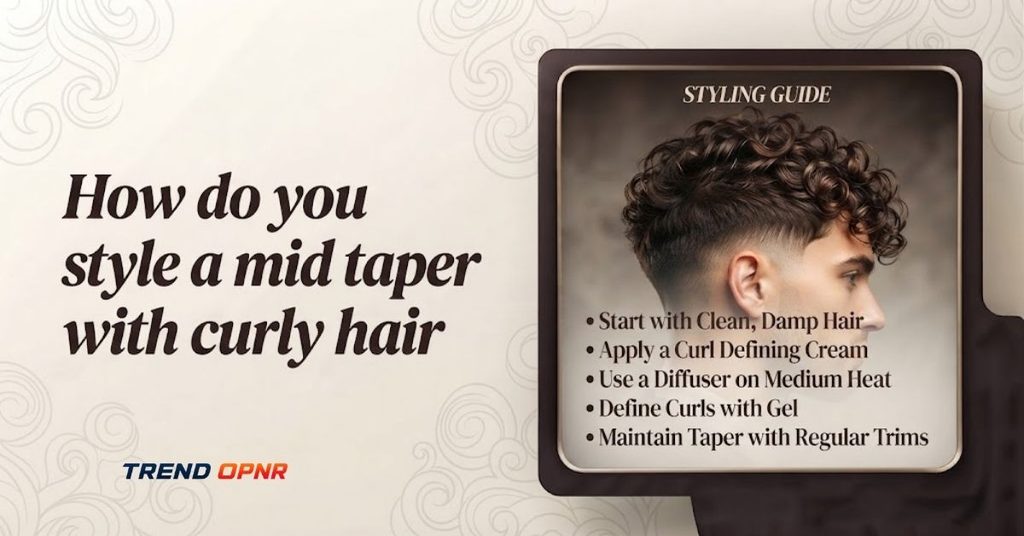
Styling a mid taper with curls should focus primarily on the top. The taper itself needs little styling because the blend and taper finish come from clipper work.
Start with damp, detangled hair. Apply a suitable leave-in conditioner or curl product, distribute it through the curls, and then allow the hair to air-dry or diffuse with controlled heat.
Step 1: start with damp, detangled hair
Curly hair is generally easier to detangle when wet or damp. Use your fingers or a wide-tooth comb to reduce unnecessary pulling.
A wash day routine can include gentle cleansing, conditioning, detangling, and curl definition. Avoid aggressively brushing dry curls because doing so can disrupt the curl pattern and increase frizz.
Step 2: add moisture and definition
Use a leave-in conditioner, curl cream, mousse, or gel according to your desired hold. Curl definition products can help loose curls and tight curls retain their natural pattern.
For a mid taper fade curly hair style, keep heavy product concentrated on the top rather than coating the taper line. Too much buildup around the shortened sides can make a clean taper appear dull.
Step 3: air-dry or diffuse without flattening the shape
Air-drying can preserve natural curls with minimal manipulation. If you use a diffuser, keep the heat and airflow controlled and avoid constantly touching the hair.
For a curly blowout, lift the crown gently while drying. This helps maintain curly volume and prevents the top from collapsing against the shortened sides.
Step 4: refresh between wash days
A simple refresh can involve lightly misting the curls with water and applying a small amount of leave-in or curl product. Scrunching can restore curl definition without rebuilding the entire styling routine.
Avoid repeatedly manipulating the taper itself. The taper maintenance comes from barber touch-ups, while curl maintenance comes from moisture, gentle drying, and appropriate hair care.
How do you maintain a curly mid taper?
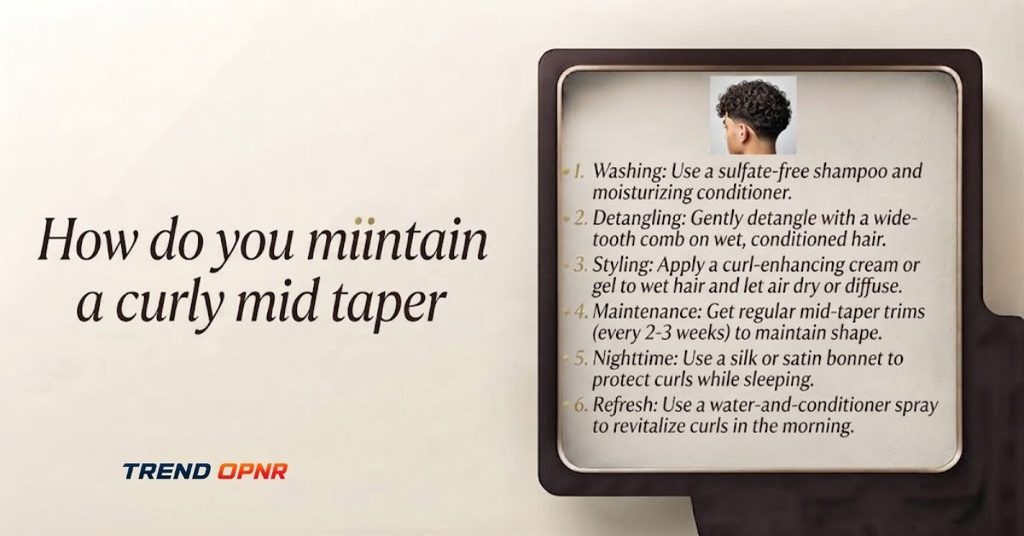
Haircut maintenance has two separate parts: maintaining the taper and maintaining the curls. The taper needs periodic barber work, while the curly top needs consistent curl care.
A mid taper fade curly hair cut may remain visually acceptable for several weeks, but the exact upkeep depends on how short the finish is, how quickly the hair grows, and how sharp you want the perimeter.
How often should you get the taper cleaned up?
A taper touch-up is often useful every few weeks when you want the blend to remain crisp. A skin finish usually shows growth faster than a guard-length or shadow finish.
People who prefer an understated haircut can allow more growth between appointments. Someone who wants a sharp contrast and clean perimeter may schedule more frequent touch-ups.
Do not attempt to recreate the blend line yourself with clippers unless you understand guard lengths and clipper work. Removing too much hair can change the taper placement and create an uneven transition.
How should you care for the curly top?
Curl care should prioritize moisture, gentle handling, and preservation of the natural curl pattern. Hair washing should be based on your hair’s needs rather than simply following the haircut schedule.
A wash day routine can include cleansing, conditioning, detangling, curl definition, and careful drying. Satin or silk materials can reduce overnight friction and help protect the curly shape.
For a mid taper fade curly hair style, maintaining volume on top while controlling side weight creates the intended silhouette. The goal is not to make the curls perfectly uniform; it is to preserve their natural behavior while keeping the haircut perimeter clean.
Common mid taper mistakes to avoid
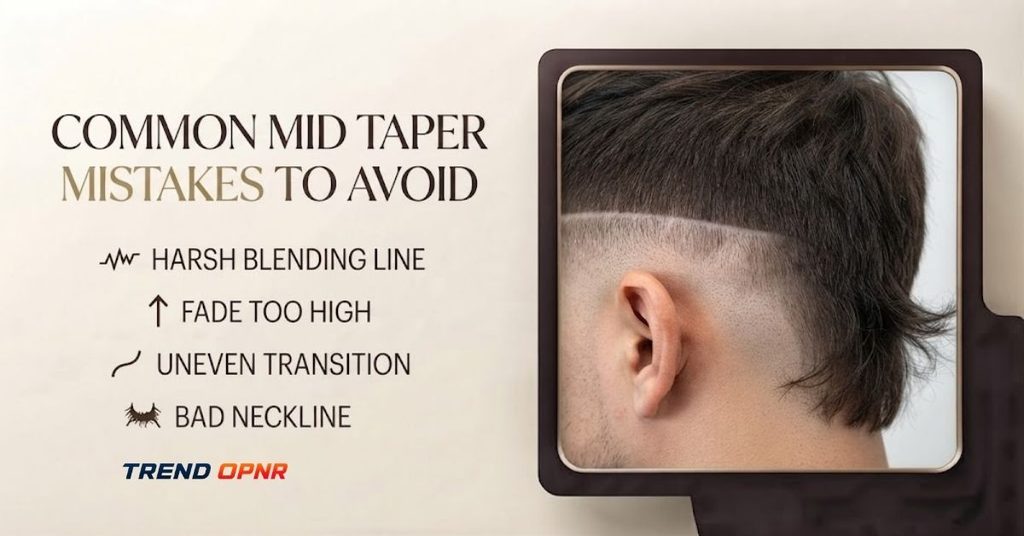
- Taking the taper too high: A high taper changes the amount of side weight and can expose more scalp than intended. Confirm the taper placement before clipper work begins.
- Removing too much curly volume: Curly shrinkage can make a haircut appear shorter after drying. Always consider dry length.
- Ignoring hair density: A taper that works on dense coily hair may look different on fine curls or wavy hair.
- Using the wrong reference photo: A straight-hair reference may not translate directly to textured hair.
- Confusing a taper with a fade: Ask whether the barber is creating a localized taper or a broader fade.
- Choosing the shortest length too quickly: A skin finish creates stronger contrast than a shadow finish.
- Cutting the top while it is interpreted only from wet length: Dry length is essential when shrinkage is significant.
- Removing all side weight: Curly silhouettes can become unbalanced if the sides are reduced too aggressively.
- Ignoring the neckline: The nape and perimeter influence how the haircut grows out.
- Overstyling the taper: Heavy product can obscure a clean blended finish.
- Forgetting curl direction: The natural curl pattern should influence the haircut shape.
- Treating every curl type identically: Loose waves, loose curls, tight curls, and coily texture respond differently to length changes.
- Copying someone else’s crown shape: Natural hair density and curl behavior can produce different proportions.
- Neglecting touch-ups: A clean blend gradually becomes less defined as the hair grows.
- Cutting too much because of wet appearance: Shrinkage can make wet length misleading.
Alternatives if a mid taper is not the look you want
A low taper is a useful alternative when you want more side weight and a softer transition. A high taper removes more side hair and produces stronger contrast.
A mid fade is another option when you want a broader fade area. A low fade reduces the sides lower on the head, while a high fade produces greater scalp exposure and a sharper haircut.
A taper vs fade comparison should focus on taper placement, blend height, side weight, contrast, scalp exposure, and maintenance rather than assuming one category is universally preferable.
For people with textured hair, a curly taper fade can also be combined with a fuller crown. A curly hair fade provides a more noticeable transition, while a curly hair taper keeps the shorter work concentrated around selected perimeter areas.
A burst fade, drop fade, temple fade, or another haircut can also change the silhouette. The right alternative depends on natural shape, hair length, desired contrast, and how much upkeep you are willing to schedule.
Mid Taper Fade Curly Hair Black
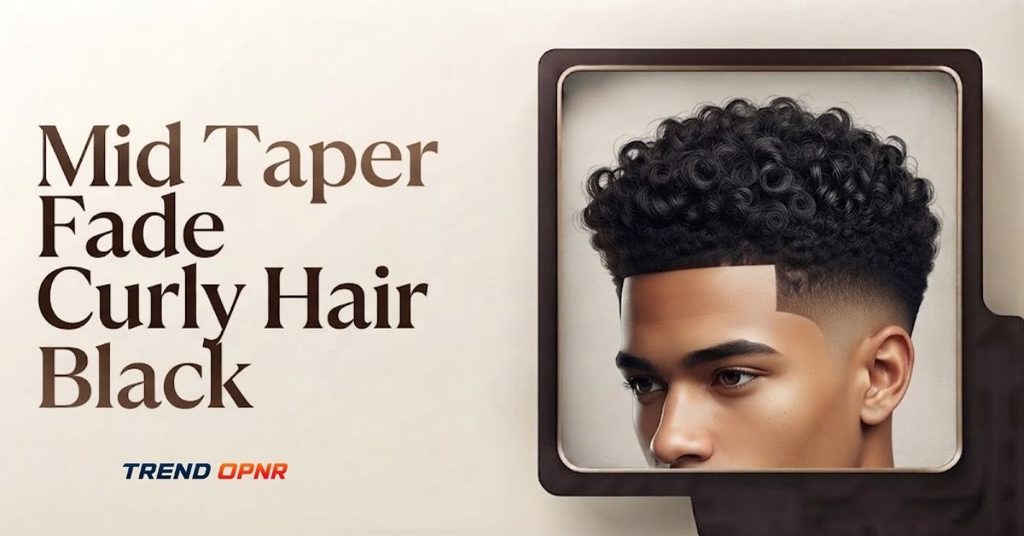
A mid taper fade curly hair style for Black men can work with tight curls, coily hair, and afro-textured hair when the barber respects natural density and shrinkage. The curly crown can remain full while the temple, sideburns, and neckline receive controlled clipper work.
A textured-hair barber can adapt the mid taper placement to the natural head shape rather than copying a straight-haired template. The finished look can range from a subtle shadow finish to a sharper skin finish depending on the desired contrast.
Mid taper fade curly hair blowout
A mid taper fade curly hair blowout emphasizes crown volume, movement, and a lifted curly silhouette. The shortened sides provide visual contrast while the top remains longer and more expansive.
For a successful blowout, discuss crown length, dry length, and volume before the appointment. Styling time is usually greater than with a compact curly hairstyle because drying technique has a major effect on the final shape.
Mid taper fade curly hair male
A mid taper fade curly hair male style can be adapted to short, medium, or long top length. The key decisions are taper height, curl definition, side weight, neckline shape, and finish.
A male curly hairstyle does not require one fixed curl type. Loose curls, tight curls, coily hair, and wavy hair can all use a curly taper when the cut specifications are adjusted for texture and density.
Mid taper fade curly hair straight hair
A mid taper fade curly hair straight hair combination can refer to naturally straight sections alongside curly or wavy sections, or to a styling reference where the taper is being compared with straight hair. The taper placement remains a structural haircut decision, while the top responds to hair texture.
Straight hair generally shows blend lines and length changes differently from curly hair. A barber should therefore use hair texture, density, and natural hair length rather than copying the exact proportions of a curly haircut.
High taper fade curly hair
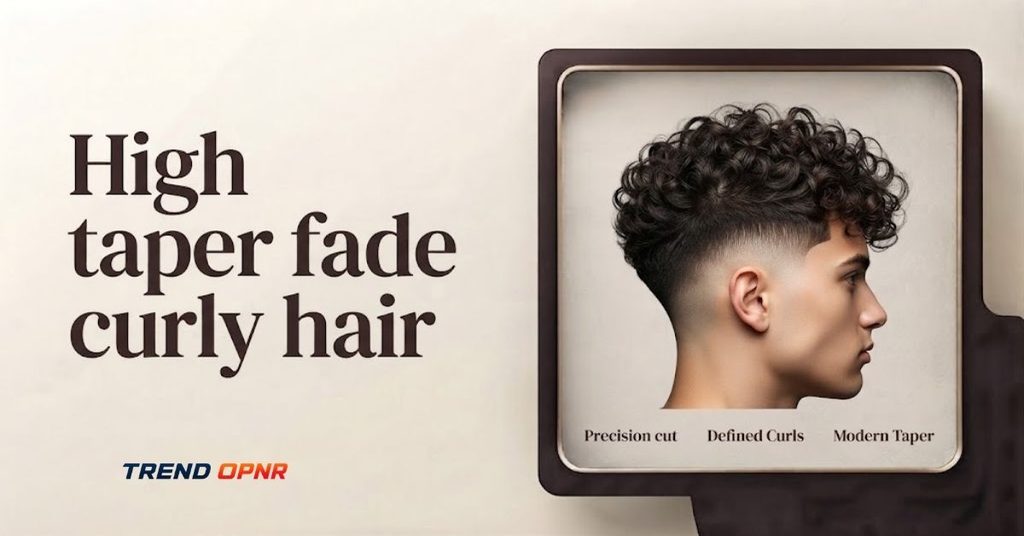
A high taper fade curly hair cut moves the taper placement above the temple and removes more side weight. The result usually creates stronger contrast between the curly crown and shortened sides.
Compared with a mid taper, the high taper can show more scalp and may require more frequent upkeep when a sharp finish is desired. It is useful when the goal is a more graphic haircut shape rather than an understated silhouette.
Low mid taper fade curly hair
A low mid taper fade curly hair interpretation combines the idea of moderate tapering with a softer, lower transition. Because the terminology can be ambiguous, tell the barber exactly where the blend should begin rather than relying on the phrase alone.
If maximum side weight is important, a conventional low taper may be more appropriate. If you want a visible temple transition without taking the blend as high as a high taper, a carefully positioned mid taper can provide that middle ground.
Frequently asked questions
Is mid taper fade good for curly hair?
Yes. A mid taper can work with curly hair because it mainly reshapes the sides, temple, sideburns, and neckline while leaving the curly crown available for natural volume and curl definition. The barber should account for curl pattern, hair density, shrinkage, and natural hair length.
Is mid-fade haram in Islam?
Whether a particular fade is considered permissible in Islam is a religious question with differing interpretations among scholars and Islamic schools. Some scholars discuss the concept of qaza.
What fade is best for curly hair?
There is no single fade that suits every curl pattern. A low fade preserves more side weight, a mid fade creates moderate contrast, and a high fade produces a stronger transition. Hair density, curl behavior, scalp exposure, desired silhouette, and maintenance preference should guide the choice.
What taper fade is best?
The best taper fade depends on the desired taper height, side weight, contrast, hair texture, and maintenance routine. A low taper is generally more understated, a mid taper creates moderate contrast, and a high taper creates a stronger haircut shape.
What is a no. 1 haircut?
A no. 1 haircut commonly refers to using a No. 1 clipper guard, which leaves approximately 1/8 inch or 3 mm of hair, although clipper systems can vary slightly. A No. 1 is a clipper length rather than a complete haircut, so it can be used as part of a taper, fade, or uniform cut.
Conclusion
A well-planned mid taper fade curly hair cut combines controlled taper placement with the natural character of curls. The most important decisions are top length, taper height, side weight, curl definition, finish, neckline, and the amount of scalp exposure you want.
A strong barber consultation starts with a clear reference photo and specific haircut vocabulary. Explain your curl pattern, density, shrinkage, desired silhouette, and maintenance expectations, then confirm the blend line and shortest length before the clippers begin. With consistent curl care and appropriate touch-ups, the haircut can retain its shape while the curls continue to look natural.

