


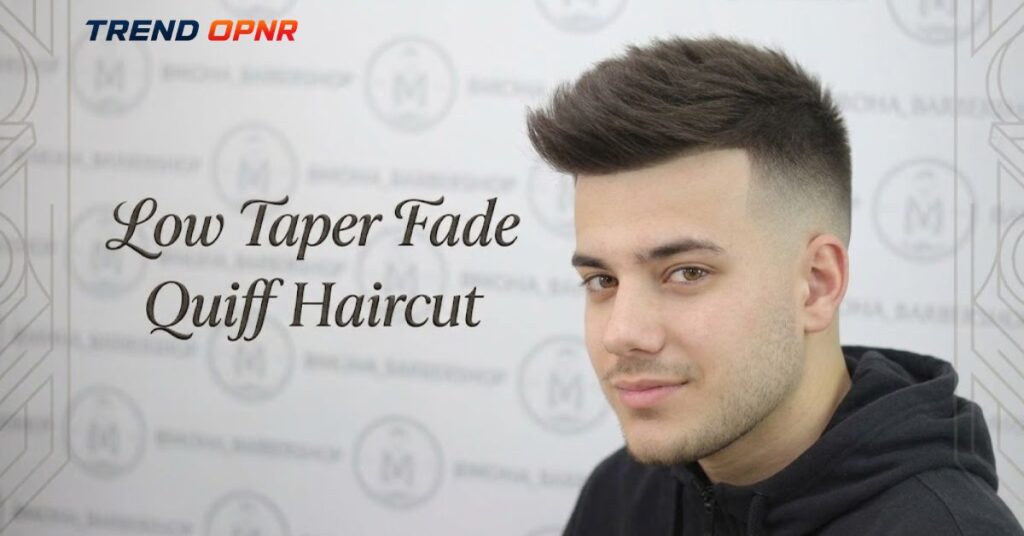
The Low Taper Fade Quiff Haircut continues to stand out as a versatile men’s hairstyle because it combines controlled sides with noticeable height on top. The result is a balanced silhouette that can look polished for work, relaxed for weekends, or more textured for nights out.
The appeal comes from its flexibility. Straight Hair can be shaped into a clean quiff, Wavy Hair can add natural movement, and Curly Hair can create a more distinctive finish. The Low Taper Fade keeps the Temples, Sideburns, and Neckline tidy while leaving enough Top Hair for styling.
This guide covers 38 variations, along with barber instructions, face-shape advice, styling products, maintenance, comparisons, celebrity inspiration, and common mistakes. Whether you want a Classic Quiff, Modern Quiff, Textured Quiff, or Messy Quiff, there is a version that can fit your personal style.
What Is a Low Taper Fade Quiff Haircut?
A Low Taper Fade Quiff Haircut combines a gradual Taper around the lower Temples, Sideburns, and Nape with longer Top Hair that is lifted at the Front Hair. Unlike a high fade, the Low Taper Fade preserves more Hair Weight around the upper sides.
The Quiff Haircut is defined by upward movement near the forehead. The Quiff can be smooth, textured, messy, loose, or highly structured, depending on Hair Length, Hair Texture, and the desired finish. The Low Taper Fade Quiff Haircut therefore gives a barber plenty of room for Haircut Customization.
What Is a Low Taper Fade?
A Low Taper Fade starts low around the ears and neckline rather than climbing high toward the temples. A Barber gradually reduces the Hair Length as the cut approaches the Lower Edges, creating a Soft Blend rather than a dramatic Skin Fade.
The Taper can be customized with a #1 Guard or #2 Guard, depending on how much contrast you want. A softer Clipper Guard transition leaves more natural Hair Density around the sides, while a closer finish produces cleaner Clean Edges.
Read More: Low Taper Fade Textured Fringe: 20 Best Styles for 2026
What Is a Quiff Haircut?
A Quiff Haircut lifts the front section of the Top Hair upward and usually directs it slightly backward, forward, or sideways. The shape creates Height, Volume, and Movement around the forehead without requiring the extremely slick structure associated with a traditional Pompadour.
A Quiff can work with Straight Hair, Wavy Hair, or Curly Hair. A Round Brush and Blow Dryer can create a polished shape, while Finger Styling can produce a more relaxed Textured Finish.
Why Is the Low Taper Fade Quiff Haircut So Popular?
The Low Taper Fade Quiff Haircut works because the two major components solve different styling needs. The Low Taper Fade controls side bulk and keeps the perimeter neat, while the Quiff adds Height and Volume where they have the greatest visual impact.
It also adapts easily to modern Men’s Grooming. A Professional Quiff can suit an office, a Messy Quiff can suit a casual weekend, and a Textured Top Quiff can provide a contemporary appearance without changing the basic Haircut Shape.
Benefits of This Haircut
- Facial Balance: Added Height can visually lengthen a Round Face and complement an Oval Face.
- Low-Maintenance Sides: The Taper keeps the Sideburns and Neckline controlled.
- Style Options: Matte Clay, Styling Paste, Hair Wax, Pomade, and Sea Salt Spray allow different finishes.
- Professional Look: A Clean Quiff can work with formal clothing and office grooming.
- Texture Control: Layered Hair and point cutting can create Separation and Definition.
- Versatility: The same haircut can become a Soft Quiff, Loose Quiff, or High-Volume Quiff.
- Hair-Type Flexibility: Straight Strands, Natural Waves, and Natural Curls can all be shaped differently.
- Easy Customization: A Barber can adjust Top Length, Fade Height, Side Bulk, and Hair Direction.
- Face-Shape Adaptability: Facial Structure can guide the amount of Height and width left on top.
- Styling Flexibility: The finish can range from Matte Finish and Natural Finish to Smooth Finish or Slick Finish.
Top 40 Best Low Taper Fade Quiff Haircut Styles
Classic Low Taper Fade Quiff Haircut
The Classic Low Taper Fade Quiff Haircut keeps the sides conservative and the Top Hair moderately long. Around 3–5 Inches of length gives enough room for Root Lift without creating excessive Hair Weight.
Use a Blow Dryer and Round Brush to build Height at the Front Hair. A small amount of Light Pomade or Matte Clay can provide control while preserving a Natural Finish.
Styling Tip: Direct warm air upward, then use Cool-Air Setting to stabilize the Shape.
Suitable Hair Type: Straight Hair or slightly Wavy Hair with medium density.
Maintenance: Schedule a Barber Trim approximately every 3–4 weeks.
Modern Low Taper Fade Quiff Haircut
The Modern Low Taper Fade Quiff Haircut introduces more Texture and Separation than the traditional version. Hair Layers can create Movement through the Top Hair, while the Low Taper Fade keeps the Lower Edges controlled.
A Matte Finish works particularly well because it avoids making the Modern Quiff appear overly rigid. Styling Paste or Matte Cream can add flexible Hold while allowing Finger Styling.
Styling Tip: Apply a small amount of Styling Paste to towel-dried hair before Blow-Drying.
Suitable Hair Type: Straight Hair, Wavy Hair, or Thick Hair.
Maintenance: Refresh the sides every 3 weeks when you want especially Clean Edges.
Textured Low Taper Fade Quiff Haircut
A Textured Low Taper Fade Quiff Haircut relies on Point Cutting, Hair Layering, and Weight Removal to prevent the Top Hair from becoming heavy. The resulting Textured Hair separates into visible sections instead of forming one solid block.
Styling Powder or Matte Clay can enhance Piecey Texture. The Low Taper Fade remains subtle, so the contrast comes mainly from the Texture and Definition on top.
Styling Tip: Apply Volume Powder directly at the Roots and work it through with your Fingers.
Suitable Hair Type: Thick Hair, Medium-Thick Hair, or Textured Hair.
Maintenance: Trim the top and taper regularly to preserve the intended Silhouette.
Messy Low Taper Fade Quiff
The Messy Quiff version intentionally leaves some strands moving in different directions. Instead of creating a perfectly polished Shape, the goal is Touchable Texture, Natural Movement, and a relaxed Messy Finish.
Sea Salt Spray can add Grip before Blow-Drying, while a lightweight Styling Cream can prevent the hair from becoming excessively dry. The Low Taper Fade supplies enough structure to keep the casual top from looking unkempt.
Styling Tip: Scrunch damp hair lightly and finish with Finger Styling.
Suitable Hair Type: Wavy Hair, Fine Hair, or hair with Natural Texture.
Maintenance: A taper cleanup every 3–4 weeks is generally enough.
Short Low Taper Fade Quiff
The Short Quiff keeps the Top Hair compact and easy to control. Around 2 Inches of length can provide enough Height for a recognizable Quiff without requiring an elaborate styling routine.
A tiny amount of Hair Wax or Styling Clay can push the Front Hair upward. This version is particularly practical for Active Guys and anyone who prefers a Low-Maintenance Hairstyle.
Styling Tip: Use a small amount of product and brush the front upward.
Suitable Hair Type: Straight Hair, Coarse Hair, or Thick Hair.
Maintenance: Quick side cleanup and occasional Top Trims keep the Shape consistent.
Long Low Taper Fade Quiff
The Long Quiff uses approximately 4–6 Inches of Top Hair for dramatic Height and movement. The additional Hair Length allows more experimentation with a Pompadour Quiff, Side-Swept Quiff, or Loose Quiff.
Because longer Top Hair carries more weight, Blow-Drying becomes more important. A Round Brush can lift the Roots while a medium-hold Styling Product provides structure.
Styling Tip: Lift the Front Hair with a Round Brush while Blow-Drying, then use Cool-Air Setting.
Suitable Hair Type: Medium Hair to Thick Hair.
Maintenance: Expect more frequent Top Trims and Daily Styling.
Low Taper Fade Quiff for Straight Hair
Straight Hair gives the Quiff a clean foundation, but Fine Strands can sometimes fall flat. Sea Salt Spray can create Grip before Blow-Drying, while Volume Powder can add Root Lift without excessive weight.
The Low Taper Fade keeps the sides visually neat and allows the Top Hair to become the main focus. A Matte Finish is especially useful when Straight Strands appear too flat or glossy.
Styling Tip: Pre-style with Sea Salt Spray and lift the Front Hair while drying.
Suitable Hair Type: Straight Hair from Fine Hair to Thick Hair.
Maintenance: Trim the top before it becomes too heavy to hold its direction.
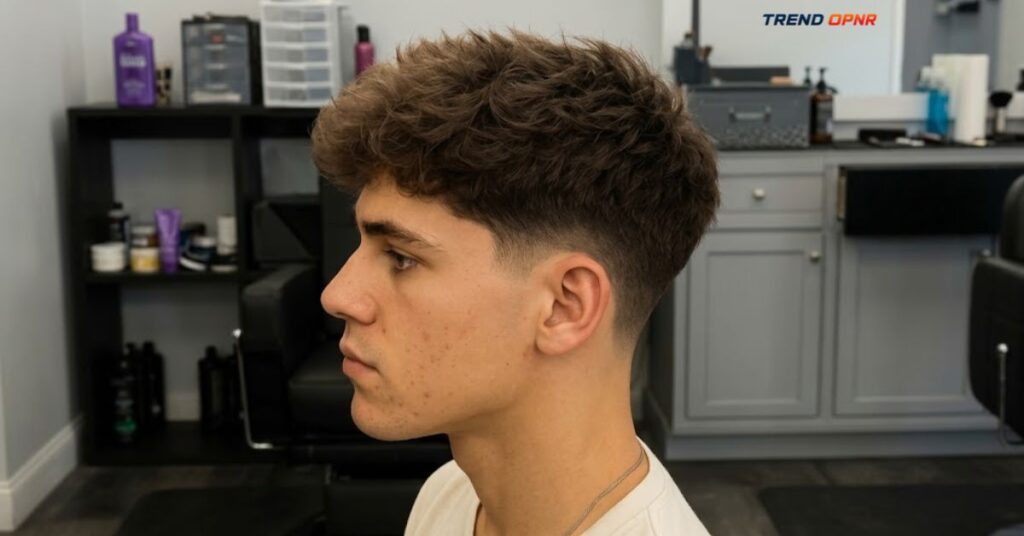
Low Taper Fade Quiff for Wavy Hair
Wavy Hair naturally contributes Bounce, Movement, and Texture to a Quiff. Rather than fighting Natural Waves, the styling should enhance their existing Hair Direction.
A lightweight Curl-Defining Cream can help maintain definition while reducing Frizz. Air Drying can create a softer Natural Finish, while Blow-Drying with a diffuser can increase Volume.
Styling Tip: Use a small amount of Curl-Defining Cream on Damp Hair and allow it to dry naturally.
Suitable Hair Type: Wavy Hair with medium to coarse Texture.
Maintenance: Regular Conditioning and periodic taper cleanup help preserve Shape.
Low Taper Fade Quiff for Curly Hair
Curly Hair can create a distinctive Quiff with Natural Curls forming the front Height. The Barber should preserve enough Curl Length on top while reducing unwanted Side Bulk around the Temples and Nape.
Leave-In Conditioner and Curl-Defining Cream can support Hair Hydration and Frizz Control. The finished style can be more rounded and textured than a Straight Hair Quiff.
Styling Tip: Apply Leave-In Conditioner to Damp Hair and shape the curls with your Fingers.
Suitable Hair Type: Loose Curls through Tight Curls.
Maintenance: Focus on moisture, Scalp Care, and regular edge maintenance.
Thick Hair Low Taper Fade Quiff Haircut
Thick Hair provides excellent natural Volume but can also create excessive Weight. A Barber can use Thinning Shears, Point Cutting, or selective Weight Removal to make the Top Hair easier to lift.
The Low Taper Fade reduces Side Bulk without forcing the entire haircut to become extremely short. Matte Clay or Styling Paste can provide Hold without making Thick Hair look greasy.
Styling Tip: Ask your Barber to remove Excess Weight rather than simply shortening the entire top.
Suitable Hair Type: Thick Hair, Coarse Hair, or High-Density Hair.
Maintenance: Consider a trim every 3 weeks when the hair grows quickly.
Thin Hair Low Taper Fade Quiff
Fine Hair can benefit from the visual contrast created by shorter sides and a lifted top. Keeping the Top Hair around a practical medium length prevents it from becoming too heavy.
Volume Powder and lightweight Styling Cream are usually more suitable than Heavy Products. Blow-Drying at the Roots can create the appearance of greater Hair Density.
Styling Tip: Use a small amount of Volume Powder rather than layering several heavy products.
Suitable Hair Type: Thin Hair, Fine Hair, or Low-Density Hair.
Maintenance: Gentle Washing and regular Conditioning can help keep the hair manageable.
Low Taper Fade Quiff with Beard
A Beard can strengthen the overall structure of a Quiff by adding visual weight around the lower face. The Barber can blend the Sideburns toward the Beard Line while keeping the Hairline clean.
A Full Beard, shorter Beard, or Beard Fade can all work depending on Facial Structure. Beard Oil can maintain softness, while a regular Beard Trim keeps the facial hair intentional.
Styling Tip: Coordinate the Sideburn Length with the Beard Length.
Suitable Hair Type: Any hair type that works with the chosen facial-hair style.
Maintenance: Combine Beard Grooming with regular fade maintenance.
Low Taper Fade Quiff with Line Up
A Line Up creates sharper boundaries around the Hairline and Temples. When combined with a soft Quiff, the contrast between Clean Edges and textured Top Hair can be especially striking.
The Barber can use a Hair Trimmer or Straight Razor for precise Edge Up work. The top should remain flexible rather than becoming too rigid.
Styling Tip: Keep the Line Up crisp but avoid forcing the natural Hairline into an unnatural shape.
Suitable Hair Type: Straight Hair, Coarse Hair, and Textured Hair.
Maintenance: Edge Maintenance may require attention every 1–2 weeks.
Low Taper Fade Quiff with Hard Part
A Hard Part introduces a defined Razor Line into the Side Part. It gives the haircut a stronger sense of Structure and Contrast while separating the Top Hair from the tapered sides.
This works particularly well when the Quiff has a clean direction. A Fine-Tooth Comb can make the part more visible, while Matte Paste can maintain texture away from the line.
Styling Tip: Comb the top away from the Hard Part before applying a small amount of Styling Paste.
Suitable Hair Type: Straight Hair or Wavy Hair that naturally accepts a part.
Maintenance: Razor Touch-Ups are useful when the part begins to soften.
Blonde Low Taper Fade Quiff Haircut
Blonde Hair can make individual Hair Layers and Texture more visible. Blonde Tones also create natural-looking highlights when the Top Hair moves under different lighting.
Purple Shampoo can help maintain cooler Blonde Tones when brassiness becomes noticeable. The cut itself can remain Classic, Textured, or Modern depending on the desired appearance.
Styling Tip: Use Purple Shampoo according to the product directions rather than overusing it.
Suitable Hair Type: Natural Blonde Hair or Dyed Blonde Hair.
Maintenance: Combine regular trims with appropriate Color Touch-Ups.
Asian Low Taper Fade Quiff Haircut
For many men with thick, straight hair, the main challenge is controlling stiffness and Side Bulk. A low taper around the lower edges can create a cleaner perimeter without removing the useful density on top.
A Blow Dryer can help direct Stiff Hair backward before applying Styling Paste. The Barber should consider the natural direction of the hair rather than forcing an unrealistic Shape.
Styling Tip: Blow-Dry backward while lifting the Roots, then finish with a moderate-Hold product.
Suitable Hair Type: Thick Hair, Straight Hair, or Coarse Hair.
Maintenance: Side Tapering every few weeks can preserve the intended silhouette.
Layered Low Taper Fade Quiff Haircut
Layered Hair gives the Top Hair different lengths that can support one another. Shorter Hair Layers near the Crown and longer sections toward the forehead can create natural Movement.
Finger Styling is useful because it separates the layers without producing the overly uniform appearance of a comb. A lightweight Matte Cream can keep the style flexible.
Styling Tip: Use your Fingers while Blow-Drying to reveal individual Hair Layers.
Suitable Hair Type: Medium Hair to Thick Hair.
Maintenance: A layered Top Trim every few weeks maintains the Shape.
Low Taper Fade Quiff with Volume
A High-Volume Quiff depends on Root Lift, sufficient Top Length, and controlled Heat Styling. The Blow Dryer should direct air beneath the Roots rather than simply blowing across the surface.
Volume Powder can create additional Grip, while Light-Hold Hairspray can stabilize the final Shape. The result is more dramatic than a Soft Quiff but remains versatile.
Styling Tip: Lift the Front Hair with a Round Brush and finish with Cool-Air Setting.
Suitable Hair Type: Straight Hair or Wavy Hair with medium density.
Maintenance: Daily Styling is normally necessary for maximum Height.
Matte Finish Low Taper Fade Quiff Haircut
The Matte Finish version focuses on natural-looking Texture instead of high shine. Matte Clay, Matte Paste, or Styling Clay can provide Hold while keeping the hair touchable.
This style is useful for men who dislike a glossy finish. The Low Taper Fade supplies clean structure, while the Matte Finish keeps the Top Hair contemporary.
Styling Tip: Warm a small amount of Matte Clay between your palms before application.
Suitable Hair Type: Fine Hair, oily hair, Straight Hair, or Textured Hair.
Maintenance: Wash away Product Buildup regularly and keep the taper refreshed.
Low Taper Fade Quiff with Textured Top
A Textured Top Quiff emphasizes Separation, Choppy Texture, and Natural Movement. Point Cutting can remove visual weight while creating distinct strands through the Front Hair and Crown.
The Low Taper Fade keeps the Lower Edges neat, allowing the Top Hair to carry most of the personality. Matte Paste works well when you want flexible Hold.
Styling Tip: Apply product mainly to the ends instead of saturating the Roots.
Suitable Hair Type: Medium Hair, Wavy Hair, or Straight Hair.
Maintenance: Regular Top Trims preserve the Textured Finish.
Professional Low Taper Fade Quiff Haircut
The Professional Quiff keeps the overall Shape controlled and avoids extreme Height. A modest Taper, clean Hairline, and Smooth Finish make the style appropriate for business environments.
A Fine-Tooth Comb and Light Pomade can produce a polished appearance without turning the hairstyle into a fully slicked-back look. The top can still retain subtle Texture.
Styling Tip: Comb the Front Hair slightly backward and to the side for a refined Silhouette.
Suitable Hair Type: Straight Hair or slightly Wavy Hair.
Maintenance: A Barber Visit every 3 weeks can maintain a Professional Appearance.
Low Taper Fade Quiff for Teen Boys
Teen Boys can benefit from a Quiff because the style can be adjusted to school requirements. A Short Quiff is easy to manage, while a Textured Quiff offers a more contemporary appearance.
The Low Taper Fade keeps the sides tidy and reduces the need for extensive morning grooming. A small amount of Styling Paste can be enough for everyday Hair Control.
Styling Tip: Blow-Dry the front upward and finish with Fingers rather than over-combing.
Suitable Hair Type: Straight Hair, Wavy Hair, or Medium Hair.
Maintenance: Keep the routine simple and schedule trims before the sides become overgrown.
Clean Low Taper Fade Quiff
A Clean Quiff emphasizes smooth blending, tidy Hairline work, and controlled Top Hair. It avoids excessive Texture and keeps Flyaways under control.
A lightweight Styling Cream can smooth the surface, while a Comb provides consistent Hair Direction. The result is a Neat Finish suitable for events, formal occasions, and daily grooming.
Styling Tip: Use a tiny amount of Styling Cream to control Flyaways.
Suitable Hair Type: Straight Hair or smooth Wavy Hair.
Maintenance: Regular washing, Conditioning, and precise trimming preserve the Clean Appearance.
Low Taper Fade Soft Quiff
The Soft Quiff is intentionally lower and more relaxed than a High-Volume Quiff. The Front Hair rises gently before flowing backward, creating a Natural Shape rather than a dramatic peak.
Lightweight Styling Cream and a Blow Dryer are enough for most men. This version works especially well when you want a versatile hairstyle that can move between casual and formal settings.
Styling Tip: Lift the front gently and avoid excessive product.
Suitable Hair Type: Straight Hair, Wavy Hair, and Medium-Thick Hair.
Maintenance: Refresh the taper every 3–4 weeks.
Low Taper Fade Mid Quiff

The Mid Quiff occupies the middle ground between a Short Quiff and a tall Quiff. It provides noticeable Height while remaining easier to control than a very long top.
Mousse can provide flexible support before Blow-Drying. A Round Brush can create a smooth Shape, while Fingers can introduce more Texture for casual styling.
Styling Tip: Direct the front slightly backward rather than straight upward.
Suitable Hair Type: Straight Hair, Wavy Hair, and Medium-Thick Hair.
Maintenance: Keep both the taper and Top Length balanced.
Low Taper Fade Drop Quiff
The Drop Quiff follows a softer curved Shape in which the Front Hair gradually decreases toward the sides. This makes the transition less rigid than a perfectly vertical Quiff.
Medium Heat and a Round Brush can establish the curve. The style is particularly useful for men who want Volume without a highly structured appearance.
Styling Tip: Lift the center front before guiding the outer sections slightly downward.
Suitable Hair Type: Straight Hair and Wavy Hair.
Maintenance: Trim the front when the curved Shape begins to collapse.
Low Taper Fade Forward Quiff
The Forward Quiff changes the normal Hair Direction by moving the Front Hair slightly forward after lifting it. This can make the forehead area appear fuller and create a youthful Silhouette.
Matte Cream or Styling Paste can maintain the direction without producing excessive Shine. The style is especially effective when the Top Hair has enough Length for controlled movement.
Styling Tip: Blow-Dry upward first, then direct the front slightly forward.
Suitable Hair Type: Straight Hair, Wavy Hair, and Thick Hair.
Maintenance: Keep the Front Hair long enough to preserve the Forward Quiff Shape.
Low Taper Fade Quiff Cut
The Low Taper Fade Quiff Cut is the straightforward foundation from which most variations begin. The Top Hair provides enough Length for Height, while the sides gradually narrow around the ears and Neckline.
It can be styled as a Clean Quiff for formal occasions or transformed into a Textured Quiff for casual wear. This adaptability makes it a reliable choice for men seeking a Modern Hairstyle.
Styling Tip: Use Styling Cream before Blow-Drying and finish with Fingers.
Suitable Hair Type: Straight Hair, Wavy Hair, and Medium-Thick Hair.
Maintenance: A Barber Trim every 3–4 weeks keeps the proportions balanced.
Low Taper Fade Quiff Undercut
This variation adds stronger separation between the Top Hair and sides. The Undercut influence creates additional Contrast while the Low Taper Fade softens the lower perimeter.
The top can remain Voluminous or Textured depending on personal preference. Matte Clay provides Hold without adding too much Shine.
Styling Tip: Lift the Roots with a Blow Dryer before applying Matte Clay.
Suitable Hair Type: Thick Hair and Medium-Density Hair.
Maintenance: The contrast grows out quickly, so regular trims are helpful.
Low Taper Fade Quiff Mid
The Quiff Mid version provides medium Height without the exaggerated structure of a tall Quiff. It is practical for everyday grooming because the Top Hair remains long enough to style but short enough to manage.
Finger Styling creates a relaxed finish, while a Comb creates a cleaner appearance. This makes the style suitable for both casual and Professional Appearance goals.
Styling Tip: Use Fingers for a softer finish and a Comb for a sharper finish.
Suitable Hair Type: Straight Hair, Wavy Hair, and Medium Hair.
Maintenance: Refresh the Taper and Top Length as the Shape grows out.
Low Taper Fade Quiff Mullet
The Quiff Mullet combines a lifted Front Hair with additional length toward the back. The Low Taper Fade cleans the lower sides while allowing the Nape to retain more length.
This creates a bolder Silhouette than a traditional Quiff. Textured Hair and Wavy Hair can make the transition especially expressive.
Styling Tip: Keep the Front Hair lifted while allowing the back to retain Natural Movement.
Suitable Hair Type: Thick Hair, Wavy Hair, or Textured Hair.
Maintenance: Shape both the taper and back regularly.
Low Taper Fade Burst Quiff
The Burst Quiff introduces a curved taper around the ear area while preserving Height on top. The curved Side Treatment gives the haircut a more energetic appearance.
Matte Clay can enhance Definition without making the hair overly shiny. The top should retain enough Hair Length to contrast with the curved sides.
Styling Tip: Blow-Dry the Front Hair upward and apply product primarily to the ends.
Suitable Hair Type: Thick Hair, Wavy Hair, and Textured Hair.
Maintenance: The curved fade benefits from frequent Barber Visits.
Low Taper Fade Medium Quiff
The Medium Quiff offers enough Top Length for Volume while remaining relatively easy to manage. It can be adapted into a Smooth Finish for work or a Textured Finish for weekends.
A Volumizing Mousse can provide pre-styling support. A Round Brush helps establish Height while preserving a natural silhouette.
Styling Tip: Lift the front gradually instead of forcing maximum Height.
Suitable Hair Type: Straight Hair, Wavy Hair, and Medium-Thick Hair.
Maintenance: Remove excess weight from the Top Hair when needed.
Low Taper Fade Pompadour Quiff
The Pompadour Quiff borrows the Height of a Pompadour while retaining the softer front movement of a Quiff. It is more dramatic than a Classic Quiff but less rigid than a traditional slick Pompadour.
A Blow Dryer and Round Brush create the foundation, while Medium-Hold Pomade adds structure. A Glossy Finish can be used for a retro appearance, although Matte Finish keeps it more contemporary.
Styling Tip: Build Height at the Roots before directing the front backward.
Suitable Hair Type: Thick Hair and Medium-Density Hair.
Maintenance: The top needs regular shaping.
Low Taper Fade Side Swept Quiff
The Side-Swept Quiff moves the Front Hair upward and toward one side. This produces a softer direction than a straight-back Quiff and can complement a Classic Side Part.
Matte Cream provides flexible Hold while preserving Movement. The style can be neat enough for a formal setting or textured enough for a casual appearance.
Styling Tip: Establish the side direction during Blow-Drying rather than forcing dry hair into place.
Suitable Hair Type: Straight Hair, Wavy Hair, and Medium-Thick Hair.
Maintenance: Preserve enough Top Length for the side sweep.
Low Taper Fade Loose Quiff
The Loose Quiff avoids perfect symmetry and lets several strands fall naturally. The result is a relaxed silhouette with a Soft Finish and Touchable Texture.
Sea Salt Spray can provide Grip without creating excessive weight. Fingers are generally better than a Fine-Tooth Comb when the goal is natural movement.
Styling Tip: Blow-Dry with your Fingers and stop before the hair becomes overly polished.
Suitable Hair Type: Straight Hair, Wavy Hair, and naturally Textured Hair.
Maintenance: Remove uneven or Split Ends when necessary.
High Volume Low Taper Fade Quiff
The High-Volume Quiff emphasizes maximum Height through the Root Lift. The Top Hair needs sufficient length and elasticity to support the shape without collapsing.
A Round Brush, Blow Dryer, Volume Powder, and Light-Hold Hairspray can be combined for a longer-lasting result. This version is particularly suited to events where a stronger Silhouette is desirable.
Styling Tip: Lift the Roots while drying before shaping the Front Hair.
Suitable Hair Type: Medium to Thick Hair with good Hair Elasticity.
Maintenance: Daily Styling is normally required.
Trending Low Taper Fade Quiff Haircut
The trending version combines the low perimeter with relaxed Texture, natural Height, and flexible styling. Instead of looking heavily sculpted, the Top Hair can remain Windswept and adjustable.
A Matte Finish keeps the style contemporary, while Sea Salt Spray provides Grip before styling. The emphasis is on natural Movement rather than excessive Product Application.
Styling Tip: Finish with a lightweight Matte Cream and restyle with your Fingers.
Suitable Hair Type: Wavy Hair, Straight Hair, or Textured Hair.
Maintenance: Refresh the taper every 3–4 weeks.
Messy quiff
A Messy Quiff works best when the Top Hair has enough Length to move independently. Rather than forcing every strand into the same Hair Direction, Finger Styling creates separation and a relaxed silhouette.
Sea Salt Spray is useful as a pre-styler, while a small amount of Matte Paste can provide Grip. The goal is controlled imperfection rather than genuinely unmaintained hair.
A Low Taper Fade keeps the sides visually organized, which allows the Messy Finish to remain intentional. This combination is especially useful for casual outfits, weekends, dates, and everyday Men’s Grooming.
Low taper textured top
A Low Taper textured top emphasizes Choppy Texture and Hair Separation. The Barber can use Point Cutting to remove selected weight while preserving enough length for a flexible Top Hair Shape.
Styling Clay can emphasize the ends without flattening the Roots. The result works well with Straight Hair and Wavy Hair, while thicker Hair Density gives the texture more visible contrast.
The Low Taper Fade should remain subtle so the textured top remains the main visual feature. Regular Haircut Maintenance prevents the layers from merging as the hair grows.
Classic side part Low Taper
A Classic Side Part with a Low Taper combines traditional grooming with a softer modern perimeter. The Side Part establishes clear Hair Direction, while the Taper avoids the dramatic contrast of a high fade.
A Fine-Tooth Comb and Light Pomade can create a polished appearance. For a more contemporary result, use Matte Paste and leave slight Texture through the Top Hair.
The style is especially suitable for Professionals and Office Workers who want a Classic Hairstyle with modern barbering. The Hairline, Sideburns, and Neckline should remain clean without looking overly sharp.
Textured French crop
A Textured French Crop differs from the Quiff because the Front Hair generally moves forward rather than upward. The shorter Top Length makes it a practical alternative for men who prefer reduced Daily Styling.
Point Cutting can produce Choppy Texture across the top, while a Low Taper Fade keeps the lower edges controlled. Matte Clay works well when a Natural Finish is preferred.
The French Crop can suit men who want a more Low-Maintenance Hairstyle. It is also useful when Facial Length makes excessive Height less desirable.
Classic side part Taper

A Classic Side Part Taper provides a traditional shape without requiring a strong Fade. The Taper gradually reduces the Hair Length around the lower edges while preserving more natural side weight.
A Comb, Light Pomade, or Styling Cream can create a Smooth Finish. A more relaxed version can use Finger Styling to retain subtle Movement.
This haircut is particularly useful when you want a Professional Appearance without a severe Skin-Level Blend. The Barber can customize the Sideburn Length and Neckline Shape to suit the individual’s Facial Structure.
Textured crop
A Textured Crop keeps the Top Hair relatively short and creates separation through Point Cutting. Compared with a Quiff, it needs less Root Lift and usually takes less time to style.
Matte Clay or Styling Paste can define individual sections without making the top appear greasy. A low taper can be paired with the crop when you want clean edges without a dramatic Fade.
It is a practical choice for men who prioritize Hair Manageability and low Daily Grooming effort. The style can also work well with Thick Hair because controlled thinning and Texture Creation can reduce visual weight.
How to Ask Your Barber for a Low Taper Fade Quiff Haircut
The best Barber Consultation starts with a Reference Picture rather than a hairstyle name alone. Show the Barber the exact amount of Height, Top Length, Fade Height, and Texture you want.
Explain whether you want a Classic Quiff, Textured Quiff, Soft Quiff, or more dramatic High-Volume Quiff. Also tell the Barber how much Daily Styling you are realistically willing to do.
What to Tell Your Barber
Ask for a low taper around the Sideburns and Neckline, keeping the transition low rather than taking the Fade high.
Request enough Top Length to create your preferred Quiff Shape. Depending on the style, this may mean approximately 2 Inches, 3–4 Inches, or 4–6 Inches.
Explain whether you want a Textured Finish, Smooth Finish, Matte Finish, or Slick Finish. If your hair is Thick Hair or Coarse Hair, ask whether Weight Removal or Thinning is appropriate.
Barber Reference Guide
| Feature | Recommendation | Why It Matters |
| Clipper Guard Number | #1 Guard or #2 Guard on lower edges | Controls the taper without unnecessarily removing upper side weight |
| Fade Height | Low | Keeps the transition around the lower Temples and Neckline |
| Top Hair Length | About 3–5 Inches | Provides useful length for many Quiff variations |
| Styling Product | Matte Clay, Styling Paste, or Sea Salt Spray | Creates Grip and Hold without excessive Shine |
| Hair Direction | Upward, backward, forward, or side-swept | Determines the Quiff’s final silhouette |
| Sideburn Length | Customized to facial hair | Creates a cleaner connection with the Beard |
| Neckline Shape | Natural or defined | Completes the haircut’s perimeter |
| Finish | Matte, Natural, Smooth, or Slick | Controls the overall appearance |
Best Face Shapes
The Low Taper Fade Quiff Haircut can be adapted to many Face Shapes by changing the Height, Width, and Hair Direction. Facial Structure should determine whether the top becomes tall, medium, or relatively compact.
Oval Face: Almost every Quiff variation can work because the Facial Proportions are naturally balanced.
Round Face: Added Height and reduced Side Bulk can create a Face-Slimming Effect.
Square Face: A Soft Quiff or Textured Quiff can complement the strong Jawline without making the overall shape too severe.
Diamond Face: A wider Layered Quiff can help balance prominent Cheekbones.
Heart Face: Moderate Height and controlled width can prevent the Forehead from appearing disproportionately broad.
Oblong Face: Avoid excessive Height and consider a Medium Quiff or Loose Quiff to preserve Facial Balance.
Best Hair Types
Straight Hair: Straight Strands are easy to direct but may need Sea Salt Spray or Styling Powder for Grip.
Wavy Hair: Natural Waves provide Bounce, Texture, and Movement with relatively little effort.
Curly Hair: Natural Curls create strong Texture but benefit from Hydration and Frizz Control.
Thick Hair: High-Density Hair has strong natural Volume but may need Weight Removal.
Thin Hair: Fine Strands benefit from lightweight products and Root Lift rather than Heavy Products.
Medium Hair: Medium Hair is highly adaptable and can support many Quiff variations.
Pros and Cons
| Pros | Cons |
| Stylish, clean, and modern appearance | Some versions require Daily Styling |
| Added Height can improve Facial Balance | Regular Barber Visits are needed |
| Works with casual and formal clothing | Long Top Hair takes longer to Blow-Dry |
| Adaptable to different Hair Types | Heavy Products can flatten Fine Hair |
| Many Texture and Finish options | Overgrown sides reduce the clean effect |
| Can complement facial hair | High-volume versions need more maintenance |
| Flexible Hair Direction | Heat Styling requires care |
| Easy to customize | Incorrect Top Length can limit styling |
How to Style a Low Taper Fade Quiff Haircut
Best Styling Products
Matte Clay: Useful for Firm Hold, Texture, and a Zero Shine appearance.
Matte Paste: Provides flexible control and a natural Textured Finish.
Hair Wax: Offers flexible Hold for short or medium Top Hair.
Pomade: Works for polished styles and can create a Slick Finish.
Light Pomade: Useful when you want control without excessive shine.
Styling Cream: Helps create a Soft Finish and control Flyaways.
Sea Salt Spray: Adds Grip and Texture before Heat Styling.
Volume Powder: Builds Root Lift without adding substantial weight.
Mousse: Useful for lightweight Volume Building before Blow-Drying.
Light-Hold Hairspray: Helps stabilize the final Shape without making it rigid.
Curl-Defining Cream: Supports Natural Curls and reduces Frizz.
Leave-In Conditioner: Adds Moisture and helps improve Hair Manageability.
Step-by-Step Styling Guide
Wash and Towel Dry: Begin with Clean Hair that is Damp rather than completely Wet Hair. Gentle Washing followed by Conditioner helps maintain Hair Hydration.
Apply Pre-Styler: Use Sea Salt Spray, Mousse, or a lightweight Styling Cream according to your Hair Type.
Create Root Lift: Use a Blow Dryer while lifting the Roots with your Fingers or a Round Brush.
Set the Direction: Direct the Front Hair upward, backward, forward, or to the side according to the chosen Quiff.
Cool the Hair: Use Cool-Air Setting briefly to help stabilize the Shape.
Apply Styling Product: Warm a small amount of Matte Clay, Styling Paste, or Hair Wax between your palms.
Create Texture: Use Finger Styling for Separation or a Comb for a cleaner finish.
Finish: Add a small amount of Hairspray if the hair needs additional Hold.
How to Maintain a Low Taper Fade Quiff Haircut
Good Hair Maintenance begins with keeping the taper proportional to the Top Length. Most men will need a Barber Visit every 3–4 weeks, although fast-growing hair may require more frequent Fade Maintenance.
Wash according to your Scalp Care needs rather than automatically shampooing every day. Regular Conditioning, Moisture Treatment, and gentle drying help preserve Hair Strength and Manageability.
Visit Your Barber Regularly: Refresh the Taper, Sideburns, Neckline, and Hairline before they become visibly overgrown.
Wash Properly: Use Shampoo appropriate for your Hair Type and avoid excessive washing when it causes dryness.
Condition Regularly: Conditioner helps longer Top Hair remain soft and easier to shape.
Control Product Buildup: Heavy Styling Products can accumulate around the Roots and make the Quiff appear flat.
Protect Hair From Excessive Heat: High-Heat Blow-Drying should not be the default every day when lower heat can achieve the same result.
Trim the Top When Necessary: Overly Long Top Hair can become too heavy for Root Lift.
Maintain Facial Hair: Beard Trim, Beard Line, and Beard Edges should complement the haircut.
Style Comparisons
Low Taper Fade Quiff vs Pompadour
| Feature | Low Taper Fade Quiff | Pompadour |
| Hair Direction | Upward with flexible backward or forward movement | Primarily backward over the crown |
| Texture | Often Natural or Textured | Usually smoother |
| Sides | Soft Low Taper | Can use a tighter Fade or Undercut |
| Vibe | Casual, versatile, modern | Retro, polished, formal |
| Styling | Moderate | Often more structured |
| Finish | Matte or Natural | Slick or Glossy |
Low Taper Fade Quiff vs Slick Back
| Feature | Low Taper Fade Quiff | Slick Back |
| Front Height | Noticeable Height | Lower and flatter |
| Hair Direction | Upward and backward/forward | Primarily straight backward |
| Product | Matte Clay or Volume Powder | Pomade or Gel |
| Texture | Natural Texture is common | Usually smoother |
| Daily Effort | Moderate | Often lower |
| Best For | Versatile styling | Clean, polished styling |
Low Taper Fade Quiff vs Textured Crop
| Feature | Low Taper Fade Quiff | Textured Crop |
| Top Hair Length | Usually 3–5 Inches | Often around 1–2 Inches |
| Fringe Direction | Upward or away from forehead | Forward |
| Face Suitability | Excellent for Oval Face and Round Face adaptations | Useful for longer or angular faces |
| Styling | Moderate | Usually minimal |
| Height | Moderate to high | Low |
| Texture | Flexible | Central feature |
Celebrity Inspiration
David Beckham: His classic grooming style demonstrates how a controlled Quiff can remain polished without looking overly rigid.
Zayn Malik: His hairstyle history shows how Texture, Height, and modern side treatments can create stronger fashion-forward looks.
Chris Hemsworth: His natural-looking Quiff demonstrates the appeal of moderate Height combined with relaxed Texture.
Zac Efron: His fuller Quiff styles show how Height can complement a strong Square Face.
Henry Cavill: His polished Quiff illustrates how classic proportions can work in formal settings.
Common Mistakes to Avoid
Using Too Much Styling Product: Excess Product Application can flatten the Top Hair and create a greasy appearance.
Choosing the Wrong Top Length: An Overly Short Top may not create enough Height, while an Overly Long Top can become Heavy Hair that falls down.
Skipping Trims: Poor Fade Maintenance allows the Taper, Sideburns, and Neckline to lose their clean structure.
Ignoring Blow-Drying: Product alone cannot always create the Root Lift needed for a substantial Quiff.
Ignoring Hair Texture: Straight Hair, Wavy Hair, and Curly Hair require different approaches to Styling Products and Heat Styling.
Using Heavy Products on Thin Hair: Heavy Wax and dense Pomade can overwhelm Fine Hair and reduce Volume.
Overusing Heat: Excessive Heat Styling can compromise Hair Health, especially when high temperatures are used repeatedly.
Forcing the Wrong Direction: Hair Direction should follow the Natural Shape whenever possible.
Neglecting Hydration: Dry or dehydrated hair can make Texture look rough and increase Frizz.
Over-Styling: Too much brushing, combing, and product can remove the Natural Movement that makes a modern Quiff attractive.
Low Taper Fade Quiff Haircut
The Low Taper Fade Quiff Haircut remains a strong choice for men who want a haircut that balances clean barbering with expressive Top Hair. The Low Taper Fade controls the lower perimeter, while the Quiff creates Height, Volume, Texture, and visual interest.
From a Classic Quiff and Professional Quiff to a Messy Quiff, Textured Quiff, or High-Volume Quiff, the core design can be adapted to different Hair Types and Face Shapes. The best result comes from choosing the right Top Length, Hair Direction, Styling Product, and maintenance schedule.
FAQ’s
Is low taper fade popular in 2026?
Yes. The Low Taper Fade remains popular because it provides a softer alternative to a high Fade while preserving useful side weight. It also pairs naturally with current Men’s Hairstyles, including the Quiff, Textured Crop, Side Part, and Modern Mullet.
What are the hottest haircut trends for men in 2026?
Popular directions include textured tops, low tapers, relaxed Quiffs, Modern Mullet variations, French Crops, and natural-looking finishes. Many current styles emphasize Hair Texture, movement, flexible Hold, and personalized Haircut Customization rather than extremely rigid styling.
What haircut is trending for 2026?
There is no single haircut that suits everyone, but low taper styles, Textured Quiffs, Textured Crops, Side Parts, and modern variations of classic cuts remain strong choices. The most useful trend is personalization based on Hair Type, Face Shape, and lifestyle.
What is a no. 1 haircut?
A No. 1 haircut generally refers to using a #1 Guard on the Clipper, leaving roughly 1/8 inch of hair. It is much shorter than the Top Hair normally required for a Quiff, so it is usually associated with the sides or a very short overall haircut.
What is a gen z haircut?
A Gen Z haircut generally refers to contemporary styles favored by younger men, often featuring Texture, movement, low or tapered sides, and less rigid styling. Examples can include Textured Quiffs, Low Taper styles, Curtains, textured crops, and modern mullet-inspired shapes.
Conclusion
The Low Taper Fade Quiff Haircut offers an unusually flexible combination of clean tapering and expressive Top Hair. Whether your preference is a Classic Quiff, Textured Quiff, Soft Quiff, Side-Swept Quiff, or Messy Quiff, the foundation can be customized around your Hair Type and Face Shape.
For the best outcome, bring a clear Reference Picture to your Barber, specify the desired Top Length and Fade Height, and choose Styling Products that match your Hair Texture. With sensible Hair Maintenance and regular trims, the style can remain sharp, modern, and easy to personalize throughout 2026.

