
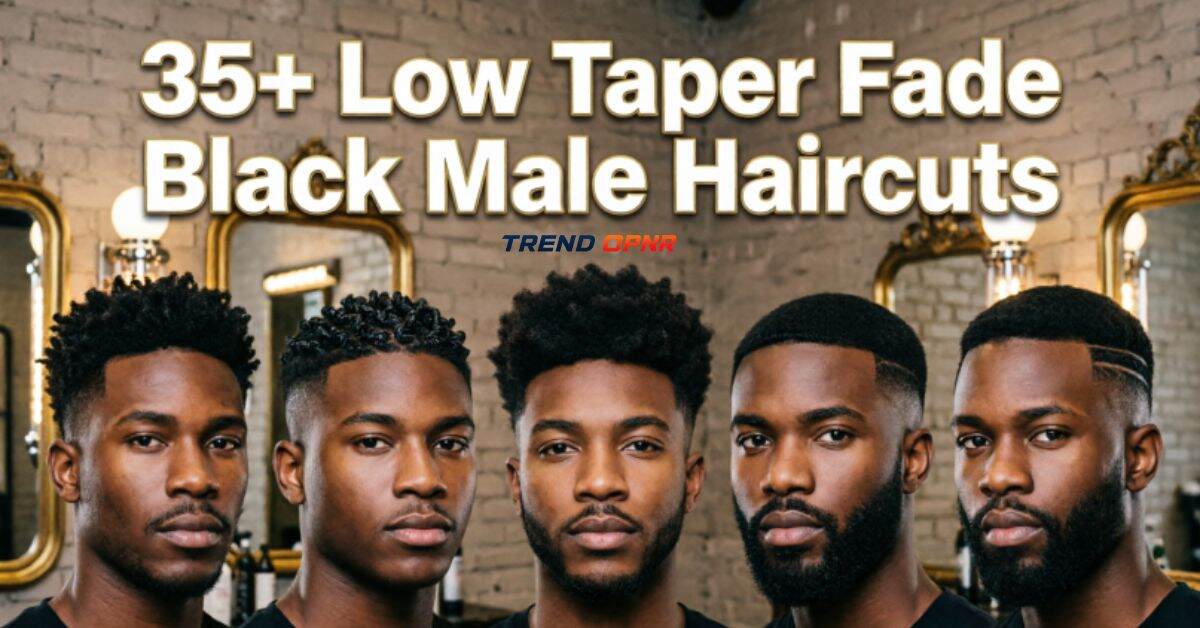

Low Taper Fade Black Male Haircuts offer a clean blend of natural texture, sharp edges, and modern style. From short curls and 360 waves to afros, twists, braids, locs, and beard combinations, there are plenty of options for different hair textures and face shapes.
In this guide, you’ll find Low Taper Fade Black Male Haircuts for classic, bold, creative, and everyday looks. Each style includes simple styling ideas, suitable face shapes, hair textures, and maintenance tips to help you choose a haircut that fits your personal style.
What Is a Low Taper Fade for Black Men and Why Does It Work So Well?
Low Taper Fade Black Male Haircuts create a gradual blend around the sideburns and neckline while keeping natural length and texture across the top. The lower placement gives Black men a clean, balanced appearance without removing too much hair. These cuts work especially well with 3C to 4C curls and coils, and they pair naturally with waves, afros, twists, braids, cornrows, locs, sponge curls, and textured styles.
KEY POINTS:
– Starts around the lower sideburns and neckline for a subtle, clean finish
– Works well with Black hair textures from Type 3C through Type 4C
– Complements 360 waves, curls, afros, twists, braids, cornrows, locs, and sponge curls
– Usually needs a taper refresh every 2 to 3 weeks to maintain the blend
– Offers a versatile look for school, work, formal events, and everyday wear
What Is a Low Taper Fade for Black Men?
Low Taper Fade Black Male Haircuts use gradual blending around the lower sides, sideburns, and neckline while leaving more natural hair on top. The taper remains low, giving the haircut a smooth and balanced finish. This approach works particularly well with curly, coily, kinky, and afro-textured hair because natural volume creates clear contrast against the shorter edges.
During the haircut, the barber moves through different clipper lengths to build a seamless transition. Longer hair gradually becomes shorter near the lower sides and neckline, creating the soft gradient associated with low taper black male styles. Unlike higher fades, the lower placement keeps more of the original hair shape intact.
Another reason Low Taper Fade Black Male Haircuts remain popular is their compatibility with different hairstyles. 360 waves, short curls, sponge curls, afros, twists, cornrows, braids, and locs can all be combined with the taper. The clean perimeter gives natural texture a sharper and more organized appearance.
For low taper black men, versatility is another major benefit. The haircut can look neat in professional surroundings while still offering enough character for casual occasions. Top length and texture can be adjusted according to personal preference, making the style suitable for both simple and creative looks.
Fact #1: Fade-style barbering has roots in military grooming, where shorter sides were valued for their neat appearance. Over time, Black barbers brought greater creativity to the technique through detailed blending, line-ups, textured tops, and distinctive designs. Fade styles later became strongly connected with Black fashion, music, and barber culture.
Read More: 10 Guard Buzz Cut: Length, Look & How to Do It Right
Why Does This Cut Work So Well on Black Hair?
Black hair offers natural density, texture, and volume that make Low Taper Fade Black Male Haircuts stand out. From the development of modern barbering to today’s creative styles, Black barbers have continued refining taper techniques to suit different curl and coil patterns.
Type 4A, 4B, and 4C hair can create a full appearance across the top, while the shorter sides provide noticeable contrast. This difference in length gives low taper black male styles a defined shape without taking away natural texture.
Another advantage comes from styling flexibility. Waves, curls, coils, afros, twists, and locs can all work with the taper. For low taper black men, the combination of natural volume and controlled edges creates a clean look that can be adapted to both classic and modern preferences.
Low Taper Fade vs. Other Fades: What Every Black Man Needs to Know
Choosing between fade styles can be confusing because small differences in placement can create completely different results. Low Taper Fade Black Male Haircuts keep the blend close to the lower sides and neckline, while other fades may remove more hair or rise higher toward the temples and crown.
For low taper black men, understanding the main fade types makes it easier to explain the desired look to a barber. Use the comparison below before booking the next haircut:
| Fade Type | Where It Starts | Skin Exposure | Overall Look |
| Low Taper Fade | Lower sideburns and neckline | Low | Clean, subtle, versatile |
| Low Fade | Lower sides above the ears | Moderate | Neat with stronger contrast |
| Mid Taper Fade | Around the temples | Moderate | Balanced and noticeable |
| High Taper Fade | Higher on the sides | High | Bold and dramatic |
| Skin Fade | Any chosen height | Very high | Sharp and close-cut |
| Drop Fade | Curves behind the ears | Varies | Rounded, distinctive shape |
| Burst Fade | Curves around the ears | Moderate–high | Bold, rounded profile |
| Temple Fade | Mainly around the temples | Low | Subtle and understated |
Low Taper Fade vs. Low Fade
Low Taper Fade Black Male Haircuts keep the blend concentrated around the sideburns and neckline, leaving more hair along the lower sides. The transition looks softer and keeps natural curls, coils, waves, or afro texture as the main feature. For low taper black men, this option gives a clean appearance without creating too much skin exposure.
A low fade usually rises slightly higher and removes more hair from the lower sides. It creates stronger contrast between the top and sides, making the overall haircut look sharper and more noticeable. For Black men seeking subtle grooming with plenty of natural volume, low taper black male styling can provide a more balanced alternative.
Low Taper Fade vs. Mid Taper Fade
Low Taper Fade Black Male Haircuts keep the blend close to the ears and neckline, creating a softer transition while preserving more fullness around the sides. This lower placement works well with waves, curls, afros, twists, and other natural textures, making it a versatile choice for low taper black men.
A mid taper begins higher around the temple area, giving the haircut more visible contrast and a stronger shape. It can make the top appear fuller and more prominent, while the sides look noticeably cleaner. For black men low taper fade fans who prefer a subtle, professional finish, the lower placement offers a calmer and more natural appearance.
Low Taper Fade vs. High Taper Fade
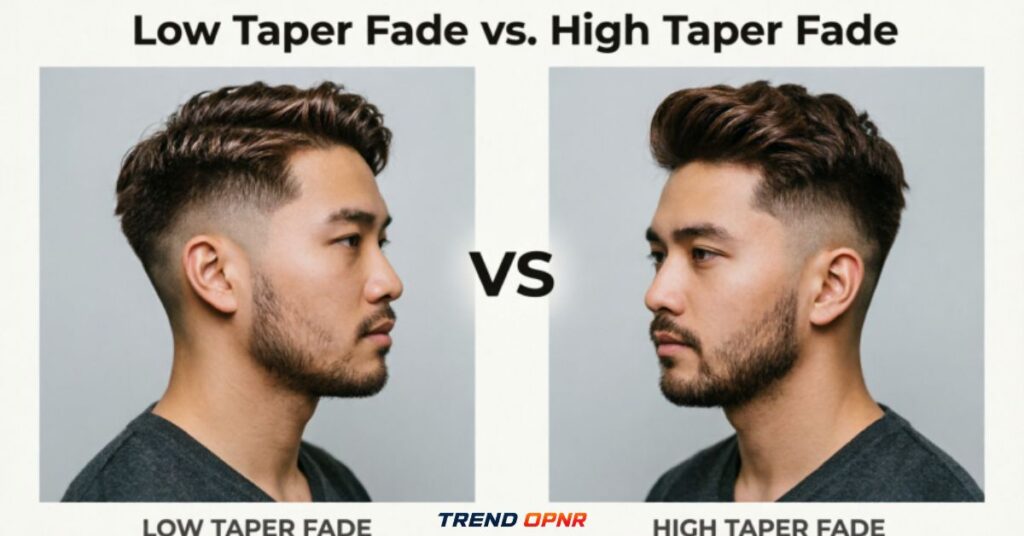
Low Taper Fade Black Male Haircuts keep the blend close to the lower sides, sideburns, and neckline. This placement preserves more hair around the temples and sides, giving curls, waves, coils, afros, or twists plenty of room to stand out. For low taper black men, the result is clean, balanced, and easy to adapt for professional or casual settings.
A high taper begins much farther up the sides, creating stronger contrast between the top and lower sections. It gives bold styles such as high tops, curls, and textured afros a more dramatic appearance. For black men low taper fade fans who prefer less skin exposure and a softer outline, the low option offers a more understated finish with natural-looking growth.
Taper vs. Fade: What Is Actually the Difference?
The terms taper and fade often sound interchangeable, but they describe different approaches to reducing hair length. A taper keeps some hair visible while gradually shortening the areas around the neckline, sideburns, or temples. Low Taper Fade Black Male Haircuts use this softer transition to keep natural texture and volume prominent across the top.
A fade creates a stronger transition and can move down to extremely short or skin-level lengths. A taper fade brings both techniques together, using gradual blending with a tighter finish around selected areas. For low taper black men, the lower placement provides a cleaner outline while maintaining more coverage than higher fade options.
Fact #2: Fade styles became increasingly influential within Black barber culture during the late 20th century. Creative barbers expanded traditional short-side cuts with detailed line-ups, textured tops, waves, afros, and personalized designs, helping establish fade variations as staples of modern men’s grooming.
Barber Tip: If choosing between low and mid placement, starting lower is often the safer option. More height can be added during a later appointment, while removing additional hair cannot be reversed until natural growth returns.
30+ Best Low Taper Fade Black Male Styles
Finding the right haircut becomes easier when natural texture, face shape, and lifestyle all work together. Low Taper Fade Black Male Haircuts offer plenty of options, from short curls and 360 waves to afros, twists, braids, locs, and creative designs. Each style can be adjusted according to top length, curl pattern, and preferred level of maintenance.
For low taper black men, the lower blend provides a clean foundation while allowing the top to carry the personality of the haircut. Below are 30+ stylish ideas covering classic, modern, protective, beard, and creative looks, making it easier to choose a cut that matches personal taste and everyday routine.
Short & Classic Styles
Short cuts remain a strong choice for men who prefer neat grooming with minimal styling. Low Taper Fade Black Male Haircuts keep the sides controlled while short curls, crops, buzz cuts, or classic tops maintain a clean and masculine appearance.
For low taper black men, classic styles work well across different hair textures and face shapes. Simple upkeep, quick styling, and easy barber maintenance make these looks suitable for school, work, formal occasions, and daily wear.
1. Low Taper Fade Black Male Short Hair
Short natural hair paired with a clean taper creates a simple yet polished appearance. The top can stay close to the head while still showing natural curls or coils, giving Low Taper Fade Black Male Haircuts a sharp outline without adding excessive volume. The style suits different face shapes and works well for everyday grooming.
Best for: All face shapes · 3C–4C textures
Styling tip: Use a small amount of edge control around the hairline for a cleaner finish.
Maintenance: Every 2 weeks
2. Low Taper Fade Buzz Cut
A buzz cut keeps the top short and uniform, while the taper adds definition around the sideburns and neckline. This combination gives Low Taper Fade Black Male Haircuts a neat, low-maintenance finish that needs little styling during the day. The short length also makes the natural shape of the head and facial features more noticeable.
Best for: Oval, square, and diamond faces · All hair textures
Styling tip: Apply lightweight scalp moisturizer to keep closely cut hair comfortable and hydrated.
Maintenance: Every 2 weeks
3. Low Taper Fade Caesar Cut
The Caesar cut keeps the top short with a defined front edge, while the taper cleans up the sides and neckline. Low Taper Fade Black Male Haircuts with Caesar styling create a structured appearance that works especially well with dense curls and coils. A precise front line can make the overall cut look even sharper.
Best for: Oval and round faces · 4B–4C textures
Styling tip: Apply a small amount of lightweight styling cream to control the short texture without making the hair look heavy.
Maintenance: Every 2–3 weeks
4. Low Taper Fade Crew Cut
A crew cut keeps the top slightly longer toward the front, creating a clean shape with very little styling effort. The tapered sides add definition while preserving enough length to show natural curls or coils. Low Taper Fade Black Male Haircuts with crew-cut styling work well for men seeking a polished look suitable for both professional and casual settings.
Best for: Square and oval faces · All hair textures
Styling tip: Use a small amount of matte styling clay for light texture and control.
Maintenance: Every 2–3 weeks
5. Low Taper Fade Textured Crop
A textured crop brings short layers and natural movement across the top, while the low taper keeps the sides neat. This variation of Low Taper Fade Black Male Haircuts works especially well with defined curls because the top can retain its natural shape without looking overly styled. A short forward fringe can add extra character.
Best for: Oval, heart, and diamond faces · 3C–4A textures
Styling tip: Apply curl cream to damp hair, then allow it to dry naturally for better definition.
Maintenance: Every 2–3 weeks
Waves & Curl Styles
Waves and curls bring natural texture to the forefront while the taper creates a sharper frame around the sides and neckline. Low Taper Fade Black Male Haircuts pair especially well with 360 waves, defined curls, sponge curls, and natural coils, creating contrast between the textured top and clean perimeter.
For low taper black men, these styles offer plenty of room for personal preference. A polished wave pattern can create a classic appearance, while loose curls or sponge-defined coils give a more relaxed and modern finish. Regular moisture and suitable styling products help preserve definition between barber visits.
6. Low Taper Fade with 360 Waves
360 waves create a smooth ripple pattern that circles around the crown and extends toward the front, back, and sides. With Low Taper Fade Black Male Haircuts, the taper keeps the lower edges tidy while allowing the wave pattern to remain the main attraction. Clean temple areas and a fresh neckline make the overall style look more defined.
Fact #3: Building 360 waves requires consistent brushing in the direction of the desired pattern. Hair length, curl pattern, moisture, and brushing habits can affect the final result, so patience and regular care are important. A durag or wave cap can also help protect the pattern during sleep.
Best for: Oval, square face shapes · 4A, 4B, 4C hair types
Styling tip: Apply wave moisturizer or light pomade after brushing, then use a durag at night to help maintain the pattern.
Maintenance: Taper refresh every 2 weeks · Regular brushing throughout the week
7. Low Taper Fade Curly Hair
Defined curls on top paired with neatly tapered sides create a balanced, modern appearance. Low Taper Fade Black Male Haircuts allow the natural curl pattern to remain the main feature while the lower sections stay clean and controlled. This look works particularly well when curls are hydrated, separated, and naturally springy.
Best for: Oval, round, and diamond faces · 3C–4A hair types
Styling tip: Work curl cream into damp hair and use a diffuser on low heat to enhance definition without flattening the curls.
Maintenance: Every 2–3 weeks
8. Low Taper Fade with Natural Coils
Natural coils create plenty of texture and volume on top, while the taper gives the sides and neckline a clean, structured finish. Low Taper Fade Black Male Haircuts work especially well with tightly coiled textures because the contrast between the fuller top and shorter edges makes the haircut stand out without needing an elaborate design.
Best for: All face shapes · 4B–4C hair types
Styling tip: Apply leave-in conditioner followed by a lightweight moisturizing butter to keep coils soft and reduce dryness.
Maintenance: Every 2–3 weeks
9. Low Taper Fade with Sponge Curls
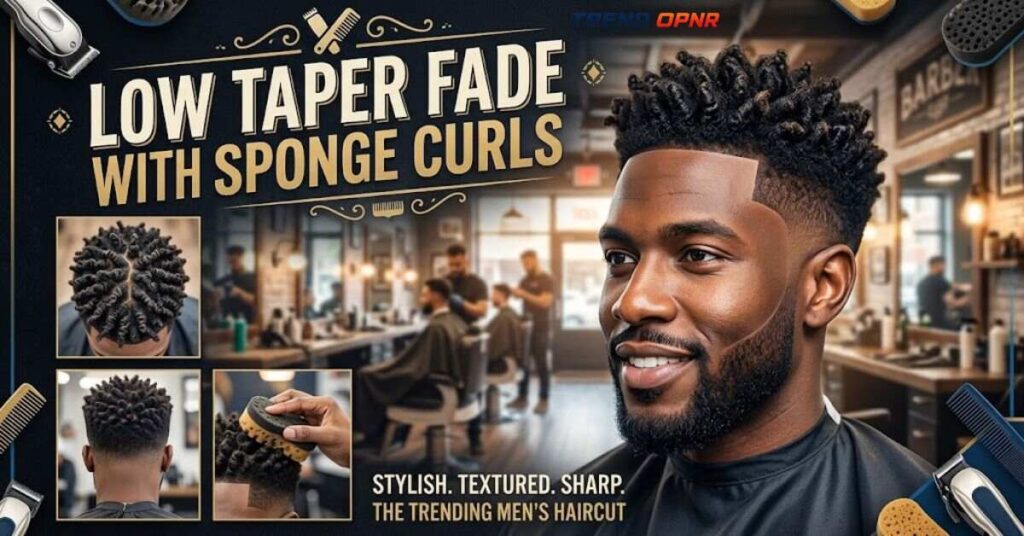
Sponge curls create small, defined coils across the top while the taper keeps the sideburns and neckline neat. This combination gives Low Taper Fade Black Male Haircuts a textured, youthful appearance without requiring lengthy styling sessions. The circular sponge technique works best on short to medium natural hair.
Best for: Round and oval faces · 4A–4B hair types
Styling tip: Apply a light curl cream to damp hair, then gently use a curl sponge in circular motions for better definition.
Maintenance: Taper refresh every 2–3 weeks · Refresh curls as needed at home
Afro Styles
Afro styles bring natural volume and texture to the top while the taper adds structure around the sides. Low Taper Fade Black Male Haircuts create strong contrast with short, medium, or fuller afros, giving the haircut a clean outline without taking away the natural character of the hair.
For low taper black men, afro variations can range from simple rounded shapes to taller, more dramatic looks. Proper moisturizing and regular shaping help keep the texture healthy while maintaining the fresh appearance of the taper.
10. Low Taper Fade Afro (Short)
A short afro paired with a low taper gives natural texture a neat, rounded shape while keeping the sides and neckline controlled. Low Taper Fade Black Male Haircuts suit this combination because the fuller top creates a clear contrast with the tapered edges. The style is easy to manage and fits casual, professional, and formal settings.
Best for: All face shapes · All Type 4 textures
Styling tip: Use a few drops of argan oil to maintain moisture and a healthy-looking finish.
Maintenance: Every 2–3 weeks
11. Low Taper Fade Afro (Medium to Full)
A medium or full afro creates noticeable volume on top, while the taper keeps the lower sections clean and well-defined. Low Taper Fade Black Male Haircuts give this fuller afro a structured outline without reducing its natural presence. Regular shaping helps maintain a balanced, rounded silhouette.
Best for: Round and oval faces · 4A–4C textures
Styling tip: Use a moisturizing conditioner and a small amount of shea butter to reduce dryness, then shape the afro gently with an afro pick.
Maintenance: Taper refresh every 2–3 weeks · Shape trim every 4–6 weeks
12. Low Taper Fade High Top
A high top adds vertical height and gives natural coily hair a bold, structured appearance. The taper keeps the lower sides neat, making the height on top stand out even more. Low Taper Fade Black Male Haircuts with high-top styling offer a modern take on a classic look and can be shaped with clean, defined edges.
Best for: Long and oblong faces · 4B–4C textures
Styling tip: Use a firm-hold styling product to maintain the top’s shape throughout the day.
Maintenance: Every 1.5–2 weeks for precise shaping and clean edges.
13. Low Taper Fade Frohawk
The frohawk keeps fuller natural hair through the center while the sides are trimmed lower, creating an edgy shape with plenty of texture. It offers the bold appearance of a mohawk while retaining the natural volume and character of afro-textured hair.
Best for: Oval, square, and heart faces · 4A–4C textures
Styling tip: Apply curl cream to the center section for definition and use edge control along the sides for a cleaner outline.
Maintenance: Every 2–3 weeks
Protective & Long Styles
Protective and longer hairstyles give natural hair room to grow while reducing daily manipulation. Braids, twists, cornrows, and locs can create strong texture and visual contrast when paired with neatly cleaned sides.
These options also offer flexibility for different lengths and personal styles. Regular scalp care, gentle handling, and timely touch-ups help keep the overall appearance neat while protecting the natural hair underneath.
14. Low Taper Fade with Two-Strand Twists
Two-strand twists add texture and length across the top while clean tapered sides create a balanced finish. The combination works well for natural hair that is being grown out, giving the style a tidy outline without taking attention away from the twists. It also offers a practical option for reducing daily styling and manipulation.
Best for: All face shapes · 3C–4C hair types
Styling tip: Apply leave-in conditioner and twisting cream to damp hair for smoother, more defined twists.
Maintenance: Taper every 2–3 weeks · Retwist every 2–4 weeks as needed.
15. Low Taper Fade with Sponge Twists
Sponge twists create small, textured sections across the top, giving natural hair a defined and playful appearance. The clean taper around the sides keeps the overall haircut balanced and easy to maintain.
Best for: All face shapes · 4A–4B textures
Styling tip: Apply light curl cream before using the sponge for better definition and moisture.
Maintenance: Every 2–3 weeks · Refresh twists as needed.
16. Low Taper Fade with Box Braids
Box braids offer structured sections across the top while the tapered sides provide a clean contrast. This combination suits different braid lengths and can give longer natural hair a polished shape without daily styling.
Best for: Oval, round, and diamond faces · All hair textures
Styling tip: Use a lightweight scalp mist to maintain hydration while the braids are installed.
Maintenance: Taper every 2–3 weeks · Refresh braids around 4–6 weeks.
17. Low Taper Fade with Cornrows
Cornrows create neat, patterned rows across the scalp, while tapered sides add definition around the edges. Straight-back rows, curved patterns, and creative layouts can all work with this haircut, depending on personal preference.
Best for: Oval, square, and heart faces · All hair textures
Styling tip: Apply a light scalp moisturizer and avoid excessive tension around the hairline.
Maintenance: Taper every 2–3 weeks · Refresh cornrows around 2–4 weeks.
18. Low Taper Fade with Locs (Dreadlocks)
Locs paired with tapered sides create an excellent balance between length and clean structure. The shorter perimeter prevents the sides from looking bulky while allowing the locs to remain the main feature. Longer locs can also be worn loose, tied back, or gathered into a bun.
Best for: Oval, diamond, and square faces · All hair textures
Styling tip: Use lightweight oil on the locs and keep the tapered sections moisturized without heavy buildup.
Maintenance: Taper every 2–3 weeks · Loc maintenance every 4–6 weeks.
19. Low Taper Fade with Finger Coils
Finger coils give the top a carefully defined pattern by shaping small sections of damp hair individually. The result is a detailed, textured finish that pairs nicely with clean tapered sides. Although styling takes longer, the defined coils can create an eye-catching appearance.
Best for: Oval, heart, and diamond faces · 3C–4B textures
Styling tip: Use curl-defining cream with lightweight gel before forming each coil for longer-lasting definition.
Maintenance: Taper every 2–3 weeks · Refresh coils weekly as needed.
Beard Combination Styles
A well-shaped beard can add extra structure to the haircut, especially when the sides transition smoothly toward the facial hair. Clean cheek lines, a defined neckline, and balanced beard length can make the overall appearance more polished.
Different beard lengths also allow plenty of styling choices, from a full beard to a short trim or goatee. Keeping both the haircut and facial hair maintained on a similar schedule helps create a consistent, sharp finish.
20. Low Taper Fade with Full Beard
A full beard adds strength and definition to the lower face, while clean tapered sides keep the haircut balanced. The transition between the sideburn area and beard can be blended smoothly for a connected appearance. This combination works well with both natural textures and longer top styles.
Best for: Oval, square, and diamond faces · All hair textures
Styling tip: Use beard oil to soften facial hair and apply light styling cream around the tapered sections for a neat finish.
Maintenance: Haircut and beard trim every 2 weeks.
21. Low Taper Fade with Short Trimmed Beard
A short beard gives the jawline more definition without requiring extensive daily care. Keeping the facial hair around 3–5 mm creates a clean contrast with the haircut, while neat cheek and neckline edges add extra polish. It is an easy choice for work, events, and casual outings.
Best for: Square, oval, and oblong faces · All hair textures
Styling tip: Apply beard balm for moisture and light control, then keep the cheek and neckline edges clearly shaped.
Maintenance: Haircut and beard trim every 2 weeks.
22. Low Taper Fade with Goatee
A goatee focuses attention around the chin and mouth, creating an angular finish that can complement stronger facial features. The clean taper around the sides keeps the overall appearance balanced and prevents the facial hair from looking disconnected from the haircut.
Best for: Diamond, triangle, and heart faces · All hair textures
Styling tip: Use beard oil for softness and a precision trimmer to maintain the outline around the chin and mustache.
Maintenance: Taper every 2–3 weeks · Goatee edge-up weekly.
Bold & Creative Styles
Bold haircut variations give traditional grooming a more personal and expressive direction. Razor designs, sharp outlines, textured tops, and added volume can transform simple tapered sides into a standout appearance. The key is keeping the shape balanced so the extra details complement the natural hair.
These styles are ideal for men who enjoy experimenting with their appearance while still wanting clean edges. An experienced barber can adjust the design, height, texture, and overall shape according to hair density and face structure.
23. Low Taper Fade with Hair Design
A creative hair design can add personality to the tapered section through shaved lines, curves, geometric shapes, initials, or other custom patterns. Simple designs often create an understated finish, while detailed patterns can make the haircut a major focal point. Choosing designs that follow the head shape usually creates a cleaner result.
Best for: All face shapes · All hair textures
Styling tip: Keep the surrounding hair moisturized and use light edge control for a tidy finish around the design.
Maintenance: Refresh the design every 1–2 weeks.
24. Low Taper Fade with Line-Up (Shape-Up / Edge-Up)
A line-up gives the forehead, temples, and sideburns a crisp, defined appearance. It can instantly make the haircut look fresher without changing the length or texture on top. This add-on pairs well with waves, curls, afros, twists, and short natural styles.
Best for: All face shapes · All hair textures
Styling tip: Use a small amount of edge control to keep the front area neat between barber appointments, without forcing the natural hairline into an unnatural shape.
Maintenance: Line-up every 1–2 weeks.
25. Low Taper Fade Blowout
A blowout creates extra height and volume by gently stretching the natural hair with controlled heat. The fuller top contrasts with the shorter tapered sides, producing a noticeable silhouette that can make natural texture appear longer and more prominent. This style works especially well for special occasions and modern casual looks.
Best for: Oval, square, and oblong faces · 4A–4C textures
Styling tip: Apply heat protectant before blow-drying, then use lightweight volumizing product to add lift without making the hair feel heavy.
Maintenance: Taper every 2–3 weeks · Restyle the blowout as needed.
Styles for Black Boys and Teens
Black boys and teens can choose from plenty of clean haircut options that suit school, sports, family events, and everyday life. Short curls, waves, mini afros, twists, and neat tapered sides can create a stylish appearance while keeping morning grooming simple.
For younger clients, comfort and easy upkeep are important. A well-planned taper can keep the neckline and side areas tidy without requiring heavy styling products. As hair grows, the top can also be adjusted into different looks while keeping the overall cut fresh.
26. Low Taper Fade for Black Boys (Ages 8–12)
For younger boys, a clean taper offers an easy-to-manage haircut with a neat appearance around the ears and neckline. The top can stay short with natural curls, coils, or a small afro, allowing the child’s natural texture to remain visible. Low Taper Fade Black Male Haircuts can also work well for school settings because the style looks tidy without requiring complicated morning routines.
Best for: All face shapes · All hair textures
Styling tip: Use a lightweight moisturizer to keep the hair soft and comfortable. Avoid heavy styling products for daily use.
Maintenance: Every 3–4 weeks.
27. Low Taper Fade for Black Teens (Ages 13–17)
Teenagers can add more personality to the haircut by choosing waves, sponge curls, twists, a mini afro, or another textured top. Low Taper Fade Black Male Haircuts provide a clean foundation while leaving enough room to experiment with different styles. The lower taper also offers a balanced appearance that can work for school, social events, and family occasions.
Best for: All face shapes · All hair textures
Styling tip: Select products according to the top style, such as curl cream for curls or wave moisturizer for waves.
Maintenance: Every 2–3 weeks.
More Styles to Try
Beyond classic cuts, there are plenty of creative ways to shape natural hair while keeping the sides neat. Low Taper Fade Black Male Haircuts can be combined with flat twists, curly fringes, color accents, simple natural texture, or a defined part line for a more personalized finish.
These variations work across different curl patterns and personal preferences. Whether the goal is subtle grooming or a more noticeable appearance, choosing the right top length and styling method can give the haircut a fresh, individual character.
28. Low Taper Fade with Flat Twist
Flat twists create clean, textured sections across the scalp while the tapered sides keep the overall haircut neat. The style gives natural hair a protective option without adding the weight of longer braids. It also works well for men who want visible texture with a structured finish.
Best for: Oval and heart faces · 3C–4B textures
Styling tip: Apply leave-in conditioner and twisting cream to damp hair for smoother, longer-lasting twists.
Maintenance: Taper every 2–3 weeks · Retwist every 2–3 weeks.
29. Low Taper Fade with Curly Fringe
A curly fringe brings natural curls forward across the forehead, creating a relaxed and contemporary appearance. The tapered sides add structure around the face while allowing the front curls to remain full and expressive. Defined curls can make the style look especially polished.
Best for: Round, heart, and diamond faces · 3C–4A textures
Styling tip: Apply curl cream to damp hair and gently shape the front curls without disturbing their natural pattern.
Maintenance: Every 2–3 weeks.
30. Low Taper Fade with Colored Tips
Colored tips add dimension to natural curls and coils without changing the entire hair color. Blonde, copper, honey, or lighter brown accents can create noticeable contrast against darker roots. The tapered sides keep the colorful top looking balanced and intentional.
Best for: All face shapes · 3C–4B textures
Styling tip: Use color-safe conditioner and deep-condition regularly to help maintain softness after coloring.
Maintenance: Taper every 2–3 weeks · Color refresh every 6–8 weeks.
31. Classic Low Taper Fade (Natural Length, No Top Style)
Sometimes natural texture looks best without extra styling. The top remains at its existing length while the sides and neckline receive a subtle taper, creating a clean appearance with minimal daily effort. This option suits men who prefer simplicity and want their natural hair pattern to speak for itself.
Best for: All face shapes · All hair textures
Styling tip: Use a lightweight moisturizer or leave-in conditioner to keep the natural texture soft and healthy.
Maintenance: Every 2–3 weeks.
32. Low Taper Fade with Hard Part Line
A hard part adds a precise shaved line that separates the top from the tapered side, creating a stronger visual structure. The part can complement waves, curls, short afros, or textured tops and gives the haircut a more distinctive finish.
Best for: Oval, square, and diamond faces · All hair textures
Styling tip: Use a small amount of edge control around the part and keep the line clean with regular barber touch-ups.
Maintenance: Part-line refresh every 1–2 weeks.
High taper fade Black male
A hard part creates a clean shaved line between the longer top and tapered sides, adding definition and structure to the overall haircut. It works well with waves, curls, short afros, and textured styles, giving each look a sharper and more polished appearance.
Best for: Oval, square, and diamond face shapes · All hair textures
Styling tip: Apply a small amount of edge control around the part and keep the line sharp with regular touch-ups.
Maintenance: Refresh the part line every 1–2 weeks.
34. Low Taper Fade Black Male Haircuts Straight Hair
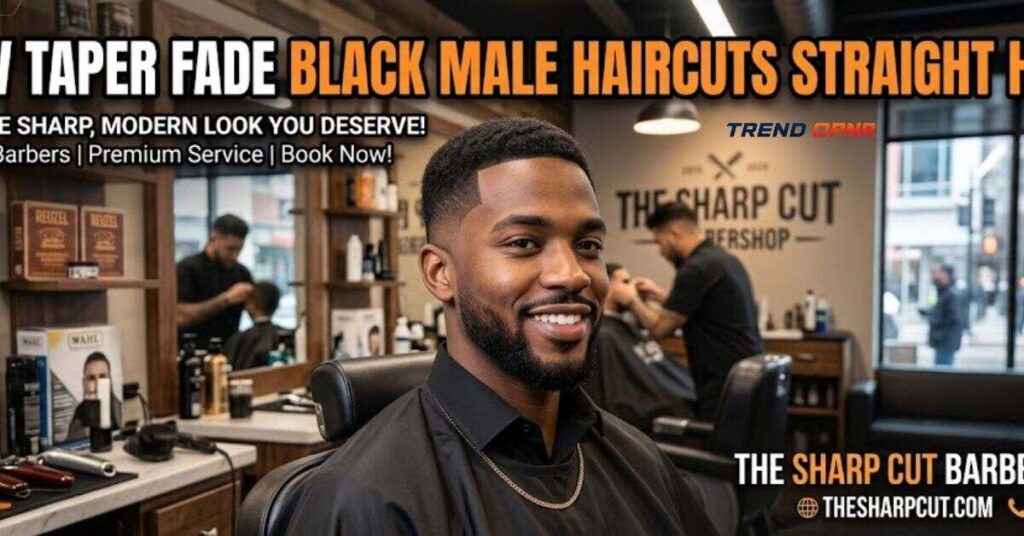
Straight hair gives the taper a smooth, neat appearance, with the gradual blend creating a clean transition around the sides and neckline. Keeping some length on top allows the hair to be styled naturally or brushed into a simple textured finish.
Best for: Oval, square, and oblong face shapes · Straight to slightly wavy hair
Styling tip: Use a lightweight styling cream or matte clay to add texture without making the hair look heavy.
Maintenance: Refresh the taper every 2–3 weeks to keep the sides and neckline sharp.
35. Short Hair Low Taper Fade Black Male
Short hair keeps the overall haircut simple, neat, and easy to manage, while the taper adds a clean transition around the ears and neckline. The short top can show natural curls, coils, or a subtle textured pattern without needing much daily styling.
Best for: Oval, round, square, and diamond face shapes · Short natural textures
Styling tip: Use a light moisturizer or curl cream to keep the hair soft and defined without adding heaviness.
Maintenance: A taper touch-up every 2–3 weeks keeps the sides and neckline looking fresh.
Best Low Taper Fade Style for Your Face Shape
Face shape can help guide the overall height, volume, and structure of the haircut. A style that adds vertical height can balance wider features, while a lower-profile top can work better for longer facial proportions. Low Taper Fade Black Male Haircuts offer enough flexibility to adjust the top according to these differences.
| Face Shape | Best Style Options | Why It Works |
| Oval | Any variation | Balanced proportions suit most styles |
| Round | Afro, high top, blowout | Added height creates a longer-looking silhouette |
| Square | Waves, short afro, crew cut | Clean sides complement the defined jaw |
| Diamond | Medium curls, textured top | Added texture softens prominent cheekbones |
| Heart/Triangle | Short afro, textured crop | Helps balance a broader forehead |
| Oblong/Long | Waves, short styles | Lower volume avoids emphasizing facial length |
Oval Face
An oval face offers plenty of flexibility because the forehead, cheekbones, and jaw usually appear well balanced. Low Taper Fade Black Male Haircuts can work with short curls, waves, afros, textured crops, twists, or longer natural styles without needing major changes to the overall shape.
Men with oval faces can focus more on personal taste than correction. A low taper keeps the sides neat while the top can carry different levels of texture and volume. Clean edges and suitable top length can make both classic and modern variations look polished.
Round Face
Round faces benefit from styles that create extra height on top while keeping the sides controlled. Low Taper Fade Black Male Haircuts with an afro, high top, blowout, or textured curls can add vertical structure and make the face appear more elongated.
Avoid keeping the top extremely flat if the goal is a more balanced appearance. A little height combined with clean tapered sides creates a sharper outline, while natural texture adds character without making the sides look wider.
Square Face
A square face already features a strong jaw and broad proportions, so a clean taper can highlight those natural features. Low Taper Fade Black Male Haircuts paired with waves, short afros, curls, or crew cuts create a structured appearance without taking attention away from the jawline.
Medium or short top lengths usually work well for this shape. Keep the taper neat around the temples and neckline, while a crisp line-up can add extra definition to the overall haircut.
Diamond Face
Diamond-shaped faces typically feature wider cheekbones with a narrower forehead and chin. A textured top can add softness and visual balance, while tapered sides keep the haircut controlled and polished.
Curly tops, textured crops, finger coils, and medium-length natural styles can complement the proportions nicely. Low Taper Fade Black Male Haircuts also provide a clean foundation, allowing texture on top to become the main feature.
Heart/Triangle Face
Heart or triangle-shaped faces often appear wider around the forehead and narrower toward the chin. A balanced haircut can reduce excessive focus on the upper face by keeping the top moderate rather than extremely tall.
Short afros, textured crops, curls, and controlled twists can work well with this facial structure. Low Taper Fade Black Male Haircuts keep the sides tidy while allowing enough texture on top to create a natural, balanced appearance.
Oblong/Long Face
Long or oblong faces usually benefit from styles that add some width without creating too much height. Waves, short afros, crew cuts, and textured crops can keep the overall silhouette balanced and prevent the face from appearing longer.
Avoid extremely tall high tops or excessive vertical volume when aiming for proportion. Low Taper Fade Black Male Haircuts with a moderate top length and clean sides provide a sharp foundation while keeping the overall shape visually balanced.
How Black Hair Textures Work with the Low Taper Fade
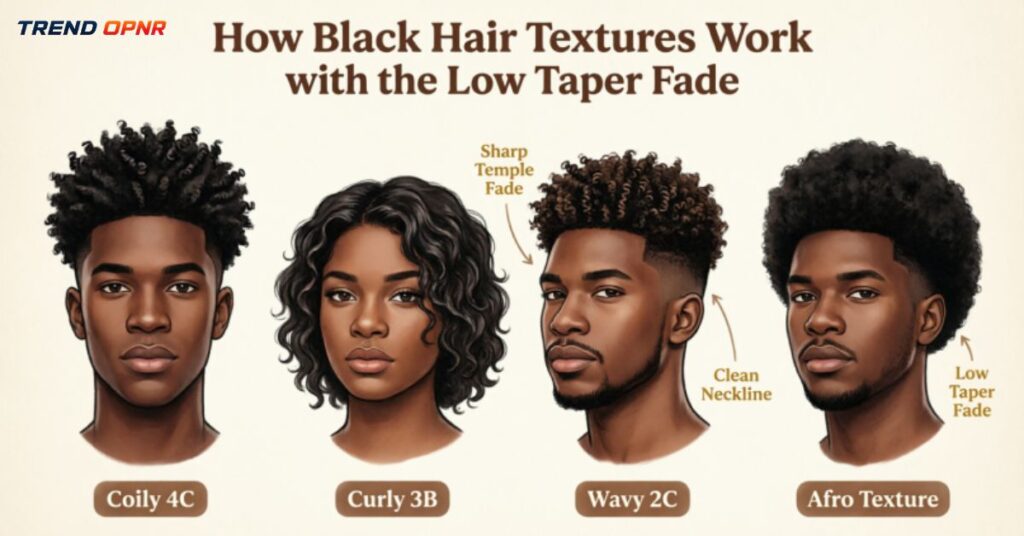
Black hair comes in many curl and coil patterns, so each texture responds differently to haircutting and styling. From springy 3C curls to tightly packed 4C coils, factors such as density, shrinkage, moisture, and definition can change the final appearance.
Natural texture can become the main feature while tapered sides create a neat outline around the head. Curls add movement, coils bring fullness, and dense textures create strong contrast with shorter sides. Understanding your curl pattern also helps with choosing suitable products, top length, and daily care.
Type 3C Hair with Low Taper Fade
Type 3C hair features tight, springy curls with noticeable definition and natural volume. A low taper keeps the sides neat while allowing the curls on top to remain full, giving the haircut a fresh and textured appearance.
This texture works nicely with curly crops, finger coils, and medium-length curls. Curl cream or leave-in conditioner can help maintain softness and definition without weighing down the natural curl pattern.
Type 4A Hair with Low Taper Fade
Type 4A hair has tightly packed coils with a visible S-shaped pattern and natural fullness. The texture creates plenty of definition on top, while shorter sides give the haircut a neat and balanced finish.
Sponge curls, twist-outs, and short rounded afros pair well with this texture. A lightweight leave-in conditioner can help keep the coils soft, defined, and easier to manage.
Type 4B Hair with Low Taper Fade
Type 4B hair features a more angular, Z-shaped coil pattern with noticeable shrinkage and dense volume. The natural fullness creates strong contrast against neatly tapered sides, giving the overall style a bold appearance.
Afros, two-strand twists, sponge styles, and waves can work well with this texture. Regular moisturizing is important because tightly coiled strands can lose moisture quickly and become prone to dryness.
Type 4C Hair with Low Taper Fade
Type 4C hair contains very tight coils with significant shrinkage and a naturally dense appearance. The texture can create an impressive contrast between the fuller top and closely trimmed sides, making the haircut look sharp and defined.
Short afros, high tops, coils, locs, and blowout styles can complement 4C texture. Gentle handling, leave-in conditioner, and regular deep conditioning can help reduce dryness and support healthier-looking hair.
How to Ask Your Barber for a Low Taper Fade
Clear communication can make a big difference when visiting the barbershop. Bring a few reference photos showing the front, sides, and back, then explain the desired taper height, top length, neckline, and any extras such as an edge-up or beard blend.
Mention your natural curl pattern and preferred finish as well. Simple details about waves, curls, coils, twists, or locs help the barber understand how the final cut needs to work with your hair texture.
Step 1: Bring a Reference Photo
Save two or three clear haircut photos before visiting the barbershop. Choose images showing different angles, especially the front, side, and back, so the barber can understand the desired shape and taper placement.
Try to select photos featuring similar hair texture and length. A reference with curls, coils, waves, twists, or locs close to your own texture can give the barber a much clearer idea of the expected result.
Step 2: Use the Right Barber Language
Use simple, specific terms instead of saying only “give me a fade.” Tell the barber where the taper needs to start, how short the sides should become, and how much length to keep on top. Mention details such as waves, curls, coils, twists, or locs.
A useful request can include the guard length, taper height, top length, and desired finish. Clear instructions reduce confusion and help the barber create the shape closer to the reference photo.
Step 3: Specify Your Neckline Shape
The neckline can change the overall finish of the haircut, so choose the shape before the barber starts. Common options include natural, rounded, and squared finishes. A natural neckline offers a softer grow-out, while rounded and squared edges create a more defined appearance.
For an everyday style, a natural or gently rounded neckline can be easier to maintain. If you prefer a sharper finish, a squared neckline can provide stronger definition around the back.
Step 4: Describe Your Add-Ons
Mention every extra detail before the haircut begins. Tell the barber if you want an edge-up, beard blend, shaved design, hard part, or specific temple finish. These details can change the final appearance significantly.
Also explain whether the hairline needs to remain natural or receive a sharper shape. Discussing each add-on in advance helps prevent unwanted changes and keeps the finished haircut closer to your preferred look.
Common Mistakes to Avoid at the Barbershop
Avoid using vague instructions such as “make it fresh” or “give me any fade.” Not specifying taper height, top length, neckline shape, or guard level can lead to a result that differs from the intended style.
Another common mistake is skipping the reference photo or forgetting to mention important add-ons. Discuss the desired finish before the clippers start, and confirm the amount of hair that will be removed from the sides and top.
How to Maintain Your Low Taper Fade
Keeping the haircut fresh requires regular trims, proper moisture, and simple daily care. A barber visit every few weeks can clean the sides, neckline, and edges while preserving the original shape.
At home, use suitable products based on your curl or coil pattern. Gentle cleansing, regular conditioning, and light moisturizing can help reduce dryness while keeping curls, coils, waves, or other top styles looking neat.
Maintenance Schedule
| Task | Frequency | Why It Matters |
| Full taper touch-up | Every 2–3 weeks | Keeps the blend clean and defined |
| Line-up / edge-up | Every 1–2 weeks | Maintains a sharp hairline |
| Moisturize hair and scalp | Daily or every other day | Helps reduce dryness and breakage |
| Wash with gentle shampoo | 1–2 times per week | Removes dirt without excessive dryness |
| Deep conditioning | Once per week | Provides extra moisture for textured hair |
| Edge control | As needed | Keeps the front and temples neat |
| Wave brushing | Daily, if needed | Helps maintain a consistent wave pattern |
| Durag or wave cap | Every night, if wearing waves | Helps protect the wave pattern |
| Clarifying shampoo | Once per month | Removes excess product buildup |
Barbershop Visit Schedule
Plan for a trim every 2–3 weeks to keep the sides, temples, and neckline looking clean. Hair tends to grow at different rates, so regular visits help preserve the smooth shape without removing too much length from the top.
For a tighter budget, alternate between full cuts and quick edge-ups. A line-up between full appointments can refresh the front and temples while giving the rest of the haircut extra time to grow.
Daily Hair Care Routine for Black Hair with a Taper
A short morning routine can keep textured hair soft, neat, and easier to style. Start by lightly misting the hair with water, then apply a suitable leave-in conditioner or lightweight oil. For defined edges, use a small amount of edge control around the hairline.
For weekly care:
- Wash 1–2 times weekly: Use a gentle shampoo followed by conditioner.
- Deep condition weekly: Leave a moisturizing treatment on for 15–20 minutes.
- Refresh monthly: Use a clarifying shampoo to remove excess styling product and buildup.
- Style as needed: Choose curl cream, wave pomade, twisting cream, or light styling products according to the top style.
Products Every Black Man Needs for His Low Taper Fade
The right products can keep textured hair moisturized, defined, and easy to manage between barber visits. Pick products according to your curl pattern and chosen top style rather than using everything at once.
| Product | Purpose | Best For |
| Leave-In Conditioner | Daily hydration | All hair types |
| Curl Cream / Activator | Defines curls and coils | 3C–4A |
| Shea Butter | Rich moisture | 4B–4C |
| Wave Pomade / Grease | Helps shape waves | 360 waves |
| Edge Control | Keeps edges neat | All styles |
| Argan Oil | Adds moisture and shine | All hair types |
| Gentle Shampoo | Cleanses the scalp | All hair types |
| Deep Conditioner | Provides intensive moisture | Dry or textured hair |
| Durag / Wave Cap | Protects wave patterns | 360 waves |
| Texture Clay | Adds matte hold and shape | Short cuts |
| Hair Mousse | Boosts volume and definition | Afros and blowouts |
| Twisting Butter | Supports twist definition | Twists and flat twists |
Budget Tip: Learning basic edge-up techniques can reduce the number of quick barber visits needed between full cuts. Keep a suitable trimmer, practice carefully, and focus on maintaining the existing hairline instead of repeatedly pushing it backward.
The Cultural Significance of the Low Taper Fade for Black Men
The taper fade has roots in military grooming, but Black barbers and communities helped transform it into a creative form of personal expression. During the 1980s and 1990s, variations such as high tops, sharp line-ups, and detailed fades became closely connected with hip-hop, fashion, and Black popular culture.
Barbershops also became important community spaces where grooming mixed with conversation, music, style, and social connection. Today, the haircut continues to represent individuality and confidence, with modern variations allowing natural curls, coils, waves, twists, braids, and locs to remain central to the overall look.
A fresh haircut can also bring a noticeable confidence boost. Clean edges, balanced proportions, and carefully shaped sides can create a polished appearance that feels suitable for everyday life, work, celebrations, and social occasions. Modern media continues to showcase these styles, reflecting their lasting influence on contemporary men’s grooming.
Low Taper Fade Black Male: 2026 Trends
Modern 2026 styles are moving toward natural texture, personalized shapes, and creative details. Curls, coils, waves, twists, locs, and short afros remain popular, while clean edges and subtle tapering keep the overall appearance polished.
Color accents, small razor designs, textured tops, and mixed styling techniques are also gaining attention. The focus is less on one fixed look and more on adapting the haircut to personal style, hair texture, and face shape.
Hybrid Texture Combinations
Combining different textures on top creates a distinctive and modern appearance. Curls can be mixed with twists, sponge coils with flat twists, or waves with another textured section for added contrast.
The tapered sides provide a clean foundation while the mixed textures become the main visual feature. This approach works best when each section is clearly shaped and the overall proportions remain balanced.
Micro-Designs in the Fade Zone
Small razor details are becoming popular for men who want extra personality without choosing an overly dramatic design. Thin lines, tiny geometric shapes, initials, and subtle curves can be placed around the temple or behind the ear.
These details look sharp when paired with clean edges and neatly blended sides. Since small designs grow out quickly, regular touch-ups are useful for keeping the pattern visible and defined.
Low Taper Fade with Color
Adding color to the tips can give natural curls and coils extra dimension. Blonde, copper, honey, and lighter brown tones can create an eye-catching contrast against darker natural roots.
Color-treated hair needs extra moisture because chemical processing can increase dryness. Using color-safe products and regular conditioning can help preserve both the shade and the natural texture.
The “Black Ninja” Low Taper
The “Black Ninja” variation focuses on sharp angles, defined edges, and a more aggressive visual finish. The sides remain controlled while the shape around the temples and behind the ears creates a bold silhouette.
This look suits men who prefer strong barbering details rather than a soft, understated finish. A skilled barber is important because precise blending and clean lines are central to the style.
Virtual Try-On Tools
Virtual hairstyle tools can help compare different looks before visiting the barbershop. Uploading a clear front-facing photo may allow users to preview variations involving curls, waves, afros, or different taper heights.
These previews are useful for narrowing down ideas, but results can vary from real hair because texture, density, lighting, and head shape affect the finished haircut. Treat virtual previews as inspiration rather than an exact prediction.
Mid taper fade Black Male
If you want to add “Mid taper fade Black Male” as a related keyword, a natural placement would be:
Mid taper fade Black Male offers a slightly higher blend around the temples than a low taper, creating more contrast while keeping the natural texture on top. It suits curls, waves, coils, afros, twists, and other textured styles.
Conclusion
Low Taper Fade Black Male Haircuts combine clean sides with natural texture, making them suitable for short hair, curls, waves, afros, twists, braids, and locs. From simple everyday cuts to bold designs, each variation can be adjusted to match different face shapes and personal styles.
Choosing the right style depends on hair texture, preferred length, face shape, and maintenance routine. With regular barber visits and proper hair care, Low Taper Fade Black Male Haircuts can stay sharp, fresh, and stylish for weeks.
FAQ’s
What is a low taper fade black male?
A low taper fade black male haircut features a gradual blend around the sideburns, ears, and neckline while keeping more natural length on top. The style works well with curls, coils, waves, afros, twists, braids, and locs.
What does a 3:2:1 fade look like?
A 3:2:1 fade uses different clipper guard lengths to create a gradual transition. The longer #3 section starts higher, followed by #2 and then #1 toward the lower sides. This creates a smooth, controlled blend instead of an abrupt change.
What is the most popular fade in 2026?
Low taper and low fade styles remain highly popular in 2026 because they offer a clean appearance without removing too much hair from the sides. Natural curls, waves, textured tops, and line-ups can easily be combined with the look.
What is a Number 4 haircut for black men?
A Number 4 haircut leaves around half an inch of hair, depending on the clipper and guard system. It provides enough length to show natural texture while keeping the overall cut short, neat, and easy to maintain.
What does 1, 2, 3, 4, 5 mean in haircuts?
Numbers refer to clipper guard sizes and indicate the approximate amount of hair left after cutting. A #1 leaves very short hair, while #2, #3, #4, and #5 progressively leave more length. Barbers combine different numbers to create blends, tapers, and fades.

